

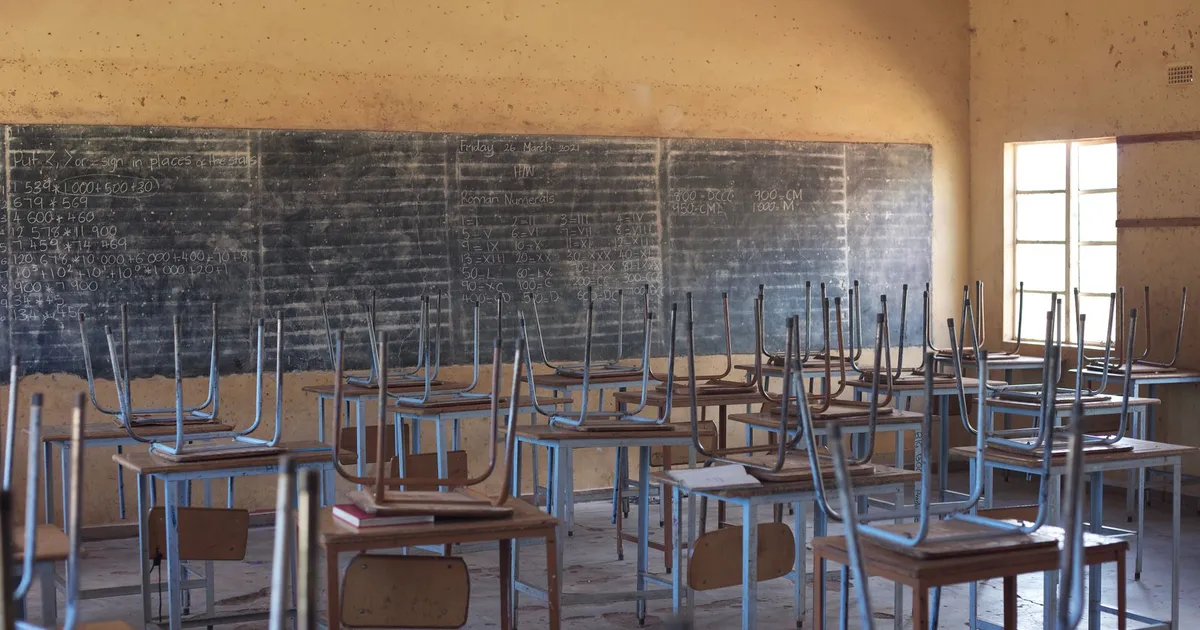
Nearly 200 New Zealand schools are now officially failing their students to some degree. The Education Review Office’s 2026 annual report puts 199 schools in the ‘of concern’ (172) or ‘significant concern’ (27) categories, about 8% of the total. ERO describes that as in line with a fairly stable historical band of 7-9%.
That framing is technically accurate and beside the point. Every one of those schools is producing the apprentices, drivers, nurses, technicians and graduates that businesses will be trying to hire a decade from now. This is a workforce story that happens to be filed under education.
A stable share hides a rising headcount
One year ago, ERO counted 168 schools of concern and warned that “too many schools are not turning things around fast enough”, calling for underperforming schools to face meaningful and timely consequences. That 2025 report also found that of the schools ERO worked with most intensively, only a third improved, a third got worse and a third did not move.
Twelve months on, the list has grown by 31 schools. Percentages can stay inside a historical band while the absolute problem gets bigger, and employers hire people, not proportions.
The detail is worse than the headline. Secondary schools make up roughly two-thirds of the most serious cases, which means the weakness sits right at the point where young people step into work or training. The schools of concern cluster in Tai Tokerau, Waikato, Bay of Plenty, Auckland and Hawke’s Bay/Tairāwhiti.
Against the government’s 2030 targets, the system is a long way off. Only 4% of English-medium schools already hit the 80% regular attendance goal, with 51% behind or significantly behind. Just 17% already meet the Year 8 reading, writing and maths target.
Where the pipeline actually leaks
The link from a weak school to an empty job is not theoretical. NZ Herald analysis shows the share of school leavers with no NCEA qualification is closer to 19% than the official 15%, with 10,496 leavers falling short in 2025. The Ministry’s data and insights lead, Grant Pollard, is investigating whether schools dropping NCEA Level 1 are distorting the picture.
The consequences are brutal. About 70% of leavers below Level 1 are not in employment, education or training within a year, and almost half of those below Level 2 are. Those without Level 2 are four times more likely to spend half their late teens and early twenties in limited employment.
That is the cohort businesses are supposed to be training up. In 2025, AUT vocational education academic Lisa Maurice-Takerei noted that more than 200 occupations sat on the Green List, yet only 6% of school leavers went into apprenticeships. She argued that leaning on immigration to fill those gaps was a missed opportunity to connect young New Zealanders with skilled work.
The regions with the weakest schools have the fewest teachers
Here is the feedback loop few are naming. Ministry of Education figures forecast a secondary teacher shortfall of 710 in 2026 and 510 in 2027, both far worse than earlier forecasts of 550 and 330. That works out at more than one missing teacher per secondary school. Shortages are sharpest in parts of Auckland and Hawke’s Bay, while primary gaps persist in Northland, Waikato and Bay of Plenty even as the national primary picture flips to surplus.
Lay that map over ERO’s and the overlap is hard to miss. The places with the most schools in trouble are often the places least able to staff a turnaround. For an employer running a plant in Whangārei, a packhouse in the Bay or a processing operation in Hawke’s Bay, that is not an abstract policy problem. It is the local labour market for the next 20 years.
Accountability is finally getting a stopwatch
There is a genuine positive here. The Education and Training (System Reform) Amendment Act 2026, in force since 6 July, replaces support-and-hope with hard deadlines. The Chief Review Officer must alert the Secretary and Minister within two working days of forming a view that a school may be of serious concern, deliver a confirming report within 28 working days, and the Secretary must report on action within 30 working days.
That is exactly the correction ERO asked for, and it is the right instinct. Statutory timelines and real consequences beat another round of gentle engagement that leaves a third of schools going backwards.
What employers should watch next
The scale of the demographic squeeze makes this urgent. Back in 2023, BusinessNZ and Sense Partners projected a 250,000-worker shortfall by 2048 as the working-age share of the population shrinks. A country facing that maths cannot afford to write off a fifth of its school leavers.
The real test of the new regime comes with next year’s ERO report. If the count of struggling schools falls, the accountability push is working. If it climbs past 200, business groups should stop treating school performance as someone else’s portfolio and start treating it as the supply chain it is.
Sources
- 1News: Nearly 200 schools ‘of concern’ or worse – Education Review Office (2026-10-31)
- RNZ: Nearly 200 schools ‘of concern’ or worse – Education Review Office (2026-10-31)
- RNZ: Education Review Office says ‘stronger consequences’ needed for struggling schools (2025-11-10)
- NZ Herald: NCEA underachievement – NZ’s failure rate is bigger than we thought and worsening (2026-08-24)
- The Conversation: Big changes to NCEA and polytechs must deliver the skills NZ urgently needs (2025-08-06)
- RNZ: Education Ministry figures reveal teacher shortage worse than previous forecast (2026-02-27)
- Ministry of Education: Education and Training (System Reform) Amendment Act 2026 (2026-09-03)
- BusinessNZ and Sense Partners: The future of workforce supply (2023-02)
Join the discussion
Add useful context, ask a good question, or challenge an idea — keep it specific and respectful.