

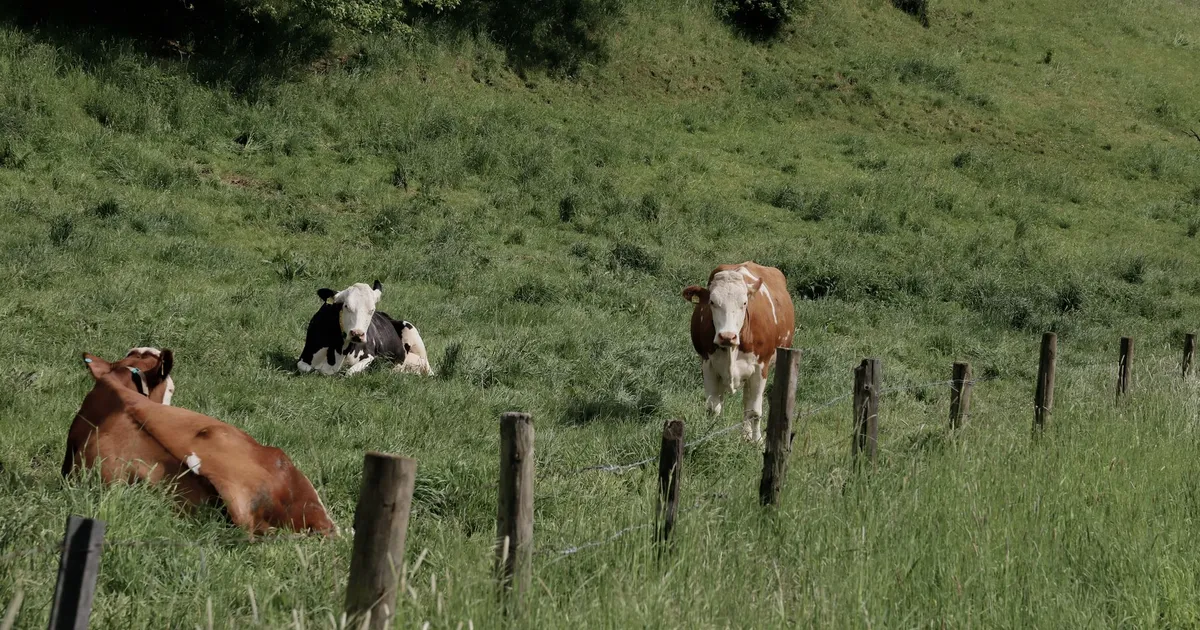
Hundreds of people packed a Christchurch hall for a freshwater debate this month. The occasion was awkward for Environment Canterbury. Weeks earlier the council voted to drop the nitrate state of emergency it had declared only a year before, while tens of thousands more dairy cows were consented in the region this year alone.
The politics have changed. The groundwater has not. For one of the most productive dairy regions in the country, that gap is now a commercial risk, not just an environmental argument.
The emergency went, the trend stayed
In 2025, ECan’s annual survey found nitrate concentrations rising in 62 percent of its long-term monitored wells. The council put the increase down to irrigated land expansion and more intensive dairy land use since 1990. It followed with a nitrate response plan and the emergency declaration.
Twelve months later the emergency is gone, but nothing in the data justified dropping it. The council’s next full groundwater survey is due shortly. If it shows the same upward drift, ECan will have spent a year telling farmers, ratepayers and lenders two contradictory things.
This is the worst outcome for business. Farmers can plan around strict rules and they can plan around loose ones. They cannot easily price a regulator that swings between the two from one year to the next.
The regulator is moving the goalposts anyway
Whatever ECan decides, the national rules are tightening. Taumata Arowai told the council in September that it is considering a long-term maximum acceptable value for nitrate, on top of the existing short-term limit. The current limit is based on acute risk to infants. A long-term limit would be based on chronic exposure in adults. Maps shown at that meeting had 15 percent of tested wells above the legal limit and another 23 percent above half of it. The regulator was also blunt that cutting nitrate at source is the only durable fix.
ECan’s updated risk maps, built from nearly 6,000 samples across 818 wells, place the worst category 4 zones on the plains south of Christchurch. That is the heart of irrigated dairy country.
A long-term limit would not only mean more wells breaching the standard. It would put pressure on everything upstream of those wells, including the consents that allow more cows onto the plains.
Somebody is already paying
The Lagmhor satellite campus of Ashburton Borough School has trucked in water for 18 months. A new bore drilled to almost 120 metres, down into the third aquifer, still came back at 3.86mg/L. That is legal, but it shows how far down you now have to drill to stay compliant.
Scale that up and the numbers get serious. Back in 2025, councils gave academics their cost estimates:
- $500,000 to $750,000 for one Waimate scheme serving 600 people
- $400 million for a new, lower-nitrate source for Selwyn
- $830 million to $1.5 billion to denitrify Christchurch’s drinking water
Those bills fall on ratepayers and water users whoever wins the policy argument. Treatment is a cost passed downstream from the land use that causes it.
This has been building for decades
None of this is sudden. A 2022 Ministry for the Environment report found national dairy cattle numbers had more than doubled from about 3 million to 7 million by 2015. The same report found Canterbury’s fertiliser nitrogen use rose 306 percent between 2002 and 2019.
Industry groups point to real progress, including catch crops, riparian planting and lower fertiliser use. That progress is not trivial. But the monitoring wells are the scoreboard, and so far the scoreboard is not moving the right way.
Why exporters should care
The risk does not stop at the farm gate. A 2022 academic study calculated that Canterbury milk’s grey water footprint ranged from 433 to 11,110 litres of water per litre of milk. It warned that current intensity poses a reputational risk to New Zealand dairy exports. Processors selling a clean, green story to buyers who check supply chains closely do not want Canterbury’s drinking-water problems turning up in a sustainability audit.
For rural lenders and valuers, the problem is pricing. Land values assume a farm can keep operating at its consented intensity. A future long-term nitrate limit, combined with a council that cannot hold a position for more than a year, makes that assumption harder to defend.
What comes next
Three things will set the direction:
- ECan’s groundwater survey, due shortly
- Taumata Arowai’s decision on a long-term nitrate limit
- An election in which the main parties have staked out very different freshwater positions
Canterbury dairy can either help shape a credible, science-based nitrate pathway now or have one imposed later, under worse conditions. Dropping the emergency label may have bought some political quiet. It has not bought the industry any time in the aquifer.
Sources
- RNZ: Canterbury freshwater debate draws hundreds as region grapples with nitrate surge (2026-10-20)
- RNZ: Water regulator tells Canterbury Regional Council long-term nitrate limits being considered (2026-09-09)
- The Press: Canterbury’s worst nitrate pollution areas mapped (2026-09-10)
- 1News: ‘Unsafe’: Canterbury school turns off water amid nitrate spike (2026-08-09)
- Environment Canterbury: Annual groundwater survey yet to show improvements in water quality (2025-08-14)
- Environment Canterbury: Taking action on nitrate (2025-09-16)
- RNZ: Academics call for urgent action on nitrate pollution (2025-03-13)
- Ministry for the Environment: Addressing risks associated with nitrates in drinking water (2022-12-02)
Join the discussion
Add useful context, ask a good question, or challenge an idea — keep it specific and respectful.