

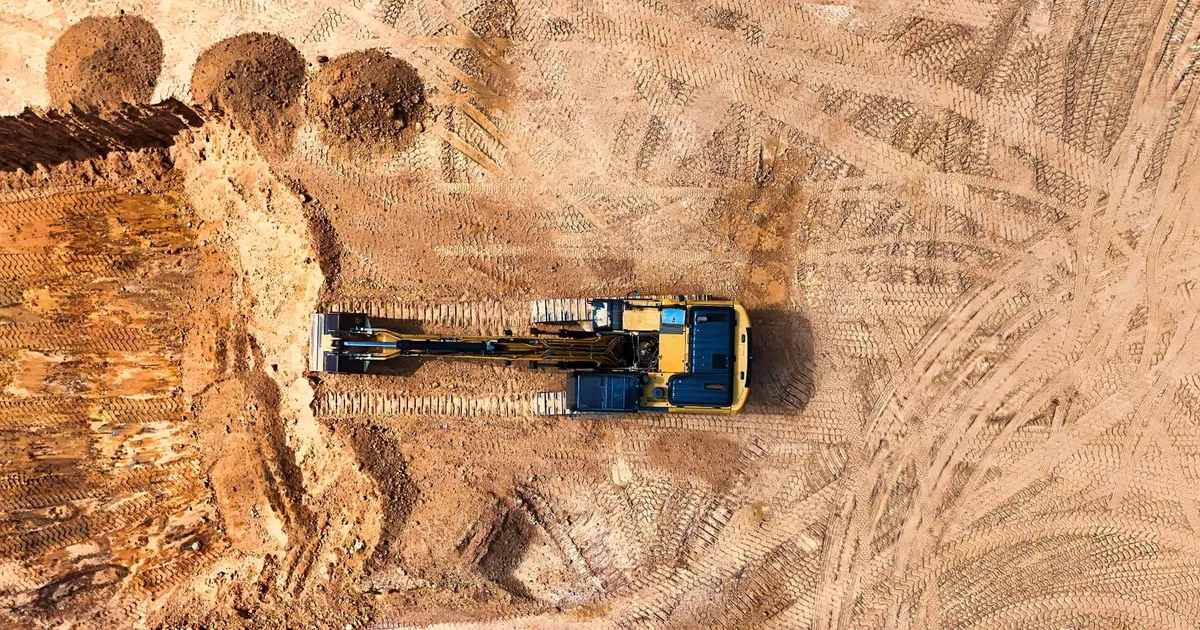
The Parkburn subdivision north of Cromwell is heading for 1000 lots, with neighbouring landowners now looking to follow. For a town that has been short of sections for years, that is a genuine win. For the civil contractors, freight operators and builders’ merchants who need flat, serviced land to park diggers and stack timber, it is a warning. Housing is getting built on land that was once earmarked partly for exactly their kind of activity, and the case that they won’t miss it rests on a thin margin.
A quarry becomes a suburb
The Parkburn proposal was accepted into the fast-track process in September, promising around 1000 residential lots, roughly 60 fulltime jobs over 10 years and 271 construction-phase positions. The plan, now before an expert panel, also includes lakeside coves, a neighbourhood centre, a primary school and the backfilling of the old quarry.
The site has been here before. Back in September 2024, Central Otago District Council approved Fulton Hogan’s private Plan Change 21, rezoning the roughly 118-hectare site for up to 543 homes alongside industrial and commercial uses. Two years on, the lot count has nearly doubled. That is what fast-track is designed to do, and on housing supply alone it deserves credit. The question is what gets squeezed out to make room.
The numbers say it’s fine, barely
The economics assessment prepared for the referral in October 2025 found Cromwell Ward had just 9.6 hectares of vacant industrial-zoned land, against projected additional demand to 2048 of 2.8 hectares in a low scenario, 6.0 in a medium one and 9.0 in a high one. It concluded that rezoning Parkburn was “unlikely to constrain Cromwell’s ability to meet future industrial needs”.
Run the high scenario and the headroom over 22 years is 0.6 of a hectare. The assessment’s more comfortable figure, up to 41 hectares, depends on how Plan Change 21’s industrial zoning is counted, and that zoning came from a plan change for the very site now being reworked. Readers should treat the range with care. The difference between 9.6 and 41 hectares is the difference between a buffer and a bottleneck.
Cromwell keeps outrunning its forecasts
Demand projections are only as good as the growth assumptions behind them, and Cromwell has a habit of beating them. The same 2025 assessment showed the study area’s population grew 60% between 2015 and 2024, from 6,800 to 10,900 residents, with 3.2% annual growth against a district average of 1.9%. It also showed more than 600 local jobs across heavy and civil construction, timber and hardware wholesaling, building installation and road freight. Those are the businesses that need yards, and a thousand new households will only add to their workload.
Council data shows Cromwell Ward consented 189 additional dwellings in the year to June 2023 while consents across the rest of the district fell 21%. Growth here is not spread evenly. It is concentrated in one town.
Zoned is not the same as available
The sharpest warning came back in 2019. At a hearing into a separate Cromwell subdivision, then-senior urban designer Alistair Ray cautioned that “land is zoned doesn’t necessarily mean it is going to come to the market when you want and in the manner that you want it”. That applies to industrial land at least as much as housing. A paddock with the right zoning but no water, power or roading is no use to a contractor who needs a depot next quarter.
There is a counterpoint. As general context, CBRE has noted that the council has historically acted as the principal developer of industrial subdivisions in Cromwell, giving the town a more generous pipeline than land-starved Queenstown. The council’s own earlier Plan Change 18 was driven by rising demand for industrial land after 2019. Cromwell is not Auckland.
But Auckland shows where this ends if nobody keeps score. In 2017, Barfoot & Thompson’s then-commercial agent Mike Jensen said council rezoning had “effectively incentivised more intensive forms of land use at the expense of industry”, pushing businesses out on short leases and demolition clauses.
Keep the tally before the neighbours cash in
None of this is an argument against Parkburn. Cromwell needs the houses, and fast-track is cutting through exactly the kind of delay that has made New Zealand housing so expensive. The risk lies in what comes next. If neighbouring landowners follow suit, each conversion will be judged on its own assessment, and each will probably pass. Collectively, they could eat a margin that was never generous.
The council should do what it has done well before. Service and release industrial land ahead of demand, count it honestly, and stop treating yards and workshops as whatever is left over once the subdivisions are drawn. The town that builds the houses still needs somewhere for the people who build them.
Sources
- Otago Daily Times: 1000 lots and more to come as neighbours get in on the action (2026-11-13)
- Crux: Cromwell’s rapid growth continues as 543 homes given green light (2024-09-26)
- Otago Daily Times: Cromwell will run out of room in 14 years, hearing told (2019-06-12)
- NZ Herald: Rezoning of industrial areas creating shortage (2017-11-03)
Join the discussion
Add useful context, ask a good question, or challenge an idea — keep it specific and respectful.