

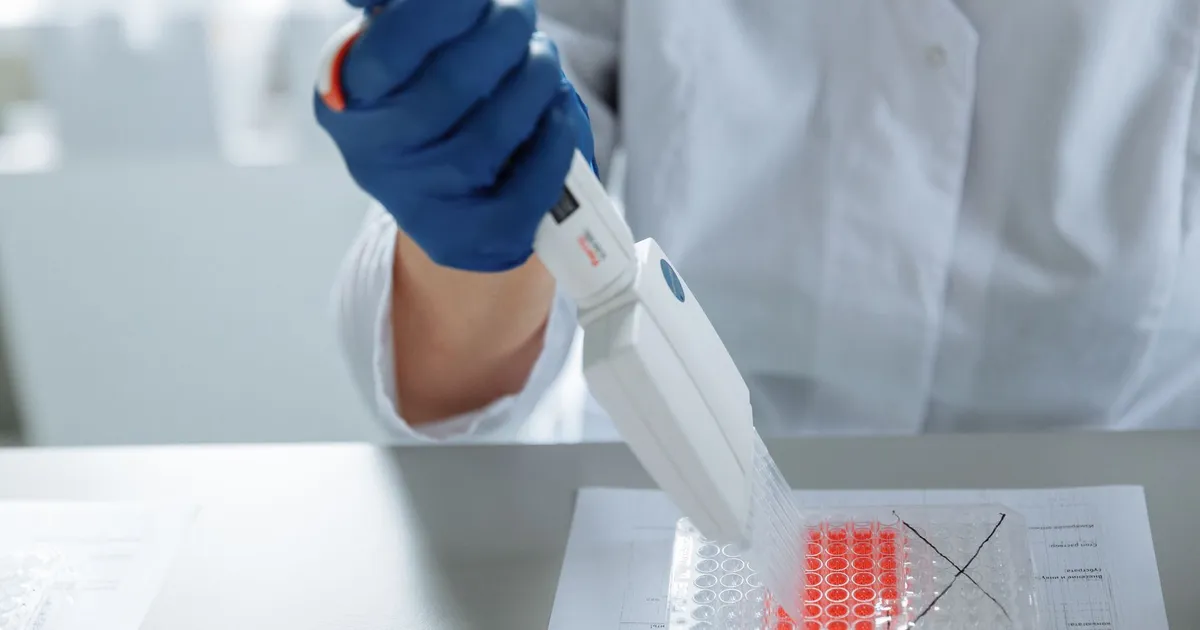
New Zealand has quietly built something it usually imports at eye-watering cost. BioOra’s CAR-T manufacturing facility in Christchurch held its ribbon-cutting this week, with first patient treatment planned for 2028. Two weeks earlier, National put a $25 million CAR-T commitment into its election health policy. The debate has shifted from whether Kiwis deserve a miracle drug to whether New Zealand can run a domestic advanced health manufacturing industry. The plant is ready. The regulatory and funding machinery that pays for it and gets it to patients is years behind.
A million-dollar treatment made locally
CAR-T takes a patient’s immune cells, re-engineers them to attack cancer, and puts them back. BioOra chief executive John Robson describes the process simply: “You take blood from a patient, you genetically modify it, and you put it back in.” The hard part is the biology and the manufacturing discipline around it.
Overseas, the treatment can cost more than $1 million. Local production inside the public system is meant to end the era of Givealittle pages and families selling assets to get treatment offshore. The clinical evidence is solid. BioOra’s trial has treated 60-70 patients with results matching world-leading outcomes.
This did not happen overnight. The Malaghan Institute and BioOra’s Phase 1 trial was approved in 2019, and in 2024 the EPA cleared a Phase 2 trial for relapsed large B-cell lymphoma through its rapid assessment pathway, deciding within 10 working days. That is regulation working quickly. Most of what comes next does not.
Robson is pitching this as a capability play, not a party-political one. “Building CAR T-cell and advanced cellular therapy manufacturing in New Zealand is about sovereign capability, creating skilled jobs, and growing the biotech industry in the South Island,” he says.
The economic case is sized for a bigger plant
In April 2026, ChristchurchNZ modelling put the facility’s value at around $98 million a year to the economy once it treats about 500 patients annually, supporting roughly 1,100 jobs, more than 480 of them direct. At the time, Ministry of Health chief science adviser Ian Town said Christchurch was “positioning itself as a leading centre for cancer research and treatment.”
Officials have more modest expectations. A June 2026 Ministry of Health aide-memoire expects the plant to make engineered cells for 160 patients in year one, then more than 300 in year two. It also says only 45-60 New Zealanders a year are currently expected to be eligible for BioOra’s product once it is commercially available.
That gap matters. The 500-patient figure depends on export demand, more approved indications or both. Neither is impossible, but investors, suppliers and Christchurch property owners planning around the precinct should treat $98 million as a mature-state scenario, not a 2028 forecast.
The law arrives two years after the first patient
The biggest risk is legislative. The Medical Products Bill, which creates the formal pathway to approve and fund living-cell therapies, is due for introduction this year but will not go live until late 2030. That is four years after the ribbon-cutting and two years after the first planned patient.
The Cancer Control Agency is drafting a national CAR-T access strategy, covering local and imported products, due by the end of 2026. The same briefing lists the supporting investment still needed, including eligibility protocols, genomic testing, upgraded stem cell transplant centres, expanded lab capacity and specialist team training. None of it has a confirmed funding line in the material reviewed.
In plain terms, a Kiwi company has made a high-value product before the state has decided who buys it, under what rules and at what price. National’s $25 million is a start. It does not answer the procurement question, and the pledge is only as good as the election result.
Build the pathway as fast as the plant
In February 2026, a commentary in The Post argued that New Zealand faced a choice between becoming a leader in advanced health manufacturing or remaining dependent on imported treatments. That choice now sits squarely with politicians.
The structural advantages are real. Medsafe’s rules align with Europe’s, the country runs a national blood collection network and every patient has a national identifier. These are the foundations a cell-therapy exporter needs. What New Zealand lacks is a regulator and funder that can move at the speed of the private capital already spent.
Whoever forms the next government should treat the Medical Products Bill as industrial policy, not health admin. Bringing the 2030 date forward and attaching a clear Pharmac or Health NZ funding mechanism to the access strategy would turn a good-news ribbon-cutting into an industry. Leaving it alone means a world-class Christchurch factory waiting on paperwork.
Sources
- NZ Herald: BioOra cuts ribbon on Christchurch Car-T facility, plans for first patient in 2028 (2026-10-20)
- Newstalk ZB: Christchurch’s new CAR-T facility bringing ‘world first’ cancer treatment to NZ (2026-10-21)
- BioOra: BioOra welcomes commitment to unlock CAR T-cell therapy in New Zealand (2026-10-06)
- Otago Daily Times: Life-saving cancer treatment facility to create 1100 jobs (2026-04-12)
- Ministry of Health: Aide-Memoire, Meeting with BioOra (2026-06)
- EPA: Next step for cancer treatment trial (2024-05-22)
- The Post: The opportunity we must seize to secure a ground-breaking cancer treatment (2026-02-11)
Join the discussion
Add useful context, ask a good question, or challenge an idea — keep it specific and respectful.