

A town where the sums are brutal
Westport is roughly 4,500 people, and Bathurst Resources employs more than 400 of them at the Stockton mine. Government assessment paperwork puts the figure at 317 direct employees, about 7% of the entire Buller workforce. Whatever number you use, the operation is the spine of the district’s economy, contributing more than $100 million annually.
The timing makes it sharper. Westport has already absorbed 40 job losses from the Westland Mineral Sands closure and 92 from the Talley’s processing factory in 2026 alone. That is 132 gone in a single year, in a town where Bathurst employs 400. Losing the mine on top of that is not a downturn, it is a collapse.
That is why 95.7% of local businesses surveyed back the fast-track application, from an 80% response rate among Westport Enterprise Network members. This is not a mining lobby talking. It is supermarkets, freight firms and hospitality operators doing the arithmetic.
The downstream is the real story
WEN chair Luke Robertson framed it as a baseline problem. “The mine currently underpins the local economy,” he said, and any hope of diversifying the district depends on having that base intact first. The ripple is what matters. “It’s more than just mining jobs, it’s downstream jobs such as freight, maintenance, supermarkets, and hospitality. We would also lose schools, sports coaches, and volunteers,” Robertson said. Bathurst supports over 125 local businesses through around $75 million of annual spending.
Robertson’s bluntest line captures the mood. “In a town of only 4500 we know we are all in this together, and our future is on a knife’s edge right now,” he said.
What’s actually being mined
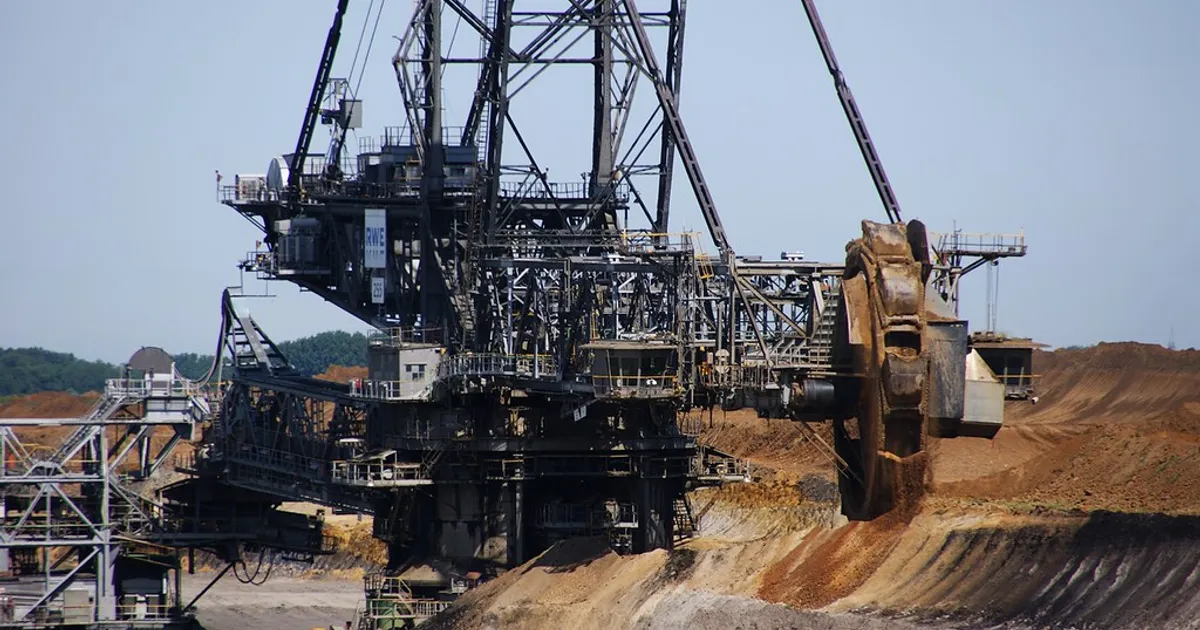
Stockton is New Zealand’s largest opencast coalmine, and it produces low-ash metallurgical coal exported to India, Japan, South Korea and China for steelmaking, not thermal coal for power stations. That distinction matters to the commercial case. Forest and Bird argued in July 2026 that Stockton is a rounding error globally, with Australia exporting 150 times the volume. West Coast geologist John Taylor rebutted that directly, saying “West Coast coal is unique in the world, that is why it still gets a premium price” because of its coking strength.
The environmental objection is real and loud. The application covers 3,000 hectares, seven times the size of Auckland’s CBD, including conservation land. Forest and Bird’s Scott Burnett called the plan “extraordinary in its scale and complexity” and unfit to be rushed. Bathurst counters with its rehabilitation record of roughly 500 hectares restored to date.
The clock Bathurst nearly ran out
The hard fact driving everything is that Bathurst’s current mining licences expire at the end of March 2027. Without new consents by then, operations stop. The company itself concedes the standard RMA route offers no guarantee of consent, or of getting it in time, given how contentious and litigious coal consenting has become. That is the honest argument for fast-track.
But Bathurst is substantially the author of its own risk. It originally targeted an April 2025 application, then slipped to November 2025, January, March, April and June 2026, before finally lodging in late August, more than 16 months late. Resources Minister Shane Jones publicly urged mining bosses in May 2026 to “bang that application in right now”. By then Bathurst said its technical work was complete, yet it took another five months to file. For a company demanding expedited treatment, that gap is a fair question.
Why the delay could be fatal
The fast-track process runs on a 90-working-day statutory timeline, which means a decision will almost certainly land after the 7 November general election. The Green Party has vowed to abandon the proposal if it gets the chance. Adam Currie of 350 Aotearoa put the consequence plainly, saying the delay “shuts the door” on a decision before the election.
The commercial context is not comfortable either. Bathurst posted $44 million EBITDA in FY25, below its own guidance, as export coal prices fell from NZD $297 to $242 per tonne. It still holds $178 million in cash, so this is a viable business, not a lame duck.
Strip away the coal politics and the test is simple. New Zealand keeps saying it wants regional jobs and resilient provincial economies. Here is 400 direct jobs, a $100 million economic base and near-unanimous local business support, riding on a consent that hinges on a court-of-public-opinion election result. Whether the country means what it says about regional New Zealand is about to be answered on a windswept plateau above Westport.
Sources
- Mining company Bathurst Resources lodges fast-track application to extend West Coast coal mining (2026-08-24)
- The Westport Business Community Overwhelmingly Supports The Bathurst Fast Track Application (2026-08-24)
- Fast-track delays push high-stakes decisions past the election (2026-07-14)
- Geologist defends coal’s special properties after ‘greenwashing’ claim (2026-07-03)
- Bathurst 2025 Annual Report (2025)
- Buller Plateaux FTA Project – Bathurst Resources
- Buller Plateaux Continuation Project – Ministry for the Environment Assessment Form
Join the discussion
Add useful context, ask a good question, or challenge an idea — keep it specific and respectful.