

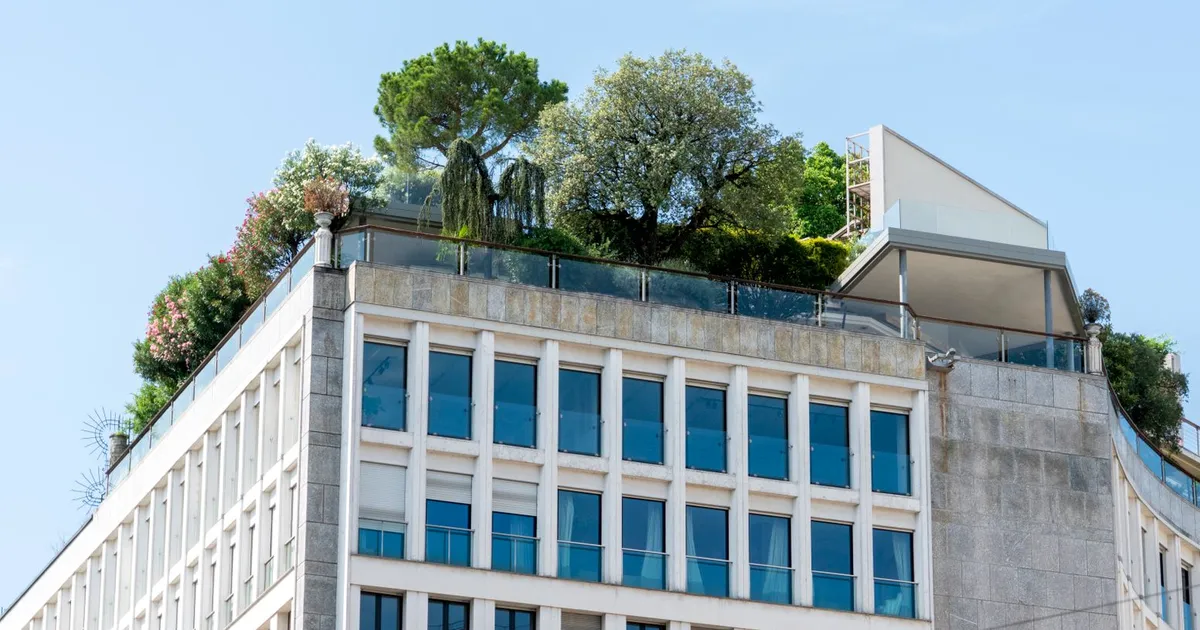
Auckland has spent the past two years proving that one of the cheapest stormwater upgrades in the city is sitting unused on its rooftops. The science is no longer the problem. The incentives are.
New monitoring reported by Newsroom found planted living roof beds cut stormwater runoff by around 90% in their first year. Small, frequent showers, which carry much of the annual pollutant load into harbours, produced almost no runoff at all. In the largest storm of the study period, 88mm of rain in April 2025, the beds still cut peak runoff by 83 to 89%.
For a city where stormwater capacity increasingly decides where housing can go, what insurers will cover and how much ratepayers must borrow for new pipes, that is a serious number. Yet living roofs remain a novelty.
The evidence has been piling up for years
This is not a single promising trial. In 2025, RNZ reported on the monitoring project on Auckland Central Library’s roof, run by the University of Auckland, Ngāti Whātua Ōrākei and Auckland Council, which found living roofs could absorb effectively all rainfall in small events and reduce or absorb 80% of rainfall in heavy downpours. The same research found summer roof temperatures were 32 to 56% lower than on a conventional roof, cutting cooling energy needs.
The council’s own 2025 update said some substrates retained nearly 80% of rainfall even in heavy rain. Its climate plan snapshot that year counted roughly 2,000 native plants on existing installations and listed green roofs as an effective resilience tool.
A 2026 Water New Zealand conference paper by University of Auckland’s Zoë Avery and Jonathon Avery and Auckland Council’s Rachel Devine puts it bluntly. The monitoring confirms strong stormwater performance under local conditions, providing the technical basis to write living roofs into regulation.
The owner pays, the city collects
So why so few? The same paper names the culprit as a classic split incentive. Building owners carry the installation and maintenance bill, while the benefits, less load on the network, cooler streets, better air and biodiversity, flow to everyone else.
A developer weighing a living roof against a standard membrane sees extra structural cost, unfamiliar warranties, uncertain insurance treatment and a maintenance schedule. The tenant gets lower cooling bills. The council gets spare pipe capacity. The developer gets a line item. The council’s companion living roof recommendations report frames the barriers the same way, as cost allocation, regulatory recognition and market confidence rather than weak evidence.
None of this is new. More than a decade ago, industry voices were already warning that Auckland had fallen behind international practice and calling for consenting and infrastructure-charge incentives. The data has transformed since then. The incentive structure has not.
Council budgets are rigged for the pipe
The sharper problem sits inside local government accounting. A 2025 Water New Zealand stormwater workshop identified “the structural mismatch between NbS and existing funding tools”, meaning nature-based solutions, with the capital versus operating spending split a particularly significant barrier.
Living systems are lighter on upfront capital but need ongoing maintenance. Councils face tight constraints on operating spending, so the option that is cheaper over its life can lose to concrete simply because of which budget line it lands on. The workshop found whole-of-life savings and avoided downstream costs are not captured in traditional business cases, creating “perverse incentives where grey infrastructure, which may be more expensive over the long term, is funded because it suits the accounting model”.
That should bother any ratepayer. It is not ideology steering the spend toward bigger pipes. It is a spreadsheet convention.
The fixes don’t need a mandate
The encouraging part is that the remedies are cheap and market-friendly. The 2026 paper recommends development contribution offsets, formal credit pathways so living roofs count within stormwater treatment approvals, expedited consents, updated technical guidance using Auckland data, more demonstration projects on council buildings and targeted subsidies in priority catchments.
That list contains no new tax and no compulsory green-roof rule. It simply lets developers capture part of the value they create, and lets the council pay for stormwater capacity wherever it is cheapest, on a roof or under a road.
For property developers, the message is that rooftop retention is now a quantified asset rather than a branding exercise. For councils, it is a chance to buy network capacity without the debt. The next test is whether Auckland Council turns its researchers’ recommendations into contribution offsets and consent credits before the next round of pipe upgrades gets locked into long-term plans. Until it does, the capacity stays up on the roof, unused.
Sources
- Newsroom: Living roofs cut stormwater runoff, so why are there so few? (2026-11-22)
- RNZ: Living roof project could provide green shoots for Auckland’s concrete jungle (2025-05-01)
- Auckland Council: Te Tāruke-ā-Tāwhiri Auckland’s Climate Plan Progress Snapshot 2025 (2025)
- Water New Zealand: Greening Auckland’s fifth facade, living roofs in a growing city (2026)
- Water New Zealand: Stormwater Workshop Write Up 2025 (2025)
- Knowledge Auckland: Living roof opportunities and recommendations for Tāmaki Makaurau
- Green Roofs Australasia: Auckland ‘behind the eight ball’ in making urban areas green
Join the discussion
Add useful context, ask a good question, or challenge an idea — keep it specific and respectful.