

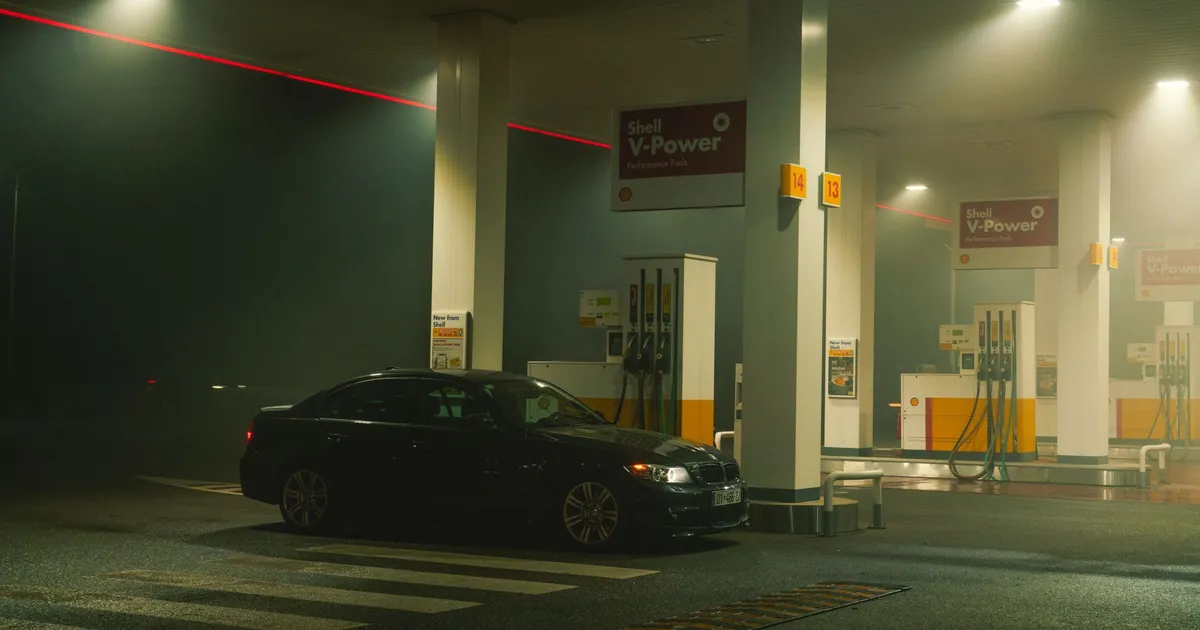
Z Oamaru on Severn St has now been closed for more than a month, and on the evidence so far nobody can say when it will reopen. The cause is not a fuel fault, a staffing problem or a commercial decision. It is stormwater infrastructure that failed after a July flood, in a district whose water planning was already flagged as inadequate.
Councils tend to treat stormwater as a line item. For the business sitting on top of the pipe, it is lost revenue every single day.
Six weeks and still no timeline
The site first closed as a precaution in early October, after a Waitaki District Council (WDC) inspection found underlying issues with the stormwater network between Reed and Severn Streets. Z said the closure related to stormwater infrastructure located on the site and that it would reopen once it was safe. WDC said it was working with Z and independent engineers to determine the extent of the issue, the repairs required and the approximate timeframes.
Seven weeks on, the language has barely moved. Z says it continues to work closely with the council and engineers, and a spokesperson acknowledged “the ongoing closure is frustrating for our local customers”. Still investigating, still no date.
Every week without a date is a week of lost fuel and shop sales, rostering headaches for staff, and regular customers building new habits at a competitor’s pump. Customer leakage is the cost that outlasts the repair.
One flood exposed a whole network
The trigger was the early July storm, when Oamaru took about 37mm of rain in two hours overnight. At least nine homes and six businesses flooded, firefighters answered more than 50 emergency calls, and stormwater and wastewater systems were overwhelmed before a state of emergency was declared at 4.25am. Mel Tavendale, the district’s mayor at the time, conceded that questions about the council’s preparedness and response needed to be answered.
The petrol station is not an isolated fault. On 27 October WDC started replacing damaged historic Ōamaru Stone culverts under Thames St, laying 250 metres of 900mm pipe to double capacity in the CBD. That work was not budgeted in the 2026-27 renewals programme. It was pulled forward from the 10-year plan because the flood forced it. When a council has to reshuffle its capital programme on the fly, the network was not in the shape the plan assumed.
The money was never there
WDC’s 2024-25 annual report, published in December 2025, recorded a $2.669 million loss against an expected $7.265 million profit, with external debt of $73.471 million. Stormwater made up just 0.8% of council revenue, even as the report named water services as the council’s biggest future challenge, requiring hundreds of millions in investment. The Secretary for Local Government had rejected WDC’s water services delivery plan, and a Crown Facilitator was appointed to help rewrite it.
That is the context for a pipe failing under a forecourt. This was not bad luck. It was a funding gap that had been written down in black and white.
Waitaki is hardly unique. In April 2026, Newsroom reported that flooding costs New Zealand an average of $281 million a year, a figure that understates the burden once private business losses are counted. Wellington Water officials admitted “we just haven’t given any attention to stormwater for many years.” Back in 2024, GHD’s chief economist told a Water New Zealand conference that decades of under-investment and inadequate depreciation had pushed infrastructure to a crisis point, and that stormwater had not escaped it. A year earlier, Engineering New Zealand commentary was already asking whether pipe systems were adequate at all.
Disruption is the cost nobody books
The economists have named the blind spot. NZIER’s March 2025 Insight 121 found that short-term disruption costs are routinely left out of infrastructure decisions, citing City Rail Link business compensation that was never budgeted upfront. Drawing on Canadian research, it noted 22% of affected small businesses saw sales drop by an average of 22%, and warned many small firms “may not be able to withstand reductions in profits long enough to benefit from future gains.”
Z will survive this. Its 2023 annual report showed 55.8 million transactions across its national network, and one dark site in North Otago is a rounding error. The point is what happens when the same failure lands on an independent operator, a cafe or a workshop with one site and three months of cash. There is no publicly stated mechanism for recovering that loss, and no sign councils price it into renewal decisions.
What business owners should do now
Ask your council where the stormwater runs under or beside your property, and what condition it is in. Check whether your business interruption cover responds to infrastructure failure rather than just direct damage. And when the next long-term plan consultation comes around, submit on renewals, not just rates.
WDC will eventually fix the pipe under Severn St. The bigger question is whether councils start counting the forecourts, shops and payrolls that sit downstream of every deferred renewal. Until they do, businesses are quietly carrying the cost of underinvestment they never voted for.
Sources
- ODT: Z Energy continues to work closely with WDC amid ‘frustrating’ ongoing closure of petrol station (2026-11-21)
- ODT: Oamaru petrol station closes following ‘issues’ with stormwater infrastructure after July floods (2026-10-06)
- RNZ: ‘They dropped the ball’: Oamaru locals frustrated at council flood response (2026-07-06)
- Waitaki District Council: Thames Street stormwater upgrade to boost capacity in Ōamaru’s CBD (2026-10-27)
- Waitaki District Council: 2024-25 Annual Report (2025-12-09)
- Newsroom: The real cost of storm-hit infrastructure – the number will blow you away (2026-04-22)
- Water New Zealand: Fixing Water Without Breaking the Bank, Stormwater Conference 2024 (2024-05-27)
- Engineering New Zealand: Resilience requires ‘revolutionary changes’ (2023-06-12)
- NZIER: Where do the costs and benefits of infrastructure projects fall? (Insight 121) (2025-03)
- Z Energy: 2023 Annual Report (2023-12-31)
Join the discussion
Add useful context, ask a good question, or challenge an idea — keep it specific and respectful.