

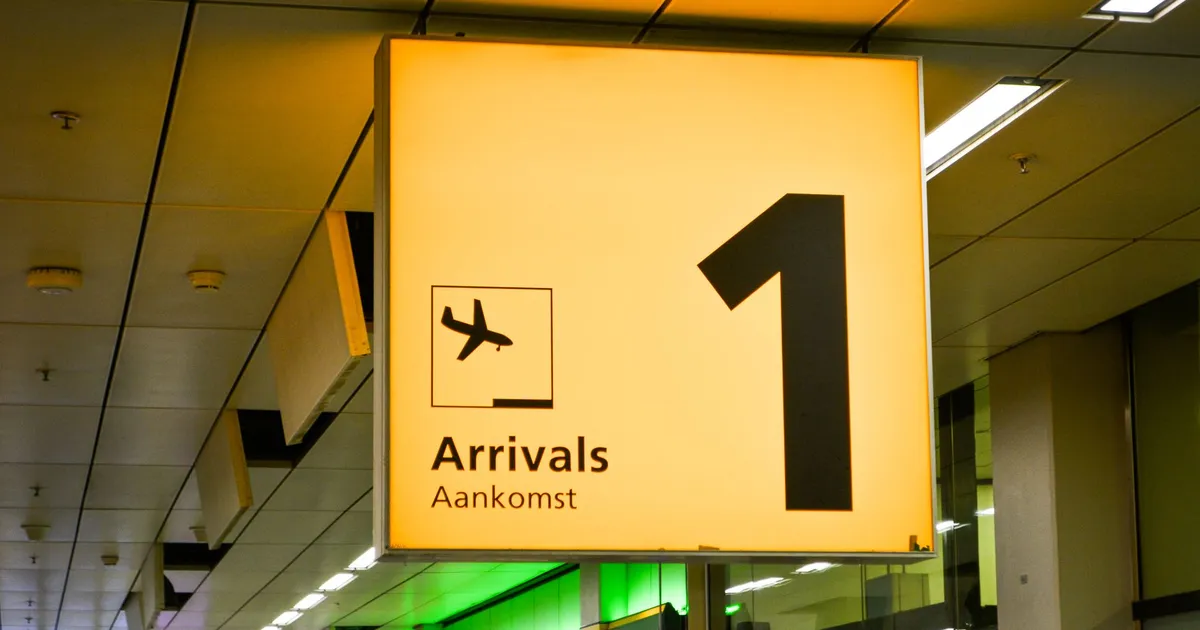
Auckland is heading into its biggest Chinese tourism summer on record, and the trigger was not a marketing blitz or a subsidy. It was paperwork removed. Auckland Airport expects China-Auckland capacity to rise 9% between November and March, adding a record 48,000 seats, within almost six million international seats scheduled through the airport, up 5% on last summer.
For hospitality, retail and attraction operators who have spent three years hearing that China would ‘come back eventually’, this is the first hard, dated demand signal. It deserves to be read that way.
The airlines have already placed their bets
The capacity is not speculative. China Southern is lifting Guangzhou-Auckland capacity 23% to a record 18 flights a week, Air China is adding 46% more Beijing capacity including double-daily services over Chinese New Year, and China Eastern is doubling its Shanghai-Auckland-Buenos Aires service from two to four weekly flights from early December, according to the NZ Herald’s breakdown.
Air New Zealand is adding more than 7,000 seats between Shanghai and Auckland from 23 January to 20 February 2027, taking weekly return services from seven to ten. Chief commercial officer Scott Wilkinson says the move responds to strong customer demand and will also open up more cargo space for exporters shipping into China.
Airlines do not add frequencies on hope. They add them when forward bookings justify the aircraft.
Why China was the last to recover
China was New Zealand’s second-largest source market before the pandemic and the slowest to return. As recently as February 2026, Chinese arrivals were still only 64% of pre-pandemic levels, even after a 48% year-on-year jump.
Westpac senior economist Darren Gibbs says “of all our markets, China was probably the slowest to recover”, and points to weak household finances in China, where residential property prices have fallen 22% since 2021. Yet he calls the visa changes “probably crucial” to the added demand.
Two changes did the heavy lifting. From November 2025, Chinese nationals could transit New Zealand on an NZeTA rather than a separate transit visa. And an Immigration NZ trial, also from November 2025, let eligible Chinese passport holders travel on from Australia without a separate NZ visitor visa. The effect was immediate. Over last summer, Chinese visitors arriving in Auckland via Australia rose 147%, against 17% for direct arrivals.
That is about as clean a policy result as government gets. No grants, no new agency, just less friction at the border.
The money is already landing
China added 67,000 visitor arrivals in the June 2026 year, reaching 315,400 visitors as the third-largest source market. By July, total overseas arrivals had edged past pre-Covid levels for the first time, and China’s share of arrivals was back to 11%, matching July 2019.
These are high-value visitors. Chinese travellers recorded the highest median daily spend of any market at $508, up 30%, well ahead of Americans. Auckland Airport estimated earlier this year that Chinese tourists were spending around $1.1 million a day in the city. Hotels have felt it, with a 60% jump in Chinese visitors helping drive a 19.6% rise in Auckland hotel revpar.
One caution for anyone building a business case on the spend data. MBIE corrected a weighting error that had lumped China in with Hong Kong and Macau, lifting China’s measured share by 11 percentage points. The arrival growth is real, but part of China’s jump in survey share is a restatement, not new tourists.
Plan around the calendar, not the headlines
The practical upside here is timing. Operators know which routes are growing, by how much, and when. China Eastern’s extra frequencies start in early December. The Chinese New Year peak, Year of the Goat, runs through late January and February. That is enough lead time to roster Mandarin-speaking staff, adjust inventory, package tours and set pricing before demand arrives rather than after.
The Buenos Aires route is worth watching too. It is turning Auckland into a transit point between Asia and South America, with knock-on cargo benefits for freight and logistics firms.
The risks are genuine. Chinese household confidence remains fragile, and a further downturn in China’s economy would hit discretionary travel first. But the bigger near-term risk sits in Wellington. The Australia visa-waiver trial was set to run for 12 months from November 2025, which puts its end date right at the start of the busiest Chinese summer Auckland has ever scheduled. If the policy that unlocked a 147% surge is not confirmed beyond its trial period, the government will have demonstrated exactly what works and then switched it off. Ministers should lock it in before the first of those 48,000 seats lands.
Sources
- NZ Herald: Chinese visitors to Auckland to reach record high this summer, with airlines adding 48,000 seats (2026-10-13)
- Inside Tourism: Air NZ adds extra services for Chinese New Year (2026-09-30)
- Infometrics: Chinese visitors boost arrivals in February (2026-04-14)
- Stats NZ: International travel May 2026 (2026-07-14)
- Stats NZ: Annual visitor arrivals up 9 percent (2026-08-14)
- Stats NZ: International travel July 2026 (2026-09-14)
- MBIE: IVS Release – Key Highlights (Year ending June 2026) (2026-09-01)
Join the discussion
Add useful context, ask a good question, or challenge an idea — keep it specific and respectful.