

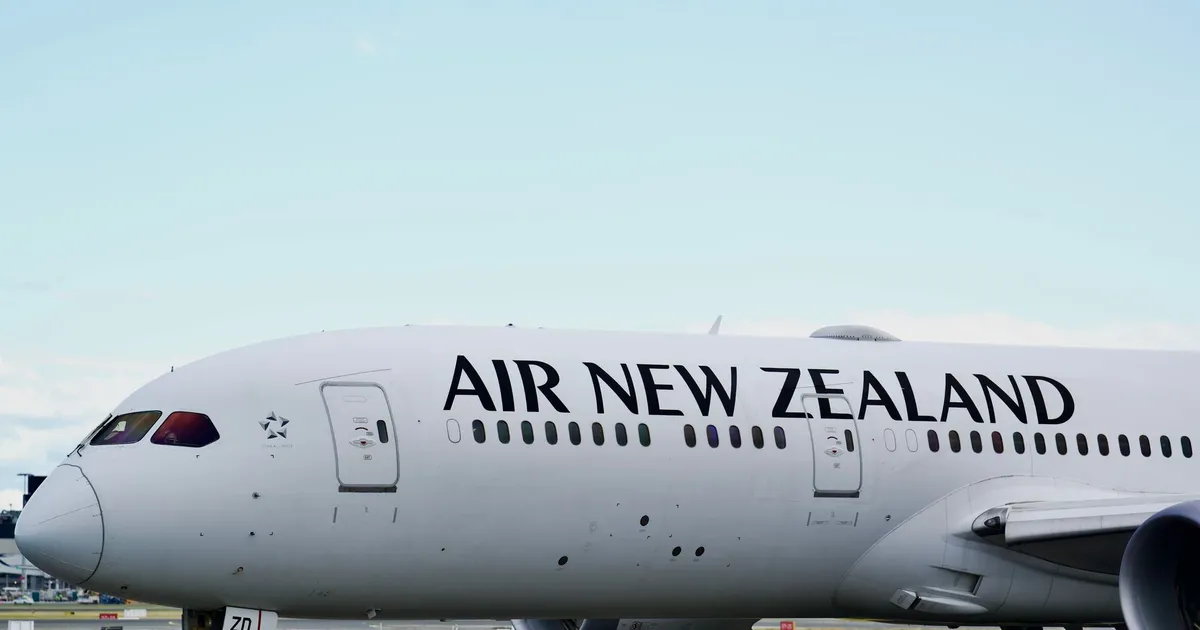
From 7 April 2027, a Kiwi sales manager flying to a client in Townsville, Launceston or Newcastle will need two tickets instead of one. Air New Zealand and Qantas are ending their codeshare after eight years, and Air NZ travellers will lose seamless connections to more than 60 Qantas destinations across Australia.
Most coverage has treated this as a frequent flyer grievance. For any business whose customers, suppliers or project sites sit outside Sydney, Melbourne, Brisbane, Perth and Adelaide, it is something more practical. It is a small but real increase in the cost of doing business in New Zealand’s largest export market.
One ticket did more work than it looked
The 2018 deal, struck after Air NZ’s Virgin Australia alliance ended, let Air NZ put its code on up to 85 Qantas domestic routes, with Qantas coding up to 30 Air NZ domestic services in return. In practice, that meant one booking from Auckland or Christchurch through to a regional Australian city, bags checked all the way, and a single airline on the hook if anything went wrong.
That last point is the one business travellers will feel most. After April, a delayed trans-Tasman leg that causes you to miss a separately booked Qantas, Jetstar, Virgin or Rex connection in Sydney becomes your problem, not the airline’s. Firms will need longer layovers, more buffer days and more admin time to book and manage fragmented itineraries. For a service firm sending technicians to a mine site or a food exporter visiting regional distributors, that is time billed to nobody.
Qantas is not retreating, it is competing
Qantas’s explanation is commercially straightforward. The airline says more customers now fly direct on its own and Jetstar’s expanded trans-Tasman and New Zealand domestic services, and that the Air NZ partnership made up less than 0.1% of its frequent flyer reward bookings and redemptions.
Read that alongside its recent moves and the strategy is obvious. Qantas has been building an Auckland hub, complete with a new lounge, and is taking on Air NZ directly with Auckland-New York and Auckland-Samoa services. It no longer wants to feed its biggest regional rival. That is a rational business decision, and more head-to-head competition on the Tasman should be good for fares over time. But the regional Australian connectivity that Kiwi firms relied on was a by-product of cooperation, and it disappears with it.
Connections are the market, not the exception
The scale of the dependence on connecting itineraries is easy to underestimate. A 2025 Motu report for the Ministry of Transport counted 462,002 passengers on indirect NZ-Australia routes against 26,261 on direct routes in the city pairs it analysed. The same report put average fares at $532 on direct routes and $465 on indirect ones. Connecting travel is not a niche, and making it clunkier pushes some travellers towards dearer or less convenient options.
This risk was flagged years ago. In a 2023 submission, NZ Airports warned that New Zealand is “comparatively vulnerable to reductions in air capacity” because so few airlines are based here and the population is small, and urged officials to monitor capacity and competition regularly. A codeshare ending for loyalty programme reasons in Sydney, with knock-on effects for exporters in Hamilton, is exactly the kind of exposure it described.
Air NZ is not in a position to fill the gap alone
Do not expect Air NZ to launch a string of direct flights to regional Australia. Its June 2026 operating statistics show domestic capacity cut 3.6% due to fuel costs and load factor down to 81.4%. International short-haul capacity did rise 3.6% on new A321s, but that growth is going into proven routes, not speculative regional ones. An airline managing every seat this tightly will lean on partners, not its own balance sheet.
Virgin is the deal to watch
That partner may be Virgin Australia. It has asked the ACCC to let it expand its trans-Tasman codeshare with Air NZ to include each other’s domestic flights. If approved, Kiwi travellers could regain one-ticket access to much of regional Australia, and the Tasman would end up with two competing alliances rather than one cosy arrangement. That is the best outcome on offer, and a better market than the one being dismantled.
But it is an application, not a deal. Until the ACCC rules and Virgin’s network maps are published, businesses with regional Australian exposure should plan for April 2027 as if the gap is real. Budget more travel time, book connections with generous margins, and push corporate travel agents now on how they will protect fragmented itineraries. Qantas has made its choice. The regulator in Canberra will decide how much it costs New Zealand firms.
Sources
- Stuff: Who loses as Air NZ and Qantas end their codeshare (2026-10-13)
- Aero South Pacific: Qantas calls time on Air New Zealand codeshare partnership (2026-10-09)
- Travel Today: Tasman competition set to ramp up? (2026-10-09)
- Ministry of Transport: Motu Report Qantas American Authorisation 2025 (2025-11-09)
- NZ Airports: Submission on the Qantas and Emirates master coordination agreement reauthorisation (2023)
Join the discussion
Add useful context, ask a good question, or challenge an idea — keep it specific and respectful.