

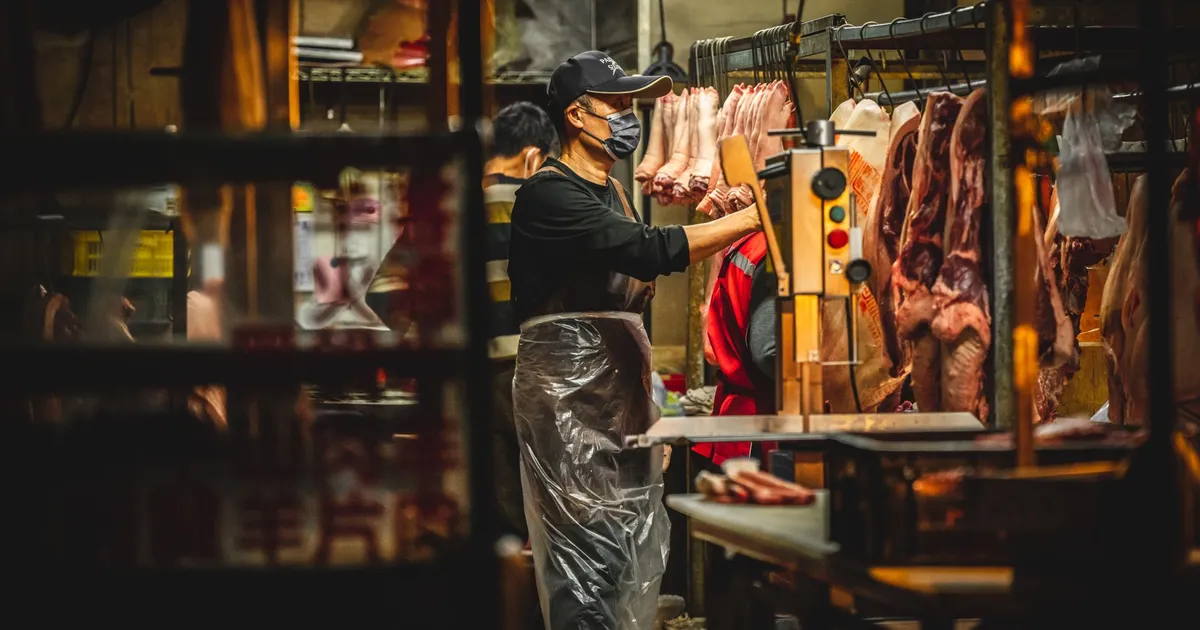
When Reuben Sharples, managing director of New Lynn’s Aussie Butcher, advertised for a meat packer, he got more than 1000 applications. About 120 arrived by email, then “another 870-odd on SEEK”, and they kept coming. The pool included a candidate with 20 years in aviation security, several rest-home workers and a computer engineer.
After working through the lot, he hired three people, one of them an apprentice.
That ratio is the story. A thousand applicants for a packing job looks like a simple glut of desperate workers. It is really a sign of a market where people and roles are failing to find each other, and that should worry employers more than the headline unemployment rate does.
Overqualified and still out of work
Sharples told 1News it was “daunting” to see applicants whose skill sets were “10, 20 times” what the role required, joking he could have built “something to go to Mars” with the people who applied.
The official data explains the desperation. Stats NZ’s June quarter release put unemployment at 5.6%, up from 5.4% in March, with 171,000 people out of work. The underutilisation rate, which captures people who want more hours, climbed to 13.8% from 12.9%. And this is not a one-quarter wobble. Reserve Bank figures show unemployment at 4.7% in June 2024, 5.2% a year later and 5.6% now. Three years of steady deterioration.
The jobs are coming back faster than the hires
Here is the part most coverage of the butcher story will miss. Demand for workers is recovering. MBIE’s Jobs Online data shows online job ads grew 7% in the year to June, the first growth after 11 straight quarters of decline. The rebound was led by manufacturing, construction and primary industries, concentrated in unskilled and machinery operator roles, exactly the territory of a meat-packing job. Treasury noted ads jumped 6.1% in June alone, even as hours worked fell 0.3%.
Employment grew too. BNZ economists said the 0.5% quarterly lift was “much more than the 0.2% we had anticipated”, yet unemployment still rose. Their explanation is blunt: “one reason for this may be a mismatch between skills needed and skills available.” They add that the sustainable unemployment rate “may well be higher than the 4.5%-ish the RBNZ has previously assumed.”
Translate that to New Lynn. An aviation security specialist and a computer engineer are technically available. Whether either will still be packing mince in six months is another question entirely, and Sharples clearly knew it.
A thousand CVs is mostly noise
Application volume has been an unreliable signal for a while. Squirrel chief executive David Cunningham recently described a “tsunami” of AI-generated applications, including more than 1000 for one role, and turned to AI screening just to cope.
The meat industry has seen this film before. In 2024, Trade Me applications in the Te Kūiti area were up 34.8% while listings fell 38.7%, yet three local meat works were still around 100 workers short. Universal Beef Packers’ production manager at the time, Steve Allen, said then that “the younger generation, it’s hard to get them to work”, and the firm shifted to hiring older staff. In early 2025, Pak’nSave Highland Park drew 2500 to 3000 applicants in a week for roughly 250 jobs.
Blame is easy, matching is hard
The EMA’s head of advocacy Alan McDonald says firms have been “focused on retaining the staff they already have” amid higher costs and weak demand, and that young people “are often the first to miss out because entry-level jobs become less available.” His fix is restoring business confidence.
The CTU’s latest report argues the Reserve Bank and the coalition’s fiscal approach are “largely to blame”. Tight monetary policy plainly did bite. But no stimulus package turns a computer engineer into a committed meat packer, or a reluctant school leaver into someone who turns up on day three. If BNZ is right about a higher structural floor, the answer lies in training pipelines and work readiness, not a bigger cheque.
What this means for anyone hiring
Wage pressure is not the constraint. Annual wage growth sits at just 2.0%. The cost that matters is the bad hire who quits in a month. Screen for trainability, genuine interest and staying power rather than CV polish. Lean on referrals, as Sharples advises, and budget for longer time-to-hire, not shorter.
BNZ thinks unemployment is “at or very near its peak” and should fall through 2027. That is welcome. But the cycle turning will not fix the matching problem. Employers in processing, trades and entry-level work should expect to keep wading through a thousand applications to find the three people who will actually stay.
Sources
- RNZ: West Auckland butcher gets 1000 applications for meat packer job (2026-10-13)
- 1News: West Auckland butcher gets 1000 applications for meat packer job (2026-10-13)
- Stats NZ: Labour market statistics, June 2026 quarter (2026-08-05)
- Treasury: Fortnightly Economic Update, 6 August 2026 (2026-08-06)
- BNZ Economics: Labour market at a turning point (2026-08-05)
- RNZ: One job ad, 1000 applicants: How do you stand out in a world of AI job hunters? (2026-09-02)
- Waikato Times: ‘The younger generation, it’s hard to get them to work’ – Te Kūiti meat works (2024-11-07)
- RNZ: Thousands apply to work at North Island’s biggest new supermarket (2025-02-24)
- EMA: Businesses holding back on hiring as labour market weakens (2026-08-05)
- NZCTU: Three years of pain, the state of the labour market 2023-26 (2026-10)
Join the discussion
Add useful context, ask a good question, or challenge an idea — keep it specific and respectful.