

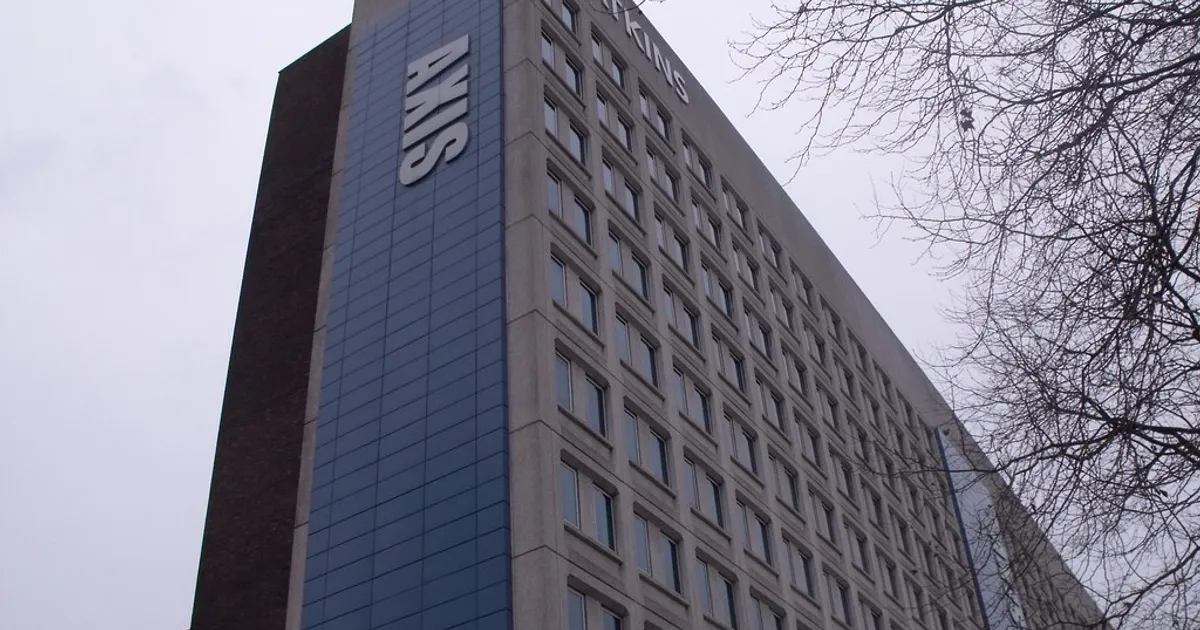
Dunedin’s office market has a headline problem. Prime vacancies have tripled over the past year, according to the Otago Daily Times, with one market source summing it up bluntly: “there’s just not a lot of demand.”
It is tempting to read that as hybrid work finally gutting a regional CBD. The numbers say something more useful, and more uncomfortable for owners of older buildings. Tenants are not leaving the office. They are leaving the wrong offices.
One move, one big multiple
CBRE’s latest data shows Dunedin’s overall office vacancy rose to 9.7% in June 2026, up from 9.4% a year earlier. That is a nudge, not a collapse.
The tripling sits in the much smaller prime-grade pool, and the main cause is a single tenant. ACC moved into its new building on Dowling Street, leaving a large block of backfill space in an older prime building behind. In a market Dunedin’s size, one big occupier relocating can triple a small prime vacancy rate while the city-wide figure barely shifts.
The geography tells the same tale. Dowling Street and High Street recorded the strongest positive absorption as tenants moved into newer stock. Rattray Street posted the largest vacancy increase, and Dunedin Central around Moray Place and Princes Street still carries the highest vacancy in the city. Money and tenants are flowing downhill to the modern buildings.
Nor is this a regional property slump. Over the same period Dunedin’s industrial vacancy fell to 2.7% from 2.9%, with more than 45,500 sqm taken up across 37 new occupancies. Businesses are expanding in Dunedin. They just want different space.
The South Island isn’t moving as one
CBRE’s South Island comparison undercuts any blanket hybrid-work narrative. Nelson’s office vacancy rose to 9.2% as tenants vacated secondary assets, while Queenstown’s sits at just 1.1% with industrial vacancy at zero. Invercargill saw vacancy fall across both office and industrial.
If remote work were killing office demand, Queenstown would not have a space shortage. Local economics and building quality are doing the heavy lifting, not Zoom.
Workers are coming back, not leaving
The timing of the Dunedin story is awkward for the doom crowd. A day earlier, CBRE’s national occupier survey found average attendance lifted to 3.6 days a week in 2026, up from 3.4 in 2025. Nearly a third of occupiers now run above 80% utilisation, up from 24% last year and 18% in 2024. And 44% cite business or headcount growth, not cost-cutting, as the main driver of their real estate strategy.
JLL’s April 2026 sentiment survey reached the same conclusion, describing “a clear shift from experimentation to optimisation”. Firms want more out of the space they keep, through better design and technology, rather than simply shedding square metres.
The big cities already ran this experiment
Auckland and Wellington landlords have been living this for two years. In late 2025, JLL put Wellington’s prime vacancy at 8.5% against 19.8% for secondary stock, while Auckland’s CBD split was 10.8% prime versus 22.1% secondary.
By September 2026 JLL was saying the flight to quality intensifies, with sustainability-certified buildings showing lower vacancy and landlords repositioning stock to lift prime supply in all three main centres. Owners who refurbished are filling floors. Owners who didn’t are discounting.
Dunedin is simply catching up, with the volume turned up because the market is small enough for one tenant to swing the averages.
What this means for tenants and owners
For occupiers, this is leverage. Bargaining power is concentrated in older and secondary buildings, and owners of half-empty floors on Rattray Street or Moray Place will be more flexible on incentives, fit-out contributions and lease terms than they were a year ago.
It is also a prompt to check what you actually use. In April 2026, workplace strategist Steffan Williams of Gaze Commercial warned most firms were “flying blind” on office costs, estimating a desk cost around $10,800 a year and that right-sizing could save a 125-person company about $270,000 annually. Utilisation has risen since, but the principle holds: a lease renewal is the cheapest moment to fix a bad fit.
For landlords holding ageing CBD stock, the choice is now binary. Spend to upgrade, on seismic, sustainability and amenity, or accept that tenants and rents will keep walking to the newer block down the street. Hybrid work didn’t create that choice. It just removed the option of ignoring it.
The next test comes when the ACC backfill space is relet, or isn’t. If it goes quickly at a discount, Dunedin’s tripling will look like a blip. If it sits empty, expect the repricing of older office buildings to spread well beyond one building and one street.
Sources
- Otago Daily Times: ‘There’s just not a lot of demand’: Prime Dunedin office vacancies triple over past year (2026-10-12)
- CBRE (LinkedIn): South Island vacancy surveys show different trends across office and industrial markets (2026-08-30)
- JLL: Office Sentiment Survey 2026 (2026-04-01)
- JLL: New Zealand’s Office Property Trends (2026-09-08)
- NZ Adviser: NZ companies ‘flying blind’ on office costs as hybrid work leaves expensive space sitting empty (2026-04-23)
Join the discussion
Add useful context, ask a good question, or challenge an idea — keep it specific and respectful.