

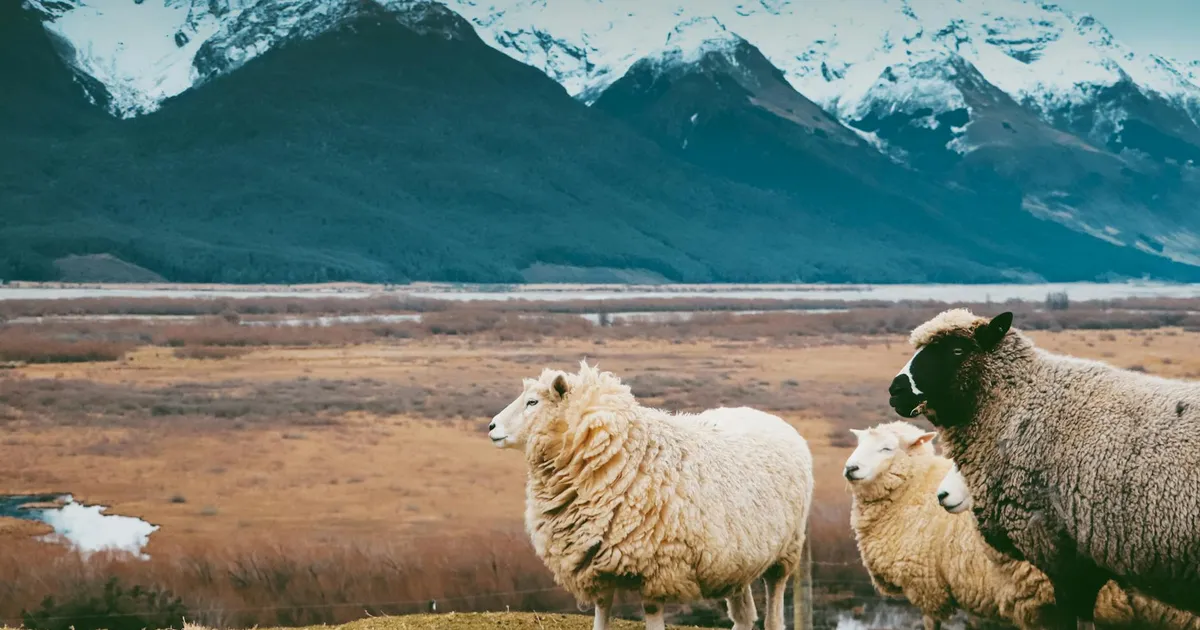
The sheep went first
Tim Edney, a property investment specialist whose portfolio spans vineyards, residential property and almost 6,000 hectares of pastoral land in the Lakes District, has cleared thousands of Simmental cattle and more than 1,800 Perendale sheep from Arcadia Station. The property, bordering Diamond Lake and Mt Aspiring National Park, has been converted to a dedicated film and tourism operation.
Edney bought Arcadia in 2020 from Jim Veint, with the property marketed at $15-20 million and attracting interest from American and European billionaires. At the time, he pledged to keep it as a working farm while reviving Queenstown’s film industry. That dual-use model lasted about five years before the economics forced a binary choice.
His reasoning is operational, not sentimental: “You can’t run a working farm and a high-volume filming operation at the same time without compromise.” Film crews need “controlled landscapes, predictable conditions, and minimal disruption”. Livestock wandering into shot is not compatible with that.
The genetic capital that walked out the gate
Jim Veint, now 87, farmed Arcadia for 70 years and built a Simmental stud that topped New Zealand’s national sale and produced back-to-back Supreme Show Champions at the Sydney Royal Easter Show. He performed more than 3,000 artificial inseminations and travelled to Britain, Germany and Switzerland to assess AI bulls.
That genetic capital, developed over decades, has now been dispersed at auction to farms across the South Island. Veint is measured about the loss: “Those bloodlines don’t just come back once they’re gone.” He believed “the two can work together if managed properly” and noted the animals “were part of the scenery, they helped shape the place as people know it.”
Edney was blunter: “You’re either supporting filming, or you’re not.”
The numbers that made the decision obvious
Arcadia has featured in almost 20 productions since 1958, including Peter Jackson’s Lord of the Rings and Hobbit trilogies, Chronicles of Narnia, and a Taylor Swift music video. New Zealand’s screen sector now generates $3 billion in total output and employs 26,960 people. Qualifying production expenditure for international films hit $647.1 million in 2024/25, and screen content drives an estimated $2.7 billion in tourism expenditure.
Pre-pandemic, tourism contributed $16.4 billion directly to GDP, employed 225,384 people, and generated $17.5 billion in export receipts. The property itself carries 11 consented residential sections, four lifestyle sections, and approximately 21 hectares zoned for rural visitor accommodation. The planning system had already anticipated this transition. The marginal return from running 1,800 sheep on land that commands premium rates from Hollywood is not a close call.
The risk nobody prices in
The agritourism model that Veint advocated, where farming and tourism coexist with animals providing both production value and visitor appeal, works for many properties. But for a high-volume film operation it is not viable, and Edney’s rejection of it is a signal about where the premium end of the land-use market is heading.
The problem is that tourism is volatile. Its share of GDP peaked at 10.4% in 2004 and 2016, crashed to 5.2% during COVID, and has only recovered to 7.5% by March 2024. The screen sector itself is heavily reliant on government incentives to attract international productions. If those incentives shift, or if a future pandemic shuts borders again, the economics that drove Edney’s decision change overnight.
But the sheep are already gone. Land converted away from farming does not easily convert back, and bloodlines developed over 70 years and 3,000 artificial inseminations do not reassemble at auction. Edney has made the rational choice for his balance sheet. The uncomfortable question for the pastoral sector is what happens when that logic scales, and the most scenic, highest-profile rural land in New Zealand is progressively allocated to experiences while the farming that shaped it is the first thing to go.
Sources
- Otago Daily Times: Glenorchy farm becomes fulltime film set
- NZ Herald: The Lord of the Rings farm Arcadia Station shifts from working farm to full-time movies, tourism
- Lakes Weekly Bulletin: Jim Veint – A rural champion
- NZ Herald: Richlister buys Glenorchy’s Arcadia Station, wants to revive Queenstown’s fortunes
- OneRoof: Gandalf’s favourite spot sells for multi-million-dollar sum
- NZ Film Commission: Lights, Camera, Impact
- Stats NZ: Tourism satellite account – Year ended March 2020
- Figure.nz: Tourism value added as share of GDP
- Agritourism NZ: The growth of agritourism in rural New Zealand