

The number that should worry everyone
Auckland Transport’s Airport to Botany (A2B) project is an 18km busway with 12 stations connecting Auckland Airport to Botany Town Centre. It is the next major piece of Auckland’s rapid transit network, integrating with four existing and proposed lines. On paper, it is exactly the kind of infrastructure a growing city needs.
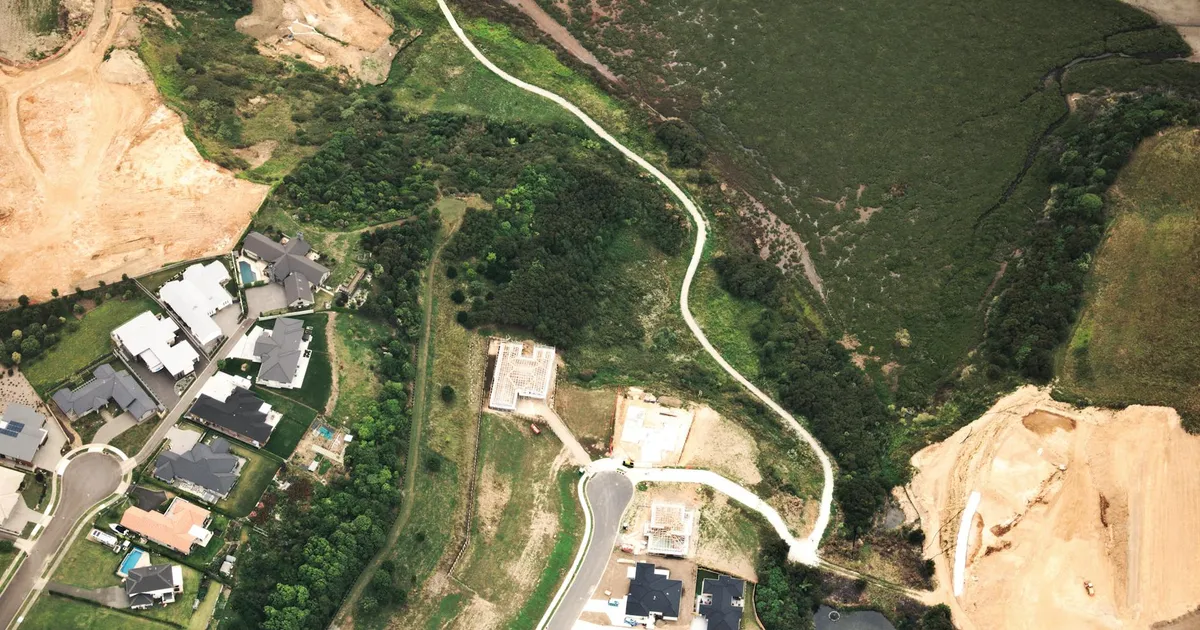
The problem is the corridor. Some 630 properties sit inside the acquisition zone. For context, the Eastern Busway from Panmure to Botany required purchasing over 400 properties in total, and Auckland Transport’s Jane Small issued just four compulsory acquisition notices across six years. The A2B starts 50% larger by property count before a single notice has been sent.
New Zealand’s last compulsory acquisition under the Public Works Act was in 2014, covering three properties, and took at least two years. Scaling that process to hundreds of acquisitions is not an incremental challenge. It is a fundamentally different operation.
Burswood showed what happens when the route shifts
The Eastern Busway offers a preview of how these fights play out. In late 2021, Auckland Transport abruptly announced a route change away from Ti Rakau Drive into the Burswood residential suburb, roughly 300 metres north. The rationale was blunt: the new alignment would save approximately $30 million by avoiding commercial property acquisitions and reduce construction time by 12 to 18 months.
The cost fell on homeowners. Around 40 homes faced demolition and 30 properties partial acquisition. More than 500 people signed a petition to move the busway back. AT’s Duncan Humphrey defended the late disclosure by arguing they hadn’t settled on the option and didn’t want to “stir up uncertainty”. Residents wanted transparency. They got a fait accompli.
The Eastern Busway’s final Botany link section eventually received $101 million in confirmed funding split 51/49 between the National Land Transport Fund and Auckland Council, with forecast patronage of 18,000 passengers per day by 2028. But the Burswood episode demonstrated a pattern: AT will route around commercial properties and through residential ones when the numbers justify it.
The compensation framework has improved but not enough
The Public Works Amendment Bill has lifted the home-loss base payment from $35,000 to $50,000 and introduced an incentive payment of 10% of land value, capped at $100,000, for voluntary sale before a Notice of Intention is issued. Projects on the critical infrastructure track offer better terms: 15% of land value up to $150,000 for early sellers, plus a 5% recognition payment capped at $92,000 for all acquired landowners.
Those numbers sound reasonable until you read the fine print. AT’s own cost estimate report explicitly excludes business loss, relocation costs, court hearing costs, and temporary occupation rental from its property cost calculations. The headline acquisition figure is not the full cost to affected parties.
Lawyers Jenny Turner and Mike Doesburg at Wynn Williams have noted that “full compensation” under the Act is often less than the “special value” land holds for its owner. The imaginary market concept, where valuers assess what a property would be worth without the project in prospect, consistently produces figures that fall short of replacement cost in a tight market.
The price of not buying early
New Zealand’s failure to protect land corridors ahead of construction is compounding every project’s cost. A Cabinet paper from early 2024 flagged a stark example: land for the Opaheke North-South Arterial Road would cost $78 million today but is projected to cost $1 billion if purchased 10 to 20 years later. Australia has demonstrated the alternative, where land protection saved an estimated A$10.8 billion across seven transport projects.
The A2B’s staged delivery timeline runs to 2040 for full infrastructure. Properties sitting under a designation for years before construction begins face planning uncertainty that is particularly punishing for businesses needing to invest in their premises. You cannot expand a warehouse or renew a lease with confidence when the Crown might acquire your site in five years, or fifteen.
This is not just Auckland’s problem
Wellington’s Petone to Grenada road has flagged up to 200 potentially affected properties. Transpower has told Parliament it faces “unprecedented” infrastructure delivery with electricity demand forecast to grow more than 60% by 2050. Matt Fanning of Transpower stated plainly: “We really need the Public Works Act to be fit for purpose.”
Law Association property lawyer Phil Shannon sees the reforms differently, arguing they have shifted the balance “too far towards speed and executive power” and away from independent oversight.
Both sides have a point, which is precisely the problem. New Zealand needs to build infrastructure at a pace and scale it has not attempted in decades, using a property acquisition system that has barely been tested. The 630 properties on the A2B corridor are not just an Auckland Transport headache. They are the first real measure of whether this country can still build big things without drowning in property conflict for a generation.
Sources
- A2B Project Cost Estimate Report – Auckland Transport
- Sudden busway plan change threatens 40 Auckland homes – 1News (2021-11-11)
- 40 Auckland homes closer to being lost after busway decision – 1News (2022-07-06)
- Eastern Busway: Funding for final section confirmed – NZ Herald
- PWA land valuation is tricky business – Local Government Magazine
- Govt investigates securing land for housing and roads decades ahead – Newsroom (2024-02-28)
- Up to 200 properties may be directly affected by Petone to Grenada road – RNZ
- Transpower needs fit for purpose Public Works Act – RNZ