

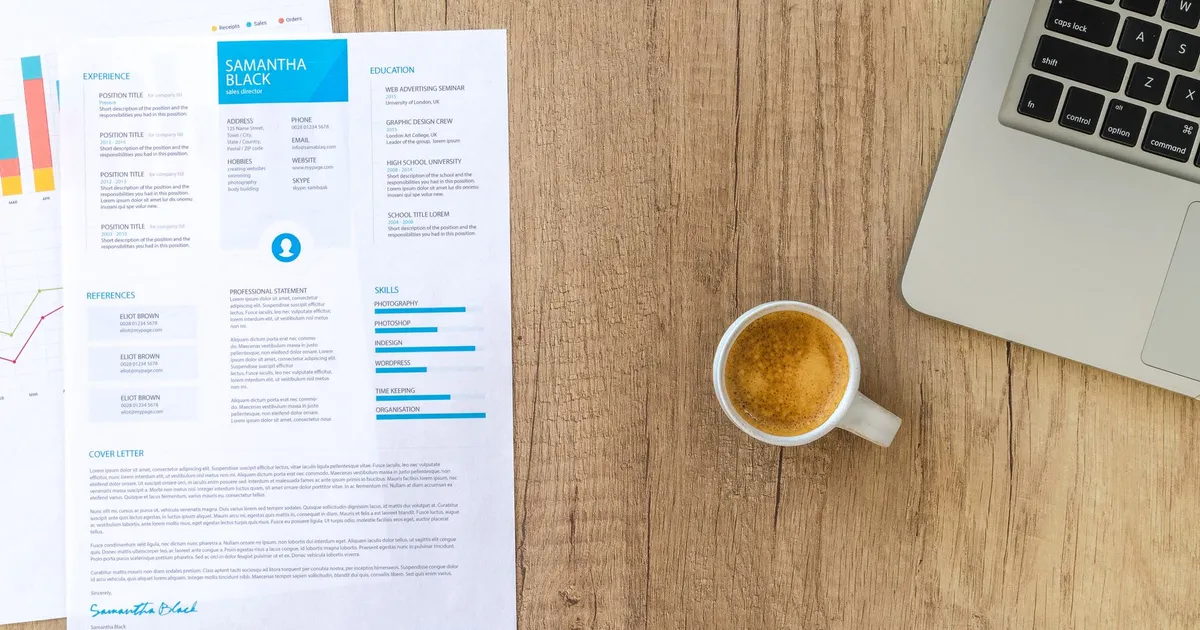
The filter that used to work has collapsed
Applying for a job used to cost something. Researching the company, tailoring a CV, writing a cover letter that meant something – that effort was itself a filter. It quietly weeded out the unserious and the irrelevant, and the cost sat with the candidate. That barrier is gone.
Squirrel chief executive David Cunningham told RNZ his company received more than 1,000 applications for a single role, most of them clearly AI-generated. “AI is good at ‘match my current CV to this job, update accordingly, and write a cover letter’,” he said. His verdict on those cover letters is blunt: “The cover letters are a waste of time now really, because you can write a cover letter to make it sound like you’re a perfect fit for any job.”
That is the crux of it. The old signal – a well-written, tailored application – now signals nothing, because anyone can generate one in seconds.
A recovering market with a candidate glut
This is not happening in a dead labour market. Quite the opposite. SEEK reported in May 2026 that job ad volumes were up 12.2% year-on-year, an 18-month run of monthly growth and the highest level in over two years. MBIE’s Jobs Online data showed online advertisements up 11.8% in the year to March 2026, a third straight quarter of annual growth after 11 quarters of decline.
But there are still far more people chasing roles than roles to fill. Stats NZ figures cited by RNZ put unemployment at 5.3% in the first quarter of 2026, with youth unemployment at 14.4%. More jobs than two years ago, but still a deep oversupply of candidates – ideal conditions for AI-assisted mass-applying.
The cost has moved to your desk
The effort that used to sit with candidates has transferred almost entirely to employers. Hayley Pickard, managing director of recruiter Fortitude Group, described the reality to RNZ: “I regularly receive applications that use the exact terminology from the job advertisement but provide no real evidence behind it.” Skills lifted straight from the ad appear in the application with no examples of when, where or how they were gained.
The result is what she calls “screening fatigue.” Working through hundreds of near-identical applications, employers are not hunting for the most beautifully written one. They want three answers, fast – can this person do the job, are they genuinely interested, and can I trust what they have told me. Her counterintuitive conclusion is one worth pinning up in every HR department: “A straightforward, specific and recognisably human application can now stand out more than an extremely polished one.”
AI screening AI, and everyone pays a subscription
The predictable response has been an arms race. Employment Hero reported running more than 2,500 AI-led interviews in a single month in New Zealand, with its local customer base up 60% in two years. Chief executive Neil Webster explained the logic: “If you’ve had 200 people apply for a role, you need to be able to quickly comb that down and rank those employees, so the AI does that and gives you a shortlist.”
Candidates, in turn, are optimising for the machines. A Te Awamutu CV-writing business reported its customer base up 50% year-on-year, with operator Sarah Wrightson noting CVs are “scanned for the key words, job titles, formatting – and if they don’t match closely enough, they get rejected instantly.” AI writes the application, AI screens it, and a CV consultant sits in the middle collecting fees. Nobody has actually improved the match.
The candidate you’ll never know you lost
The risk most employers underestimate is not the dud who slips through. University of Otago associate professor Paula O’Kane put the asymmetry plainly: “It’s the people who miss that are the biggest risk rather than the people you put through that you shouldn’t have put through.” A false positive gets caught in later rounds. A strong candidate filtered out by an algorithm is simply gone, and you never learn what you missed.
There is a legal edge to this too. An April 2026 HR industry analysis warned that AI is supercharging applicant numbers while stripping CVs of real signal. Screening tools trained on historical hiring data can reproduce past bias at scale, and the employer, not the vendor, wears the liability. If your screening tool is a black box you cannot explain, you cannot defend a discrimination claim either.
What actually works now
The employers navigating this well have drawn the same conclusions. Treat cover letters as near-worthless for assessing fit. Screen on verifiable specifics – what you did, where, when, how. Run a short early-stage phone or video call, which separates genuine candidates from polished noise faster than any document ever will. And keep a human making the final call. The written application, once the whole game, is now the least reliable thing in the pile. The signal is in the conversation, and finding it is the cost of hiring in 2026.
Sources
- One job ad, 1000 applicants: How do you stand out in a world of AI job hunters? (2026-09-02)
- AI is interviewing thousands of Kiwi job seekers (2026-05-21)
- AI causing headaches for both job hunters and recruiters (2026-05-06)
- SEEK Employment Report – May 2026 (2026-05)
- AI is flooding your talent pipeline – but not always with the right people (2026-04-07)