

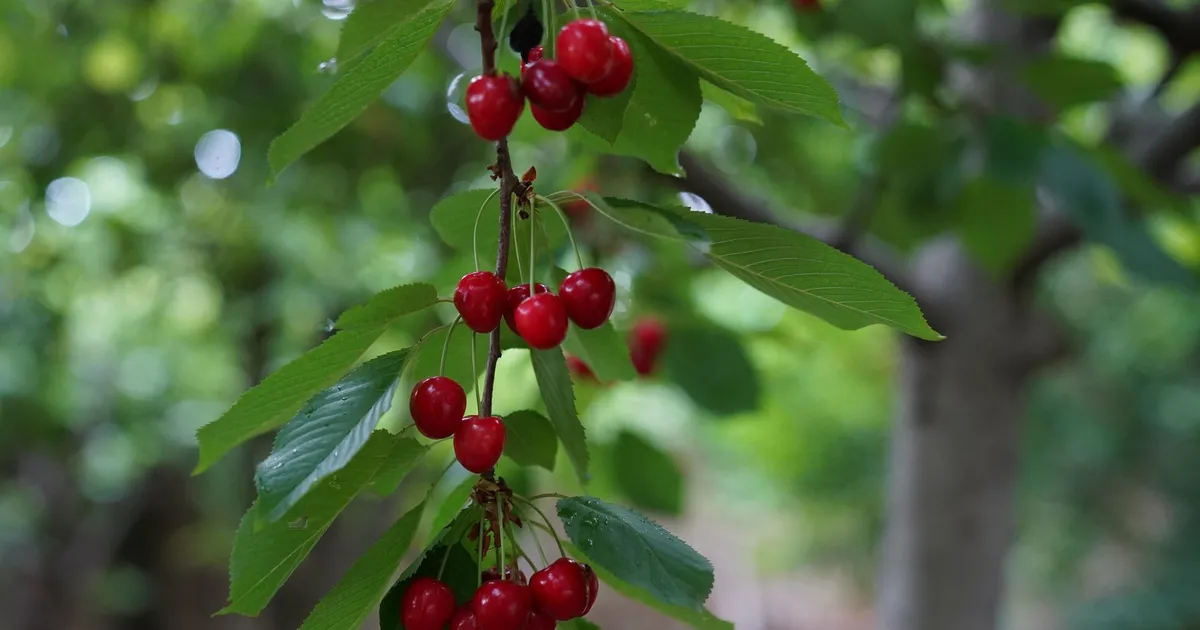
Central Otago District Council wants to modernise its rating system, and on paper the case looks tidy. Most councils already rate on capital value, so why not Central Otago? The problem is what the council has chosen to count as capital. Under its proposal, the cherry trees, apple trees and grapevines behind the district’s best-known industry go into the rating base. The pine trees on the forestry block over the fence do not.
That is not a technicality. It means the businesses that turned Central Otago into a brand are being treated as a convenient pool of rateable value. It comes just as the fruit sector is warning that “there’s nothing left”.
Three options, one obvious target
The council consulted from 3 August to 4 September on three options. It could switch from land value to capital value, switch and add a commercial differential, or keep the current system. Any change takes effect from 1 July 2027.
Chief financial officer Paul Morris argues that “capital value gives a more complete picture of a property’s worth as it reflects the land and everything on it”. That is a fair point for a house or a warehouse. But the council’s FAQ is explicit that “commercially grown fruit trees and grapevines are calculated as part of capital value” under the change, while trees on forestry blocks are not.
The same FAQ projects that most residential ratepayers will see a reduction. Rates are a fixed pie, so if houses pay less, someone else pays more. A planted orchard is not a decorative improvement. It is the productive plant of a food business, and it already generates taxable income. No council would rate a manufacturer on the value of its machinery. Rating an orchardist’s trees is the horticultural equivalent.
Option B would go further, adding a commercial differential on top. Growers could face both changes at once.
Gisborne already ran this experiment
Growers have seen this film before. When Gisborne valuations capitalised Zespri SunGold licence values into rateable land, kiwifruit growers were stunned by the rates bills that followed. The dispute went to the Land Valuation Tribunal and then on appeal, with growers calling it a “rates grab”. At the time, Federated Farmers flagged the same inconsistency now at issue in Central Otago. Pine trees were excluded from valuations, while perennial crops such as kiwifruit, grapes and apples were included.
There is one difference. Gisborne’s problem arose through a contested valuation call. Central Otago would be choosing the asymmetry as a matter of rating policy. The council has built a calculator so individual ratepayers can check their own property. But nothing it has published shows sector-wide modelling of what capital value rating does to a typical cherry orchard or vineyard, as opposed to an average residential section.
A sector its own valuers call subdued
The timing is hard to defend. The council’s March 2026 revaluation described the horticulture market as “subdued amid challenging climatic and financial conditions”, with cherry orchards under the most pressure. The same revaluation found horticultural land value up 7.5% since 2022, against 5.9% for capital value. In other words, the dirt is appreciating faster than the orchards on it, which points to lifestyle and subdivision demand rather than fruit margins.
The national picture is healthier. Fruit exports reached $6.1 billion in the year to November 2025. But a kiwifruit-led national number says little about a frost-hit cherry grower in Cromwell. In its 2025 annual report, Horticulture NZ criticised valuation approaches that price productive land by its potential sale price rather than its suitability for growing food. Its warning was that this undermines the strategic value of irreplaceable growing land.
Growth should pay for growth
Central Otago is not short of momentum. District GDP rose 3.5% to $2.15 billion in the year to March 2026, against 0.8% nationally. Much of the pressure on council infrastructure comes from residential expansion, tourism and lifestyle subdivision.
Shifting rates off residential sections and onto orchards takes money from the sector that defines the district. It uses that money to cushion the households driving the demand. Even the narrower apple and pear sector generated $39.3 million in direct orchard revenue and supported 122 jobs in 2023. Cherries, stonefruit and wine add substantially more.
What councillors should demand before voting
The consultation has closed, but the decision has not been made. Before councillors deliberate, they should insist on three things.
- Published modelling of rates impacts by sector, not just for the median house.
- Consistent treatment of trees. Either perennial crops sit outside capital value like forestry, or the council explains why a grapevine is an improvement and a radiata pine is not.
- An honest look at whether Option C, the existing land value system, is the fairer settlement for a district whose economic identity is grown on its land.
If the council wants to keep growers, it should stop rating them like land bankers. Otherwise it risks taxing the orchards until the subdividers it is trying to manage are the only buyers left.
Sources
- Otago Daily Times: ‘There’s nothing left’: Rating changes for Central Otago will hit growers hard, fruit sector says (2026-10-05)
- Otago Daily Times: Rates review consultation nears close as council weighs three options (2026-09-02)
- Let’s Talk Central Otago: FAQs, Rates Review 2026 (2026-09-07)
- Central Otago District Council: New rating valuations for Central Otago (2026-03-11)
- Farmers Weekly: Kiwifruit growers stunned by rates decision
- Inkl: Kiwifruit bonanza for councils is ‘rates grab’ to growers
- Stats NZ: Fruit exports surpass $6 billion for the year ended November 2025 (2025-11-01)
- Horticulture New Zealand Annual Report 2025 (2025-03-31)
- Infometrics: Regional Economic Profile, Central Otago District economic growth (2026-03-01)
- New Zealand Apple and Pear Industry Economic Contribution Review 2024 (2024-10-01)
Join the discussion
Add useful context, ask a good question, or challenge an idea — keep it specific and respectful.