

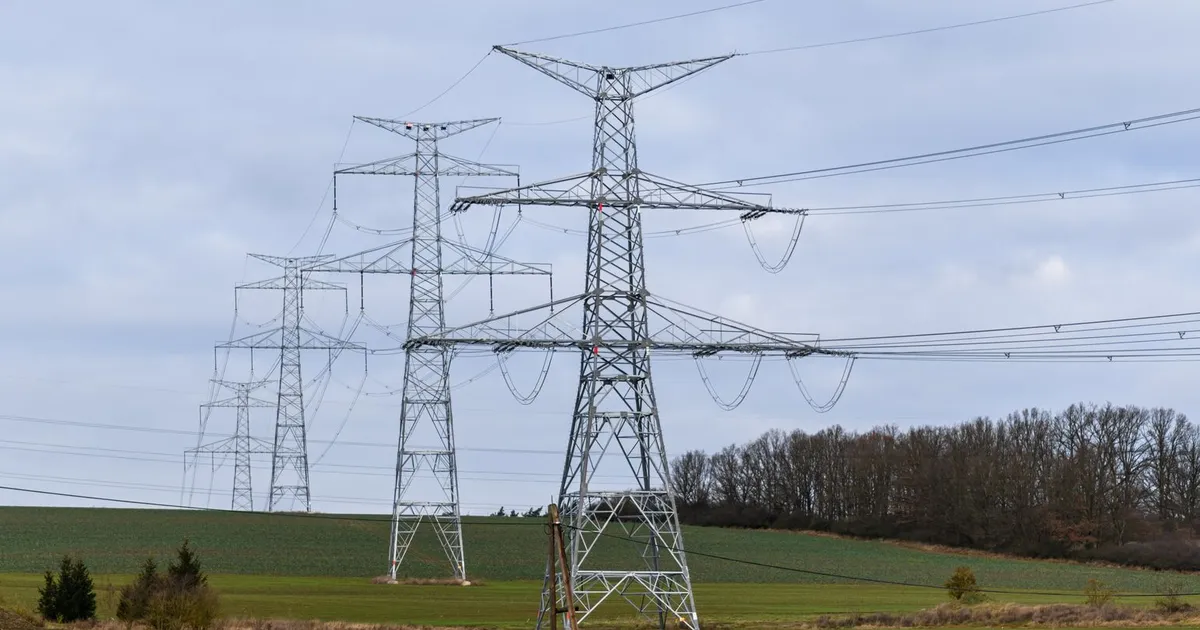
National has picked a new villain for the power-bill fight, and for once it is the right one. The party’s nine-point energy policy, released today by energy spokesman Simeon Brown, moves the cost-of-living argument away from generators and onto the 28 regulated lines companies whose charges sit inside every bill.
For business, this matters more than any household rebate. Lines charges are a structural cost. You cannot shop around for them, and they are largely insulated from the competition that is now pushing wholesale prices down.
Generation got cheaper, the wires did not
Brown’s pitch starts with a success story. He says New Zealand is in its “biggest renewables boom in a generation“, with significant falls in wholesale prices over the past year. “But the price of electricity itself is only one part of a power bill,” he says.
The numbers back him. Government figures released in August show the average power bill rose 8% in the past year, with roughly two-thirds of that rise coming from lines charges, even though they make up only about 24.5% of the bill. The Electricity Authority separately found lines charges drove 54% of the 6.8% increase in the first half of 2026.
In other words, the competitive part of the market is delivering. The monopoly part is eating the gains.
A price path set at peak interest rates
The culprit is a regulatory decision most business owners have never heard of. In November 2024, the Commerce Commission set distribution businesses’ allowable revenue at $11.5 billion over five years to March 2030, a 47% real increase on the previous period. Combined with Transpower’s allowance, that was estimated to add around $10 to $25 a month to household bills in the first year alone.
That revenue allowance baked in the cost of capital at a time when interest rates were near their highs. Rates have since fallen sharply. The cap has not moved, because it is fixed for five years. National wants Part 4 of the Commerce Act reviewed and “affordability” written into law as a core Electricity Authority objective, alongside competition and reliability.
Both are sensible. A regulator told to weigh affordability equally is a regulator that has to justify every gold-plated substation.
The fix lands after the problem
Here is the catch National is not advertising. The review is pitched “ahead of the next price reset”, and the current path runs until March 2030. Unless a new government reopens the existing settlement, which would invite legal fights with the lines companies, businesses will pay the 2024 price path for another three and a half years regardless of who wins the election.
That is not a reason to oppose the policy. It is a reason to be realistic about it. The more immediate wins are the smaller planks: forcing lines companies to approve small-scale solar connections within two working days with automatic compensation for delays, letting customers choose their own connection contractors, and opening transmission to private investment. The Electricity Authority has already flagged one customer who received quotes ranging from $20,537 to $76,738 for the same connection from the same lines company. Contestability would sort that out faster than any review.
Merging monopolies is not the answer
The tempting populist fix, forcing the 28 companies to amalgamate, has already been tested and found wanting. MBIE’s analysis, drawing on Frontier Economics, concluded consolidation might not significantly reduce prices, because efficiency tracks customer density more than scale. As Energy Minister in July, Brown himself said forced amalgamation was not required at this time.
The industry has a point too. In April, Electricity Networks Aotearoa chief executive Tracey Kai argued that lines companies face the same labour, materials and financing pressures as everyone else, and that deferred maintenance only becomes costlier later. Much of the network dates from the 1960s and 1970s. It needs replacing.
The $32 billion question for business
That is the real issue. Lines companies are forecast to spend more than $32 billion over the next decade, and consumers will fund all of it. The debate is not whether to spend but whether every dollar is spent well, and right now the regulatory settings give lines companies little reason to economise.
For coolstores, processors, manufacturers and anyone running heavy loads, the lesson is straightforward. Do not budget on falling wholesale prices flowing through to your delivered cost. Track the lines component of your bill separately, push your network company on connection costs, and take on-site generation seriously.
National has correctly diagnosed where the money is going. Whoever governs after the election will be judged on whether the 2030 reset is built for a world of cheaper capital and tougher scrutiny, or simply rolls the same generous assumptions forward for another five years.
Sources
- NZ Herald: Election 2026: National pivots cost of living focus to lines companies with energy review (2026-10-01)
- 1News: Govt targets power line companies as spending forecast hits $32 billion (2026-08-19)
- The Post: MBIE seeking ways to contain expected increases in electricity lines charges (2026-08-18)
- Commerce Commission: Default price-quality paths for electricity distribution businesses from 1 April 2025, final decision (2024-11-20)
- Commerce Commission: Final revenue limits and quality standards for electricity lines companies for 2025-2030 (2024-11-20)
- NZ Herald: Energy Minister Simeon Brown calls on power networks to tackle scale and cost pressures (2026-07-08)
- ENA: Yes, power bills are rising, but keeping them low will cost us more in the long run (2026-04-01)
- National Party: Network efficiency needed for more affordable power, Govt says (2026-08-19)
Join the discussion
Add useful context, ask a good question, or challenge an idea — keep it specific and respectful.