

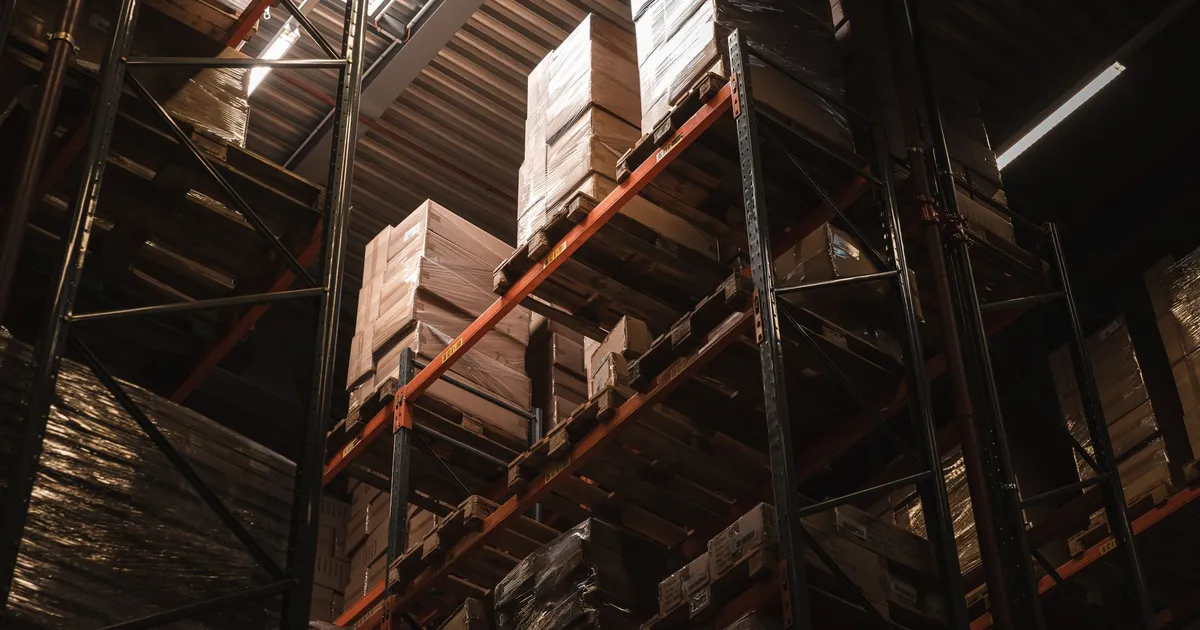
From orchards to export infrastructure
The land 10km southwest of the Christchurch CBD used to grow apples. The Kain brothers ran their Apple Fields orchards there, and Heinz Wattie’s held a 61-hectare vegetable plot. Today that ground has been assembled into the 150-hectare Hornby Quadrant, and what it produces now is freight capacity for the South Island export economy.
Calder Stewart, the privately owned Otago family firm developing the precinct, is roughly halfway through a build-out valued at $3 billion on completion. A new Lactalis distribution centre handling chilled, frozen and ambient dairy is now operational, and Glassons has a large-format clothing warehouse on site. Property director Ben Stewart’s summary is blunt: “It’s evolution.”
The tenant roster is the proof
Warehousing is not glamorous, but the names inside Hornby Quadrant tell you this is not a speculative punt. The April 2026 tenant list reads like a directory of South Island distribution: Foodstuffs South Island’s distribution centre for the region’s dominant grocery cooperative, six Fletcher Building subsidiaries including Winstone Wallboards, bed maker Sleepyhead, transport operator Penske, Japanese-owned packaging firm Oji Fibre Solutions, and NZX-listed meal-kit provider My Food Bag.
The standout is Dairyworks, which moves roughly 80% of New Zealand’s cheese through its chilled warehouse. Add Lactalis, the French dairy multinational, and Hornby Quadrant becomes a genuine node in the country’s food supply chain rather than a suburban business park.
Why Christchurch had no choice
The sharper business story is scarcity. Commercial land in Christchurch has doubled to almost $500 per square metre over the past five years, and Hornby Quadrant is described as one of the last remaining sites capable of supporting facilities of 40,000sqm or more. For distributors chasing scale, there is nowhere else to go.
Stewart put the driver plainly in April 2026: “Rapid advancements in automated search and retrieval technologies are incentivising companies to look for locations that can support the establishment of much larger and intensified operations.” He was equally direct about the cost of inaction, warning that the shortage of large sites “has the potential to limit economic growth, drive up land prices even further, and force businesses to look outside Christchurch”. The precinct is not ahead of demand. It is filling a gap the market could not otherwise close.
Record exports flowing through the cold chain
The timing lands well. New Zealand’s goods exports hit $81.0 billion in the year to March 2026, up $7.1 billion. May 2026 alone delivered $8.9 billion in goods exports, up 18% year-on-year, with milk powder, butter and cheese contributing $2.3 billion in that single month and milk powder up 23% to $1.093 billion. Dairy exports in March 2026 reached $2.3 billion.
The chilled and ambient warehousing being built at Hornby, Dairyworks and Lactalis included, is the physical plumbing behind those numbers. Record export volumes need somewhere to be stored, sorted and shipped from, and that is exactly what this land now does.
A South Island logistics spine
The most under-reported element is scale beyond the precinct itself. Calder Stewart is committing more than $500 million over five years to the next stage, and Hornby Quadrant is being folded into a $5.5 billion, 860-hectare regional network connecting Canterbury with the country’s largest inland port and a major planned Otago and Southland development. This is coordinated infrastructure, not isolated property speculation, and it changes location decisions across the lower South Island.
What comes next
Around 80 hectares remain to be developed, global freight and distribution players are circling, and full build-out is expected to employ thousands of people alongside 70MW of rooftop solar capable of powering 9,350 homes. Canterbury’s orchards produced fruit. Their replacement produces the freight backbone of a serious export economy, and it is only half finished.
Sources
- Christchurch warehousing boom: Hornby Quadrant grows on former apple orchards (2026-09-10)
- Calder Stewart developing $3b Hornby Quadrant industrial hub in Christchurch (2026-04-26)
- $500m-plus to be invested in huge new South Island industrial expansion (2026-04-29)
- Half a billion for Hornby (2026-05-13)
- $500m+ for new South Island industrial expansion (2026-04-28)
- Overseas merchandise trade: March 2026 (2026-04-20)
- Overseas merchandise trade: May 2026 (2026-06-19)
- Total exports rise in March (2026-04-20)
Join the discussion
Add useful context, ask a good question, or challenge an idea — keep it specific and respectful.