

The market moved first
The City Rail Link opens to passengers on Sunday, and the commercial market is not waiting for the patronage data. Around Karanga-a-hape Station, new leases are already being snapped up ahead of the opening, with Barfoot & Thompson commercial leasing agent Adam Thompson describing “plenty of interest in the area” and one property directly opposite the station “attracting multiple offers”.
That is the story. Not sentiment, not hope, but pricing. Landlords and tenants are making multi-year financial commitments based on passenger flows that do not yet exist. When money moves ahead of the trains, the private sector is telling you it believes the business case.
What K Rd survived to get here
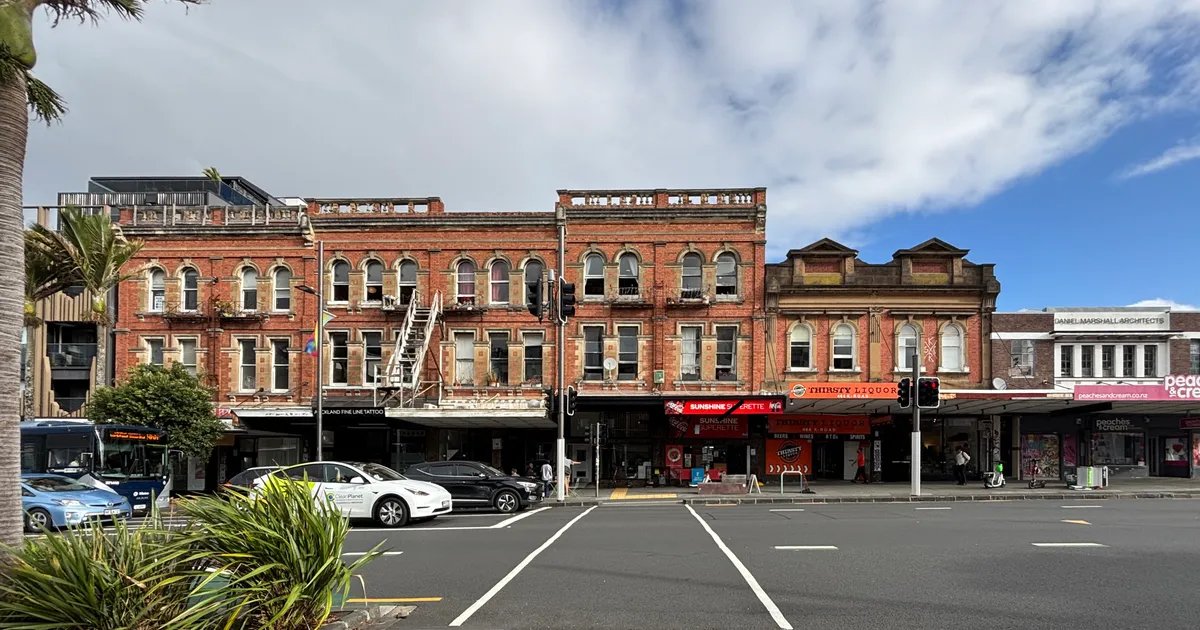
The backdrop makes the confidence more striking. K Rd businesses endured a triple whammy of pandemic, recession and CRL construction stretching back nearly six years, from a $30 million streetscape enhancement to car park removal and underground tunnelling that brought noise, dust and sewer smells.
The damage was measurable. Council card-spending data showed a 22.5% drop on K Rd between April/May 2024 and the same period in 2025, and by mid-2025, 23 shops sat vacant, mirroring the pandemic-era low. In June 2026, Jamey Holloway from the K Road Business Association was still describing businesses as being “kind of on borrowed time”.
The turn began before the trains
As construction wrapped up in late 2025, the mood shifted. 1News reported in December 2025 that Flying Out Records’ Hunter Keane had noticed “much more people coming through now that the construction’s over,” while Lebanese Grocer’s Elie Assaf said foot traffic had increased and “people seem like they actually want to come down and visit K’ Rd now.” The end of the disruption alone was enough to start reversing the decline.
The numbers underwriting the bet
The demand thesis is real. Auckland Transport projects the CRL will carry more than 18,000 passengers per hour into the city centre at peak. CBRE’s June 2026 analysis found residential prices in CRL station catchments grew 36% over the decade to 2024 against 29% for Auckland overall, and concluded that locations with direct station access “are likely to benefit from higher foot traffic, with food and beverage and convenience retail best placed to capture this demand.”
The precinct data is encouraging too. Colliers’ first-half 2026 report shows prime CBD retail rents holding at $3,400 per sqm, while Heart of the City’s March 2026 figures put CBD retail vacancy at 8.4%, its lowest since December 2020.
Where the bet gets riskier
The macro picture is not uniformly supportive, and pretending otherwise would flatter the new tenants. The same Heart of the City data shows a warning inside the good news: city centre foot traffic up 4% year-on-year, but overall spending down 9% against the March 2025 quarter. More people are walking past. They are not necessarily buying.
Nationally, the retail engine is still soft. Stats NZ’s June 2026 quarter recorded $31 billion in sales value, up 6.6% on a year earlier, but volumes fell 0.5% – the growth is mostly inflation. And the daytime worker base that props up weekday trade has not come back, with CBD office vacancy at 16.2% in the first half of 2026, up from 14.6%.
CBRE’s own analysis flags the catch. Improved accessibility, it notes, “is likely to shift spending between locations,” creating a more competitive environment where performance depends on how well each centre aligns with commuter flows. A rising tide for K Rd may mean an ebbing tide somewhere else.
The verdict
The lease activity is the most concrete signal yet that developers and operators believe the CRL will pay off. Landlords do not commit on sentiment alone. But the divergence between foot traffic and spending, elevated office vacancy and flat retail volumes means the businesses moving in are making a calculated wager, not collecting a guaranteed return.
The CRL is a genuine opportunity for food, beverage and convenience retail in the right locations. It will not rescue precincts that lack the fundamentals. The operators who survived the construction earned their moment. The ones signing new leases now deserve respect for the risk they are shouldering, because the trains prove nothing until the tills follow.
Sources
- City Rail Link: New Karangahape Rd leases snapped up ahead of station opening (2026-09-10)
- Years of dust and detours: The businesses clinging on for the City Rail Link (2026-06-27)
- Quarterly Results – March 2026 | Heart of the City (2026-03)
- Retail trade survey: June 2026 quarter | Stats NZ (2026-08-24)
- Businesses celebrate as Auckland’s City Rail Link in home stretch (2025-12-24)
- Spending slumps 22% on Auckland’s K Rd, businesses pin hopes on City Rail Link (2025-08-01)
Join the discussion
Add useful context, ask a good question, or challenge an idea — keep it specific and respectful.