

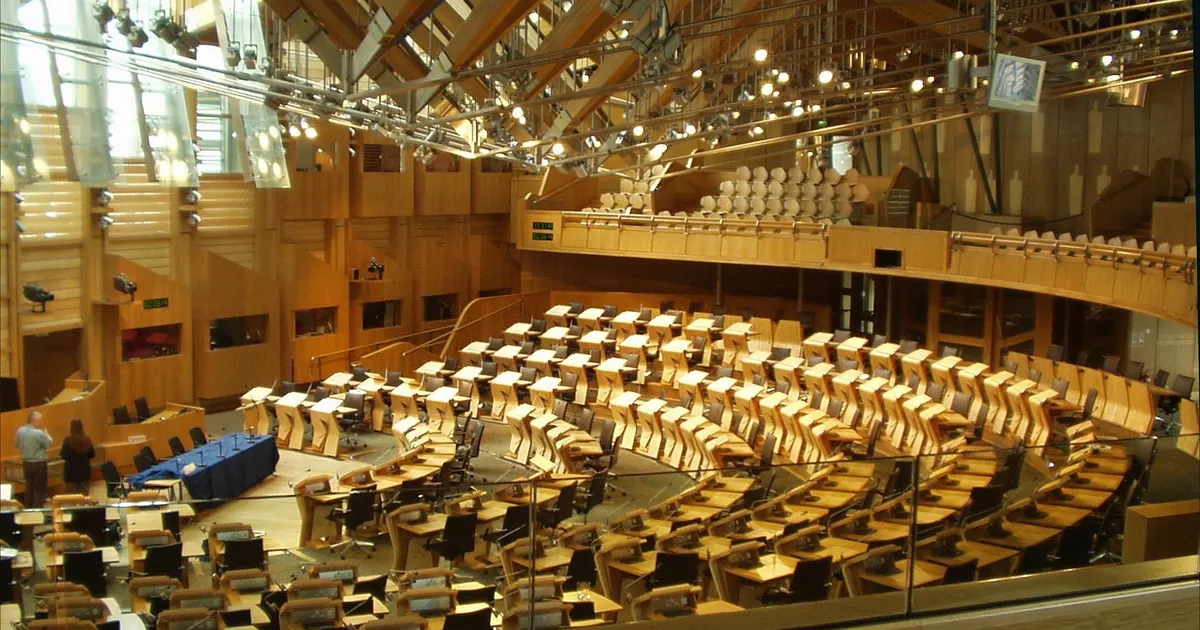
New Zealand’s largest emitters can stop worrying about being sued into a courtroom climate regime. The Climate Change Response (Tort Liability) Amendment Bill passed its third reading 67 votes to 53, blocking tort lawsuits against companies for greenhouse gas emissions, and it applies to both current and future proceedings.
The target was never abstract. In 2024, the Supreme Court granted Ngapuhi iwi leader and climate activist Mike Smith permission to sue six of the country’s biggest emitters, including Fonterra and Z Energy, for climate-related harm. That hearing had been set down for April 2027. It will not now proceed.
Why directors should welcome the certainty
For boards in dairy, energy and heavy industry, this closes off a genuinely open-ended exposure. The Emissions Trading Scheme and the Climate Change Response Act 2002 remain fully intact, so companies still carry their regulatory obligations. What disappears is the prospect of civil tort liability running in parallel, producing conflicting standards and unpredictable damages that no D&O insurer or lender could price with confidence.
The reach went well beyond the six named defendants. A successful tort claim would have set a common law precedent applicable to any business with material emissions. That is precisely the kind of legal fog that suppresses investment. Justice Minister Paul Goldsmith made the point plainly at the first reading in July 2026: “Ultimately, if there is a legal uncertainty, there is less investment over time, and that affects us all by making our country less competitive.”
Goldsmith’s constitutional argument is the stronger one. When the change was first announced in May 2026, he said tort law “is not well-suited to respond to a problem like climate change”, a problem tangled up in economic and social trade-offs that belong with elected lawmakers. ACT’s Simon Court put it more bluntly at the third reading: “Parliament makes the laws. Courts interpret the laws”, warning that Smith’s case risked “a parallel and contradictory climate regime.”
That is the right answer for investment certainty. Climate policy is set by the ETS and by Parliament, not litigated case by case with the whole economy exposed to the outcome.
Part of a wider shift back to Parliament
The tort bill does not stand alone. In October 2025, Cabinet agreed to lift the mandatory climate disclosure threshold from $60 million to $1 billion market capitalisation, sharply cutting the number of NZX-listed companies required to produce annual climate statements. The compliance burden justified it. A December 2024 MBIE discussion document found the median cost for NZX 50 companies ran to $250,000 to $300,000 per statement, with Turners Automotive Group reporting its first climate statement cost more than $1 million.
Taken together, the government is moving climate accountability away from courts and away from individual disclosure burdens and concentrating it in frameworks under parliamentary control. For business, that is a coherent and defensible direction.
The loose thread
The honest part of this story is that the process was not clean, and that matters for the durability of the win. RNZ reported that a previously undisclosed briefing from Fonterra and Z Energy reached the Prime Minister’s office and was not surfaced under an Official Information Act request, with officials reportedly advising against intervening in a live case. Smith has filed High Court proceedings challenging the process as unlawful, arguing the government legislated “after the defendants lobbied for it.” That challenge, separate from the extinguished substantive case, is still live.
The NZ Bar Association has previously warned that “the overuse of retrospective legislation to remove existing rights or claims” creates its own broad uncertainty for citizens. That is not a green talking point. Rule-of-law stability is a business asset, and legislating to cancel a live case sets a precedent that could one day cut against commercial claimants too.
A May 2026 Newsroom analysis by Stephen Young, Ben Tombs and Ben France-Hudson framed the trade-off as swapping “commercial certainty for environmental insecurity” and asked the unresolved question of who ultimately pays for climate harm.
What happens next
The practical answer for directors is settled. The tort threat is gone, the ETS governs, and boards can plan accordingly. The question worth tracking is whether Smith’s process challenge exposes anything that reopens the political fight. Parliament has decisively claimed the last word on climate policy. Whether it did so in a way that holds is the thread business leaders should keep an eye on.
Sources
- Legislation to end climate lawsuits against companies passes third reading in Parliament (2026-08-19)
- Bill banning climate tort cases like Mike Smith’s passes first reading (2026-07-02)
- Government changes climate law to prevent lawsuits (2026-05-12)
- Justice Minister says Parliament, not the courts, is the place to resolve claims of climate change harm (2026-05-12)
- Climate change activist files High Court proceedings over government ruling (2026-06-29)
- Climate law change is a dangerous trade-off (2026-05-16)
- NZ Bar Association calls for government to reconsider changing climate law to prevent lawsuits