

A minor upgrade that took seven years
After seven years of hearings, court battles and a legislative drafting error, Port of Tauranga has a draft decision on its side. On 17-18 August 2026, a fast-track expert panel proposed to grant all the consents the port sought for its Stella Passage development. It is not yet final, conditions remain unpublished, and interested parties still have room to comment. But after this long a slog, a draft yes counts as progress.
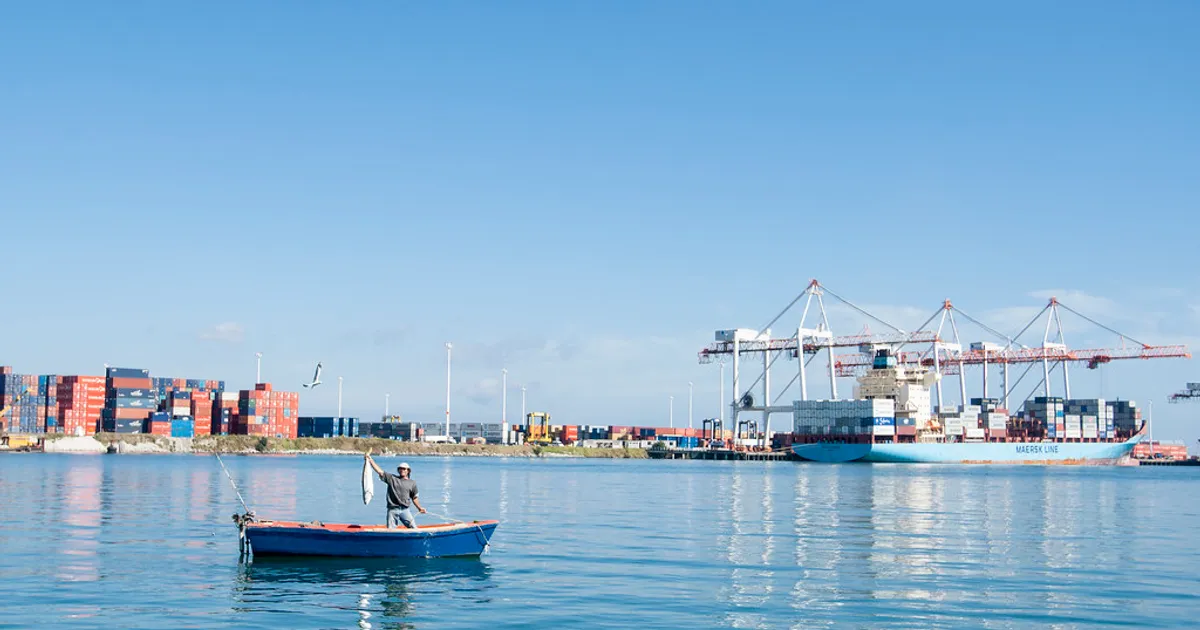
What makes the timeline so galling is the scale of what is actually being built. Port CEO Leonard Sampson told Mike Hosking the process had been “incredibly frustrating”, and that “in the scheme of things, it’s minor upgrades to accommodate more container vessels.” He is not exaggerating the modesty of the works. The plan is a 385-metre extension to the Sulphur Point container berth and a 315-metre extension to the Mount Maunganui wharves, plus dredging of about 10.55 hectares to 16 metres depth and four additional cranes. All within the port’s existing footprint.
What the delay cost
Here is the bill for process over delivery. Sampson told the NZ Herald’s Mood of the Boardroom that even with a quick green light, “the project will have been 10 years in the planning by the time it’s built” and the cost had doubled to “nudge $100m.”
Before a single metre of wharf was extended, the port had spent roughly $12 million on the consenting process alone, BusinessDesk reported in 2025. That is $12 million of lawyers, planners and hearings producing no berth.
The most concrete casualty was a lost shipping route. In May 2026, Sampson said the port had “unfortunately had to turn away an international service to a new market” worth $70-90 million in ocean freight savings to New Zealand importers and exporters. He put a similar number on the opportunity in August, telling Mood of the Boardroom that “one new service to the Americas” represented $65-90 million in savings passed to consumers and back to regional communities. That is the tangible price of a berth that could not be built.
Why Tauranga is not just a regional problem
Tauranga is the country’s export gateway. Roughly half of New Zealand’s containerised exports move through it, and it sits in the middle of the horticulture heartland. For Zespri, capacity at Tauranga is close to existential. CEO Jason Te Brake said in May 2026 that “around 95 percent of Zespri’s New Zealand fruit is exported through the Port of Tauranga”, so congestion directly affects the ability to get fruit to market on time. He framed constrained port networks as something that “increased costs, emissions and undermined confidence for investors”. Port capacity, in other words, is an investment signal, not just a logistics headache.
A case study in NZ’s consenting problem
The path here reads like a warning label for infrastructure reform. The project ground through Resource Management Act hearings and the Environment Court, which found the environmental impact would be minor in the short term and negligible in the long term. In late August 2025, a High Court judicial review put the initial fast-track application on hold. Then the Fast-track Approvals Act 2024, the government’s flagship reform, turned out to contain a drafting error in how the project was described, requiring an amendment passed in December 2025. The port withdrew and re-lodged its application in January 2026 under the corrected law, and the panel’s draft decision followed in August.
Sampson’s verdict on that fragility is blunt. “We can’t have legislation that is open to interpretation for years and can be hijacked,” he said.
From words to concrete
Sampson’s wider point is that this is a productivity story. “One of the single biggest ways to lift productivity is by having an appropriate level of infrastructure,” he said, adding there is “an urgent need to convert words into action”. The project would also “unlock decarbonisation opportunities” as a secondary benefit.
The draft approval is genuine good news for exporters and for the fast-track regime’s credibility. But the lesson every business owner should take from it is the one Sampson keeps returning to. A modest, low-impact upgrade to the country’s most important port took a decade and doubled in cost, not because the engineering was hard, but because the process was. Final consents and unpublished conditions are still ahead. The concrete cannot come soon enough.
Sources
- Leonard Sampson, Port of Tauranga CEO, on receiving conditional fast-track approval for Stella Passage (2026-08-18)
- Port of Tauranga nears finish-line in Stella Passage consent battle (2026-08-17)
- Mood of the Boardroom: Port CEO urges action on infrastructure after years of delays (2026-08-17)
- Tauranga expansion gets conditional approval (2026-08-17)
- Port of Tauranga terminal ‘at capacity’, could ‘bottleneck’ kiwifruit exports – CEO (2026-05-15)
- ‘Enormous frustration’: inside the six-year, $12m slog to expand Port of Tauranga (2025-06-23)
- Port of Tauranga re-lodges Stella Passage fast-track bid after law fix (2026-01-20)
Join the discussion
Add useful context, ask a good question, or challenge an idea — keep it specific and respectful.