

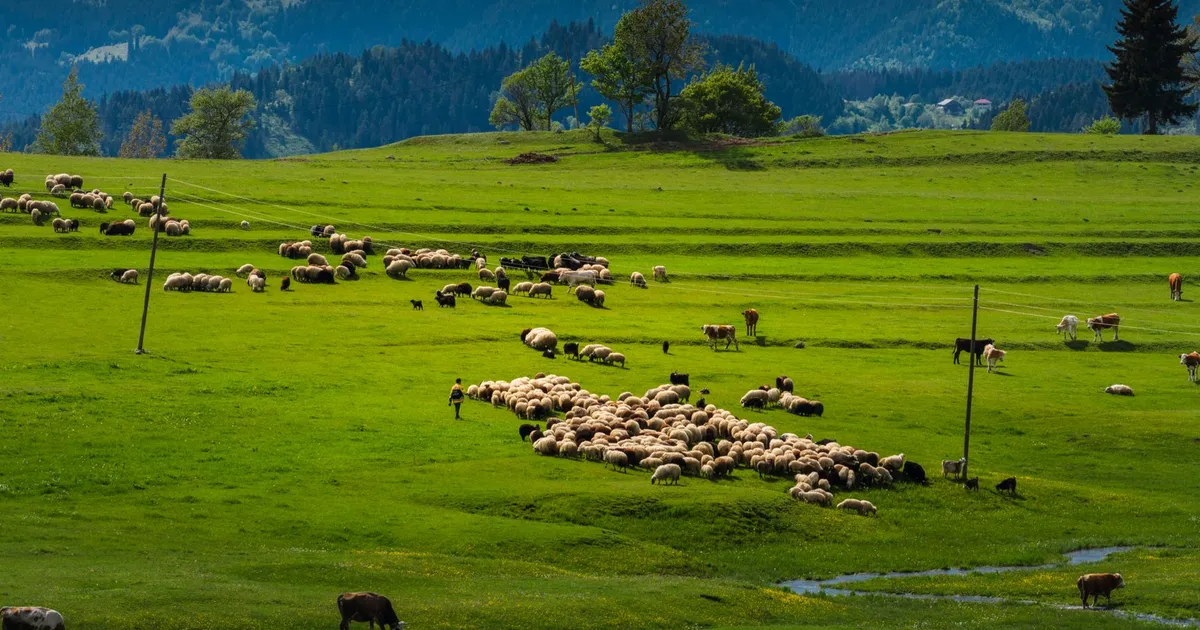
New Zealand’s national flock is quietly being reshaped by economics, and the latest data leaves little doubt about which way it is heading. Beef + Lamb New Zealand’s Stock Number Survey, released on 17 August 2026, shows beef cattle up 3.3% to 3.96 million head – the third consecutive year of growth – while sheep fell 2% to 22.78 million head, with declines in every region.
This is not a nostalgia story about the good old days of wool. It is a live signal about where farmers are putting land and capital, and what that means for processors, lenders, and rural communities.
Beef is winning because it earns more
B+LNZ chairwoman Kate Acland attributed the beef growth to “strong livestock prices and good feed availability”. The gains were broad: North Island beef cattle rose 3.2% to 2.71 million head, led by Taranaki-Manawatu at +6%, while South Island beef climbed 3.6% to 1.25 million head, with Southland up 6.7% on the back of more weaners and trading cattle on finishing farms.
The why is best captured in agricultural economist Keith Woodford’s November 2025 analysis of North Island sheep and beef farms. Cattle already made up 61% of stock units in 2024/25, and total farm income from cattle has exceeded sheep income for all of the past 10 years – more than double in the most recent year. Most tellingly, shearing expenses have exceeded wool income for seven straight years. Wool is structurally loss-making on labour costs alone. Farmers switching to beef are behaving rationally.
The number that should worry everyone
Here is the catch. Even with meat prices high, Woodford found that return on total farm capital on North Island sheep and beef farms was just 0.8% in 2024/25. A near-zero return in a strong-price environment is not a healthy sector. It is a sector whose gains have been consumed by costs, compliance, and collapsing land values.
And land values have collapsed. Total farm capital on those farms fell to $25,700 per hectare, down from $31,500 in 2021/22. That is an 18% haircut in three years, and it changes the risk profile of every lender with exposure to sheep-heavy operations.
The land is leaving the sector entirely
Species switching is only half the picture. The bigger driver has been land walking out of pastoral farming altogether. Since 2000-01, total sheep numbers have fallen 46% from 42.26 million, and around 17% of the total area of sheep and beef farms is now set aside from livestock grazing.
Much of that is forestry. B+LNZ’s 2024 land-use report documented 261,733 hectares of sheep and beef land purchased for forestry conversion between 2017 and June 2024, with more than 2.6 million stock units lost to afforestation since 2017. Official data tells the same story: agricultural land fell from 13.9 million hectares in 2017 to 13.1 million in 2022, while exotic plantations grew 176,000 hectares over the same window.
Why this is a macroeconomic question
The red meat sector generates $48.7 billion in economy-wide spending annually, earns $12.8 billion in export revenue, and supports one in every 20 New Zealand jobs. Nearly a fifth of the country’s export earnings ride on it. So the species mix of the flock is not a paddock question. It is a supply-chain question.
A sustained shift toward beef forces capital decisions on processors, whose sheep plants and cattle plants are configured differently. It reshapes demand for vets, animal health products, fertiliser, and stock transport, all of which handle sheep and cattle on entirely different schedules. And where whole farms have gone under trees, the $133 million daily multiplier that flows into shearing gangs, contractors and local suppliers simply stops.
What happens next
There is genuine good news here. The beef recovery is real, the lamb crop is forecast broadly stable at 19.75 million on a strong lambing percentage, and B+LNZ notes wool returns at levels not seen in recent years. But a stable lamb crop off a shrinking breeding flock is productivity masking decline, not growth. Breeding ewe numbers fell 1.9% and hoggets 4.5% – the pipeline that determines future supply. Until sheep farming can earn more than 0.8% on capital, the beef signal will keep flashing, and the land base will keep shrinking around it.
Sources
- NZ Herald: NZ sheep flock continues to shrink as beef cattle numbers rise (2026-08-17)
- RNZ: Beef boom pushes up NZ cattle numbers, while sheep flock continues to shrink (2026-08-17)
- Farmers Weekly: Beef cattle numbers rise as sheep flock shrinks (2026-08-17)
- Beef + Lamb NZ: Stock Number Survey 30 June 2026 (2026-08)
- Farmers Weekly: North Island ‘sheep farms’ earn more from beef than sheep (2025-11-18)
- Beef + Lamb NZ: Land-use change from pastoral farming to large-scale forestry Update (2024-09)
- EHINZ: Agricultural land use 2017-2022 (2026)
Join the discussion
Add useful context, ask a good question, or challenge an idea — keep it specific and respectful.