

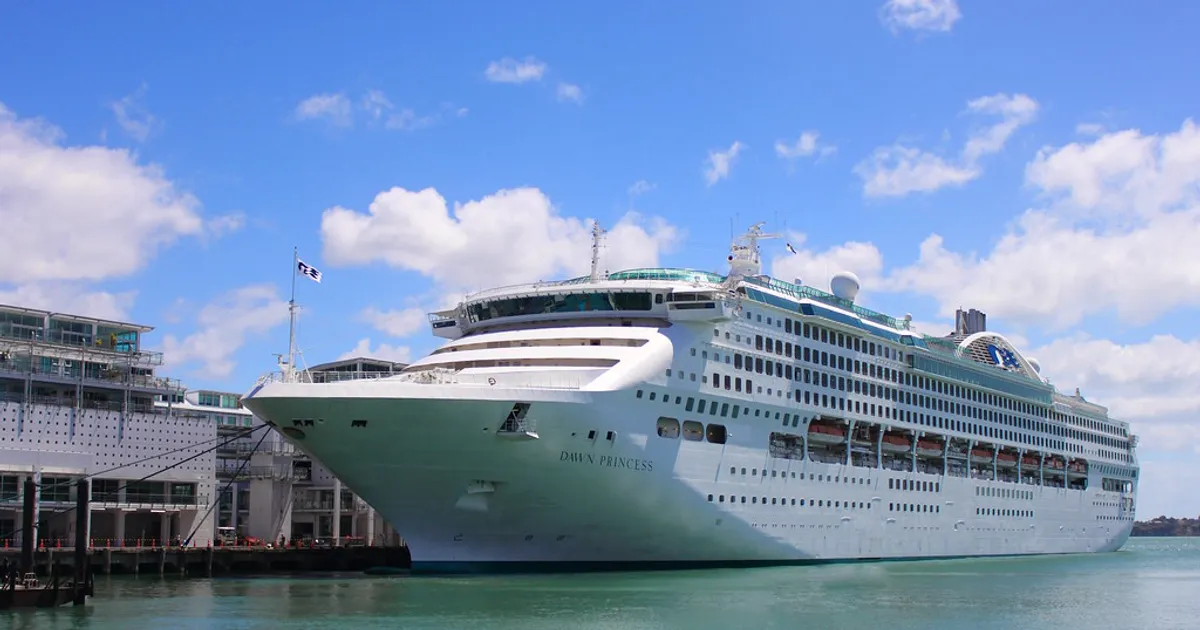
The collapse in the numbers
The scale of New Zealand’s cruise retreat is not subtle. Customs data shows the country peaked at 1,102 port visits and roughly 577,000 passengers in 2023/24, a season that delivered a $1.37 billion economic contribution. One year later, port calls fell to 845, down 27 percent. The 2025/26 season was projected at just 660 calls, the lowest since Covid.
That is roughly 440 lost port calls nationally in two seasons. Auckland, which took 131 visits and 317,236 passengers in 2023/24, has borne a large chunk of that decline. Direct spend for 2025/26 was expected to drop 40 percent. This is not a rounding error. It is a structural loss of business.
It was never a demand problem
The critical point for anyone reading this as a tourism slump is that people still want to come. In August 2025, New Zealand Cruise Association chief executive Jacqui Lloyd called the situation “pretty dire” and was explicit that the decline was a supply-side failure. Passenger ratings for New Zealand remain high; the problem is that port charges, government fees, biosecurity and biofouling compliance, fuel and currency pressures have made the country, in the industry’s own framing, one of the most expensive cruise destinations going.
Cruise lines lock in itineraries two to three years ahead. That is the uncomfortable bit. Decisions made in the expensive, complicated seasons of 2024 and 2025 are still feeding through the pipeline, which is why the thin years aren’t over yet.
Why home-porting is the real prize
The plan Auckland is now articulating is about value, not vessel counts. A home port is where a ship starts and ends its voyages, and it is the highest-yield model for local business. Turnaround passengers board and disembark in the city, often stay overnight in hotels, eat and shop before and after, and the ship provisions locally, buying New Zealand produce and paying for crew activity.
The recovery signal is Carnival Cruise Line’s decision to home-port the Carnival Adventure out of Auckland from May to July 2027, running nine cruises to Norfolk Island, Fiji, Vanuatu and New Caledonia. It is the first home-port arrangement since 2023. The strategic logic matches what the industry has been saying: the goal is extracting more value rather than throwing more ships at the country. Cruise passengers spend an average of $282 a day against $324 for other tourists, so closing that gap through longer stays and better shore experiences is the commercial priority.
The infrastructure bet
The headline investment is the $200 million Bledisloe North Wharf at Port of Auckland, which broke ground in September 2025 as the first project approved under the government’s fast-track regime. Port of Auckland chief executive Roger Gray said the port was creating Auckland’s newest cruise terminal, co-designed with iwi and stakeholders. The project is pitched to deliver $5.4 billion to Auckland and $6.6 billion to New Zealand over 30 years.
Beyond the concrete, it solves a real bottleneck. The new wharf takes ships over 200 metres, freeing Princess Wharf for smaller vessels and ending the operational clash between cruise arrivals and Auckland’s ferries.
The honest timeline
Here is where patience comes in. Construction runs 14 to 16 months, so the terminal completes in late 2026 or early 2027, and the Carnival season doesn’t start until May 2027. Tourism Minister Louise Upston acknowledged in September 2025 that 2025/26 could be as bad as the previous year, and that the turnaround is really a 2027/28 story. For CBD hospitality, transport operators, accommodation and tour businesses that live off cruise spend, that is a long, thin runway.
The part the wharf doesn’t touch
A new terminal and a home-port deal fix capacity and confidence. They do not fix the cost and regulatory complexity that pushed lines elsewhere in the first place. Biofouling compliance remains a live cost, with in-port cleaning trialled at Port of Auckland as a possible fix, and port pricing is under review. But you cannot build your way out of being the world’s dearest destination.
The timing is the trap. Lines are choosing their 2027/28 itineraries right now. Auckland has the wharf and one marquee deal to show them. Whether it also has a credible answer on cost will decide if the recovery is a rebound or a one-off.
Sources
- Construction on Auckland’s Bledisloe North wharf begins (2025-09-26)
- Mayday call for New Zealand’s sinking cruise industry (2025-08-28)
- New NZ cruise season begins amid gloomy expectations (2025-09-23)
- Report on Performance for the Year to 30 June 2025 – NZ Customs (2025)
- Border Processing Levies Report on Performance for the Year to 30 June 2024 – NZ Customs (2024)
- Carnival Cruise Line to use Auckland as home port for 2027 winter season
- New Zealand’s cruise industry falters as bookings drop 40%
- Cruise industry aims to build smaller, smarter and more localised business
Join the discussion
Add useful context, ask a good question, or challenge an idea — keep it specific and respectful.