

Seven years, $400 million, one gold bar away
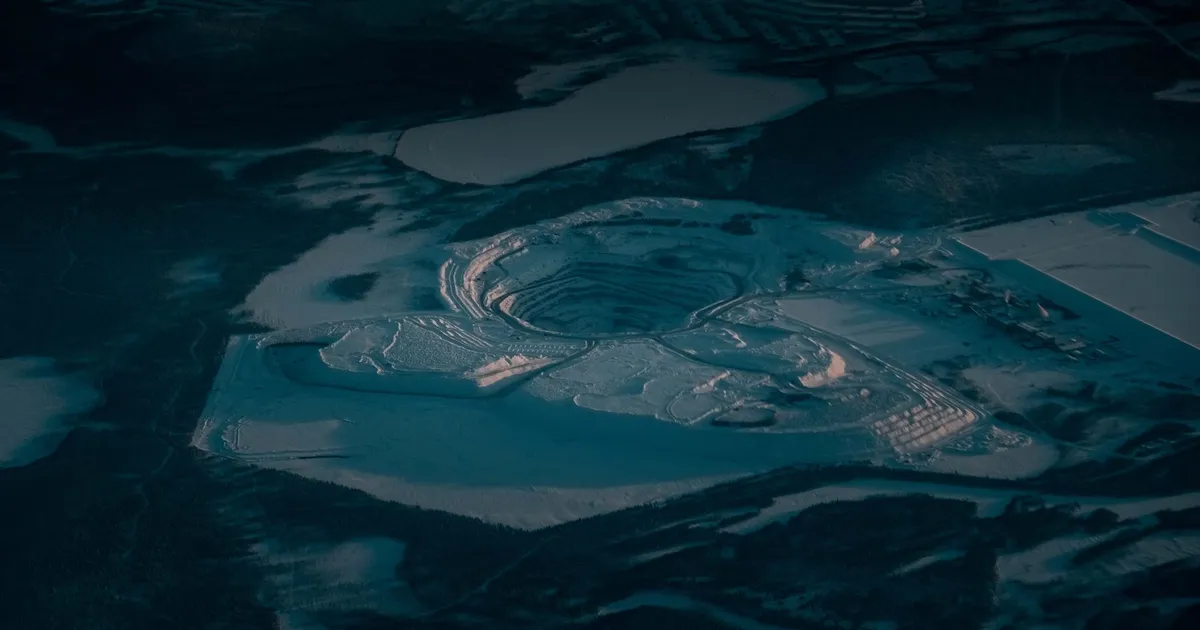
New Zealand spends a lot of time talking about productivity, exports and the productive economy. On the West Coast, someone actually built it. The Snowy River Mine near Reefton, a development exceeding $400 million by Australian company Endura, is now in active recruitment mode as it nears completion. It currently employs about 110 people and is targeting 250 within six months, with entry-level roles starting at $90,000 a year.
First gold is targeted for December 2026, with full production in early 2027. Once the $60 million processing plant is finished, the mine is expected to produce upwards of $300 million worth of gold per year. The Ikamatua site last produced anything when the Blackwater mine closed in the 1950s. It took seven years of construction to bring it back.
The economics are hard to argue with
Gold does the heavy lifting here. Endura executive chairman Jake Klein told 1News the price has surged from around $500/oz when he entered the industry to over $6,500/oz now. At that price, $300 million of annual output is not a rounding error, and the capital behind the project reflects the confidence. As of March 2025, Federation Mining had raised more than $200 million in capital, with AustralianSuper, Australia’s largest superannuation fund, moving to take a majority interest.
The regional agency put its own money on the table too. In March 2025, Development West Coast made an AU$3 million equity investment into the project, and by that point drilling stood at 30km with over 160 holes completed and 15,000 tonnes of ore stockpiled ready for processing.
The supply chain is already firing
This is the part strategy documents never capture. The construction phase alone required up to 180 contract workers over roughly a year. In February 2025, the project pumped $2.9 million into the regional economy through suppliers, contracts and wages, with about $1 million landing directly on the West Coast. Greymouth engineering firms, diesel mechanics, environmental specialists and heavy machinery operators all get pulled into the wake of a project like this.
Development West Coast chief executive Heath Milne put it plainly: “Salaries on the West Coast are leading the country and it is absolutely about projects like this where we need highly skilled workers.” For a region that has shrunk for decades, that is not a small thing.
A second mine is already in the queue
Snowy River is not a one-off. In February 2026, Newsroom reported that Rua Gold plans to develop the Auld Creek underground mine near Reefton, with a fast-track application expected by the end of 2026 and production targeted for 2028. The company forecasts its starter mine can produce 60,000 ounces annually, worth roughly NZ$500 million at current prices, and expects to hire 200 workers, with an NZX listing planned. Development West Coast has estimated that across all mining projects the region could see over $18 billion in additional exports.
The bottleneck is people, not policy
Here is the genuine constraint. Filling 250 roles at Snowy River, then 200 at Rua Gold, in a shrinking region, is a workforce problem. The $90,000 starting salary is the lever, designed to lure Kiwi miners back from Australian operations, but wages only work if there is a pipeline of experienced hands to mentor new entrants. That is the piece capital cannot buy overnight.
Policy, for once, is pointing the same direction as the market. The MBIE Minerals Strategy to 2040, released in January 2025, set a target of doubling mineral exports from $1.46 billion to $3 billion by 2035, naming gold and silver as immediate drivers and citing fast-track legislation as the enabler. The July 2026 report card shows $80 million from the Regional Infrastructure Fund ring-fenced for mineral projects and simplified permitting for small-scale operators.
But the target is not the story. The mine is. A $3 billion export goal is a line in a document. A processing plant pouring its first gold in December, a region posting the country’s strongest job growth, and $300 million a year heading offshore as export revenue is the real thing New Zealand keeps saying it wants. The task now is making sure the workforce arrives before the ore does.
Join the discussion
Add useful context, ask a good question, or challenge an idea — keep it specific and respectful.