

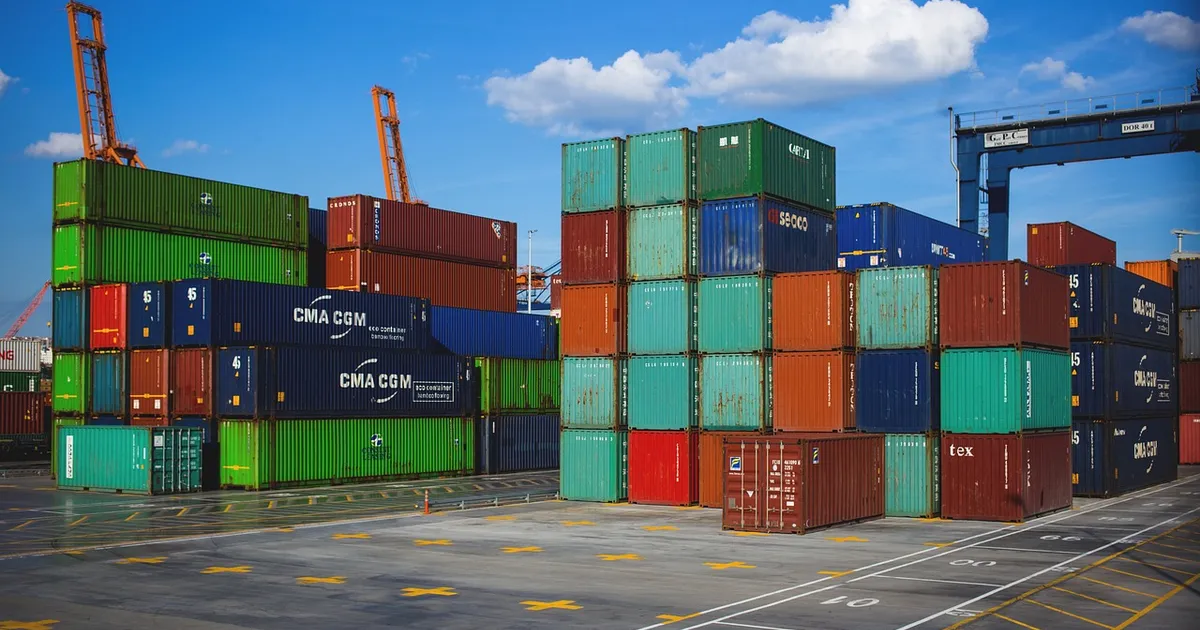
The barrier nobody voted for
New Zealand has spent decades chasing free trade agreements to knock down tariffs. It worked. Then the walls went back up in a different form. A new ExportNZ report released on 13 August 2026 finds that at least 83% of New Zealand exports are hit by non-tariff barriers, costing more than $9 billion a year. On average, a single New Zealand product runs into nine separate barriers across the markets it sells into.
These are not tariffs. They are sanitary and biosecurity rules, product standards, labelling requirements, licensing regimes, certification demands and foreign government inspections. Individually they can look reasonable. Collectively they function as a tax on trade that no one campaigned on and no one voted for.
The free trade paradox
The uncomfortable truth is that as tariffs fall, non-tariff barriers rise to take their place. Trade expert Stephen Jacobi put it plainly in 2024: “just as the tariffs go down, NTBs spring up”.
That matters because free trade agreements cover roughly 73% of New Zealand’s trade, yet the barrier bill keeps climbing. FTAs deal with tariffs at the border. Non-tariff barriers live behind the border, buried in domestic regulations, inspection systems and certification regimes that treaty text struggles to reach. Then-Trade Minister Todd McClay flagged the risk in 2024, warning it “would not be appropriate for us to have a free trade agreement with the EU and our exporters then find it is difficult” to actually use it.
Why New Zealand cops it worse
The reason New Zealand is disproportionately exposed comes down to what we sell. A 2022 MFAT analysis found that sanitary and phytosanitary restrictions, the food safety and biosecurity category, account for 59% of the barrier costs on New Zealand exports, versus just 10% globally.
That is not bad luck. It is arithmetic. New Zealand exports are overwhelmingly meat, dairy and horticulture, and food attracts the most burdensome category of barrier at a far higher rate than manufactured goods. The composition of our export economy makes us uniquely vulnerable, and no amount of FTA signing will fix that.
Where the money actually goes
The red meat sector shows how it plays out on the ground. In 2024, the Meat Industry Association reported barriers cost the sector $1.3 billion annually, with then-chief executive Sirma Karapeeva putting the figure at “$1.5 billion dollars of NTB costs, which is a considerable number”.
The specifics are galling. Back in 2023, exporters documented that some importing countries send their own inspectors to New Zealand at a cost of up to $100,000 for a single audit, while some Middle Eastern markets demand consular certification costing between $300 and more than $1,000 per shipment. Karapeeva’s verdict in 2024 was blunt: “some barriers are legitimate but many add costs without adding benefit”.
The EU’s deforestation regulation is the vivid example. It requires exporters to prove with geo-location data that their product did not come from land deforested after 2020, despite the fact that most New Zealand deforestation happened in the 19th century, with net afforestation in recent years. Exporters who have done nothing wrong still carry the compliance bill.
The part we can fix ourselves
Here is the line worth dwelling on. ExportNZ Executive Director Joshua Tan told Mike Hosking the problem is not purely someone else’s fault: “it’s not just about Free Trade Agreements or non-tariff barriers; there’s a lot which can be fixed in this country”.
That is a significant admission from an exporter lobby. It points at domestic certification complexity, the resourcing of MPI and MFAT technical experts who negotiate with counterpart agencies, and the speed of our own conformity assessment. In 2023, ExportNZ called for a dedicated task force, streamlined reporting for exporters, and proper resourcing for agencies to engage overseas, including travel budgets for technical staff. Cheap fixes, relative to a $9 billion problem.
The longer game is a plurilateral agreement targeting barriers directly, standardising certification and mutual recognition of standards. That is years away. In the meantime, every exporter paying for a $100,000 audit or duplicate environmental paperwork is funding a form of protectionism that never made it onto a ballot. Tariffs win the political argument. Barriers quietly win the money.
Sources
- Trade barriers costing Kiwi exporters billions a year, report finds (2026-08-13)
- Government and exporters battling to avert latest series of non-tariff barriers (2024-08-09)
- Parliamentary select committee hears exporters’ complaints about non-tariff barriers (2024-10-18)
- Non-tariff measures: Impacts, trends and effects on exports from New Zealand (2022-01)
- ExportNZ Pre-Election Report 2023 (2023-08)
- New Zealand’s two main red meat organisations warn of hidden barriers to trade (2023-06-29)
Join the discussion
Add useful context, ask a good question, or challenge an idea — keep it specific and respectful.