

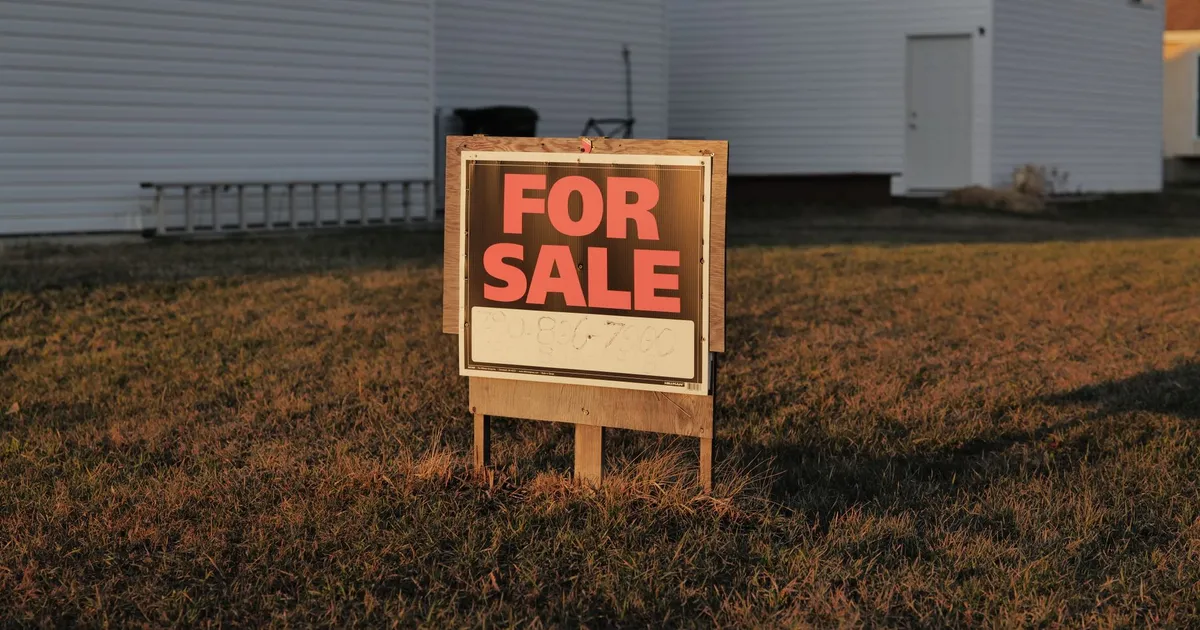
Listings up, but sales tell the real story
New Zealand homeowners have stopped holding out for the boom. June 2026 produced 7,942 new residential listings, the highest for any June in six years and up roughly 4% on June 2025. Nationally there are now around 34,000 homes on the market, against just 12,500 at the height of the Covid frenzy in 2021.
realestate.co.nz chief executive Sarah Wood frames the shift in plain behavioural terms. “There is just going to be an element of uncertainty, and that’s become a new normal,” she says. “So sellers are entering the buying and selling process because they actually need to just move on with their life.”
But the listing count is not the number that matters. Sales are. Cotality data to end of May 2026 shows completed sales down 8.3% year-on-year, a fifth straight monthly decline, while REINZ puts the annual drop at 12.6% with days to sell stuck at 47. More sellers are willing to deal. The buyer pool is not expanding to meet them.
Sellers are reading the room
The acceptance is genuine, and it shows up in pricing discipline. realestate.co.nz had 36,130 properties advertised at the end of May, the most stock for that month since 2014, with Auckland at an 18-year high of 14,261. Normally a flood of stock means heavier discounting. It isn’t happening. The average asking-price reduction in Q1 2026 was $33,212, down from $42,864 two years earlier.
“Sellers are reading the room and pricing their properties closer to what buyers are willing to pay,” realestate.co.nz spokesperson Vanessa Williams said in April. The shift is not universal, though. Tony Alexander’s May NZHL survey of 231 agents still found vendors “thinking they can achieve a 2021 price” while buyers simply walk away.
Buyers hold every card
Demand conditions remain firmly in buyers’ favour. A net 37% of agents reported falling prices in May, 52% flagged interest-rate anxiety as the top buyer concern, and 45% noted a fear of buying before prices fall further. Sentiment has soured fast. Trade Me’s Winter Pulse survey found the share of buyers expecting prices to rise collapsed from 46% in March to 29% in May.
The one bright spot is first-home buyers, who made up 27.5% of purchases in Q1 2026, the highest annual tally since 2021. Investors are retreating, leaving owner-occupiers to carry the pipeline.
No rate cavalry is coming
Don’t expect cheaper money to spark a rebound. The RBNZ held the OCR at 2.25% in May, ending the cutting cycle. Independent economist Tony Alexander is blunt about whether that revives the market. “Probably not,” he wrote in late June, naming employment confidence, “perhaps next year,” as the real precondition for recovery. Westpac senior economist Satish Ranchhod forecasts house prices to fall nearly 1% over 2026, with prices having “been tracking sideways for several years now.”
Alexander’s message to vendors hasn’t changed in three years. If you want to move your property, “you’re going to need to give ground because buyers can pick and choose in most locations.”
A two-speed market
The national aggregate hides a real divide. Canterbury hit a record average asking price of $757,136 in June, up 5.2%, while Southland’s median rose 10.2% to $540,000. Auckland is the mirror image. Asking prices dropped $84,780 to $1,012,963 between February and May, and Cotality’s March Pain and Gain report found 19.9% of Auckland resales booked a loss, median $77,000.
What it means for the ecosystem
For agents, more listings without more sales is a margin squeeze: more appraisals, marketing and open homes, no extra commission. For lenders, sellers crystallising losses in Auckland and Wellington is a live risk, and the end of OCR cuts removes the refinancing tailwind. For developers, existing stock at an 18-year high competes directly with new builds on price, gutting feasibility outside Canterbury and Southland.
The opportunity sits in the normalisation thesis. If seller acceptance lifts transaction volume even without price recovery, it unfreezes relocations, premises moves and equity releases that have been on hold. The catch is timing. With Alexander pointing at 2027 and Westpac forecasting further falls, the volume recovery is real but not imminent. Sellers have made peace with the new normal. Buyers are still waiting to see how much lower it goes.
Sources
- Why more homeowners are getting on with life and listing their homes for sale anyway (2026-07-01)
- Cotality data shows Kiwis holding on to homes for longer amid prolonged housing downturn (2026-03)
- Here’s how much sellers are cutting house prices (2026-04-28)
- NZ buyers are moving despite the gloom (2026-06-10)
- Home buyers retain the upper hand (2026-06-03)
- Tony Alexander: Why the threat of a July interest rate rise is receding (2026-06-24)
- First Impressions REINZ house sales and prices May 2026 (2026-06-15)
- NZHL Property Report – May results 2026 (2026-06)