

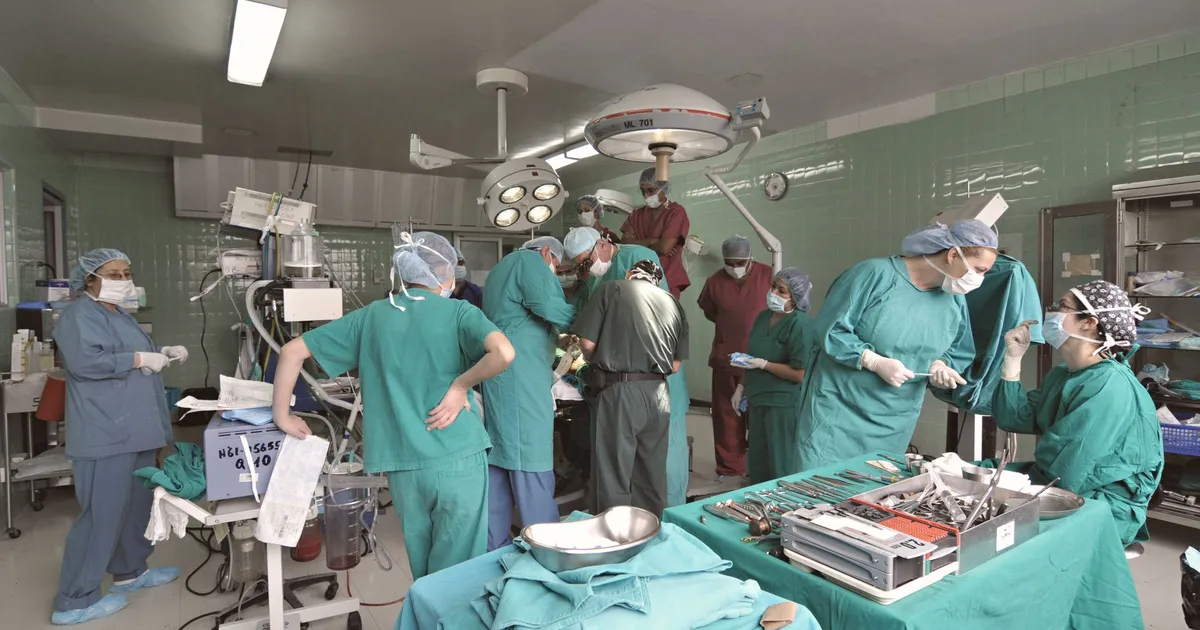
Tauranga is getting five new operating theatres with a firm completion date, and the public health system is not the one building them. Allevia Hospitals chief executive Dr Ian England has announced an $80 million private hospital, Haumoana Hospital, on Cameron Rd, right next door to the eight-theatre public Tauranga Hospital. It is due in 2029. The public redevelopment beside it still has no locked delivery date.
That contrast is the story. Private capital is moving with certainty into surgical capacity in one of the country’s fastest-growing regions, while the state is still at the design-and-assurance stage.
A deal built by people who carry the risk
The structure is worth a closer look. Willis Bond, headed by Mark McGuinness, will own the building and is buying the land from a group of medical specialists who quietly amalgamated titles between 16th and 17th Avenues. Associated firm L.T. McGuinness will build it. Allevia runs it in partnership with 26 Tauranga-based clinicians, with Ngāti Ranginui as mana whenua partner.
The three-level facility will have five theatres, an endoscopy suite, 10 day-stay beds, a 12-bed post-operative unit and 32 in-patient beds. Demolition starts on 26 November. Developers, builders and surgeons all have skin in the game, which is precisely why the timeline is firm.
It is not a one-off. Grace Hospital in Ōropi is currently the region’s only operating private hospital, Asclepius Surgical was reported under construction in the CBD in 2025 with a target of opening by the end of 2026, and another facility is planned for Te Puna. Haumoana makes four.
The queue hasn’t moved in two years
The demand case is blunt. In February 2026, more than 2,700 Bay of Plenty patients were waiting for elective surgery, according to Health NZ. When Asclepius was first reported in early 2025, the waitlist also exceeded 2,700. Two years of growth, investment and political attention, and the number is flat.
The public response is real but slow. Budget 2026 put money towards a Tauranga Hospital redevelopment, but a September 2026 Cabinet paper shows only Stage 1 was approved: design, assurance, interim capacity and site readiness across Tauranga, Hawke’s Bay and Palmerston North. The paper itself says capacity and cost estimates will change as planning continues. The project holds fast-track status, which signals urgency, but consenting speed is not the constraint. Capital allocation is.
Back in October 2024, then-Infrastructure Minister Chris Bishop warned the regional hospital programme could blow out to $3 billion from $1.8 billion, stripping money from other projects including Tauranga. Willis Bond does not have to win a Treasury argument against Whāngārei and Nelson before pouring concrete.
Outsourcing is already policy, not an emergency measure
The state is already a major customer of private theatres. An Official Information Act response shows Health NZ paid private hospitals $229.6 million in 2024/25 for elective procedures, with monthly payments peaking at $32.5 million in June 2025. In 2025, private hospitals said they performed about 70% of elective surgery, around 224,000 procedures a year, and Health NZ’s then-deputy chief executive Robyn Shearer called public-private partnerships a “pragmatic” way to hit wait-time targets.
So a new private hospital next door to a public one is not a rival system. It is extra supply the public funder already buys from.
The workforce question is the honest caveat
Critics have a point worth taking seriously. In 2025, health systems academic Professor Robin Gauld told RNZ there was no evidence private expansion lifted public capacity, and in 2024 he described private growth as “a zero sum game”. A 2025 analysis in The Conversation argued the shift to private provision would likely raise total system costs.
The real constraint is surgeons, anaesthetists and theatre nurses, not buildings. If Haumoana simply moves the same 26 clinicians across the road for more of their week, the region gains comfort, not capacity. If it helps Tauranga recruit and retain specialists who would otherwise work in Australia, it is a net gain. That second outcome is plausible, but it is the bit to watch.
What employers should take from it
For Bay of Plenty businesses, staff stuck on a surgical waitlist are a direct cost: lost days, reduced duties, and people who eventually leave. More private theatres mean faster access for insured staff and more capacity Health NZ can contract into for everyone else. Health insurance as an employee benefit becomes more valuable when there are actually theatres to use it in.
For investors, the signal is that serious developers now treat regional surgical infrastructure like logistics or build-to-rent: a demographic-growth asset with a reliable government buyer.
The public Tauranga redevelopment will eventually arrive. Until it does, the 2029 date on Cameron Rd is the only one the region can bank on, and the Bay of Plenty queue will tell us by then whether private capital added surgical capacity or merely rearranged it.
Sources
- NZ Herald: Five-theatre $80m private Tauranga Haumoana Hospital planned for 2029 (2026-10-28)
- NZ Herald: Tauranga Asclepius Surgical private medical facility under construction in city centre (2025-02-27)
- Health NZ: Approval of Stage 1 of the redevelopments of Tauranga, Hawke’s Bay and Palmerston North Hospitals (2026-09)
- Ministry for the Environment: Tauranga Hospital Redevelopment – Fast Track Approvals (2024-12-19)
- The Post: Public hospitals with private money, pragmatism or stealthy privatisation? (2024-10-18)
- FYI.org.nz: HNZ Further Response HNZ00090795 – Private hospital payments and procedures (2026-05-19)
- RNZ: Is private healthcare the answer to public funding woes, or making it worse? (2025-02-18)
- The Post: Reading the (waiting) room, private hospitals grow to meet demand (2024-11-15)
- The Conversation: NZ’s shift to more private health care will likely raise costs and reduce quality (2025-08-31)
Join the discussion
Add useful context, ask a good question, or challenge an idea — keep it specific and respectful.