

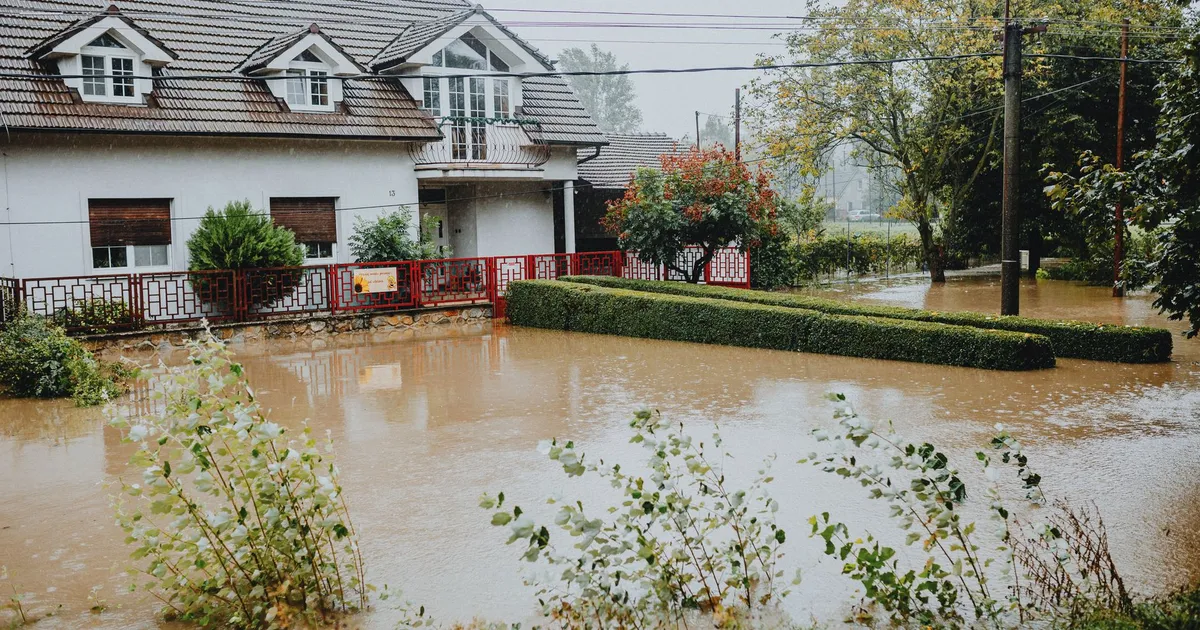
Vero’s weather claims bill more than doubled in twelve months. Its weather-related natural hazard claims reached $185 million in the year to June, up from $70 million a year earlier. The same round of disclosures shows IAG, owner of AMI and State, paying out $322 million across 44 weather events, up from $132 million, and Tower’s large-event costs rising to about $25 million from $7.2 million. Tower is honest that its prior year was unusually quiet, well below its ten-year average, so not all of the jump is new risk. But the direction across all three insurers is the same.
The part that matters for business is what insurers are doing about it. They are not just raising premiums across the board. They are pricing individual properties, and in doing so they are quietly running the managed retreat programme the government has yet to design.
The bill is structural, not a bad year
Vero’s own modelling, released this week, projects weather-related claims costs will rise 21-27 percent by 2050 under low-to-high warming scenarios, and 12-15 percent by 2040. The insurer has been blunt that customers will carry that cost.
Reinsurance tells the same story. In its 2025 disclosure, Vero reported its catastrophe reinsurance cost hit $344 million for the year to June 2025, 136 percent higher than two years earlier. That reset followed the 2023 Auckland floods and Cyclone Gabrielle, and it flows straight into retail and commercial premiums.
Pricing has gone street by street
Tower has moved to address-level pricing, mapping each property for earthquake, flood, sea surge and landslip risk. Chief executive Paul Johnston says about 90 percent of customers received a roughly $70 price cut when landslip and sea surge pricing came in, because they stopped cross-subsidising the 10 percent who actually face those risks. That comes against home insurance costs that have risen almost 60 percent in five years. “This year, we’ve had large weather storms almost every second weekend,” Johnston says.
This is accurate pricing doing its job, and it is the right approach. Cross-subsidies hide risk and encourage people to keep building and buying in the wrong places. But it also means the cost is no longer spread thinly across the country. It lands hard on specific titles.
Under 2 percent of properties carry the risk
Vero’s 2025 analysis found that less than 1.5 percent of insured coastal properties account for all projected coastal inundation losses, and under 2 percent of inland addresses account for 30 percent of projected flood losses. For most owners, repricing will be modest. For a small, identifiable group, it will be brutal.
The timeline is shorter than most assume. A 2024 study modelling four New Zealand cities found 99 percent of properties in the 1-in-100-year coastal flood zone can expect at least partial insurance retreat within a decade, with less than 10cm of further sea level rise. Full retreat was likely within 20-25 years.
Banks are the next domino
Insurance is the gatekeeper for lending. Banks need confidence a property will remain good security over a 30-year mortgage, and insurers have been working to align lending and insurance practices so banks are not financing development in high-risk spots. The mechanism is simple. If a home or commercial building becomes uninsurable, banks will not lend against it, buyers cannot finance it, and its value falls to whatever a cash buyer will pay.
That makes this a balance sheet issue today, not a 2050 issue. Businesses with coastal or flood-plain premises, property investors and anyone holding commercial real estate as loan security should be checking address-level hazard data now, before a renewal or refinance does it for them.
Wellington has parked the hard question
IAG chief executive Phil Gibson says natural hazards have cost government, councils, insurers and communities at least $64 billion over 15 years, with about 95 percent spent on response and recovery. “The government needs to do more to enable councils and property owners to reduce the natural hazard risk that they face,” he says. Climate Change Minister Simon Watts released a 16-point adaptation framework in late 2025, but the law change requiring councils to identify high-risk areas did not pass before Parliament rose, and the Cabinet paper explicitly deferred cost-sharing decisions until after the election.
That double deferral leaves the market to sort winners and losers on its own. A 2025 government-commissioned report warned that underpriced insurance can be complicit in sustaining risky occupation, but also found well-designed payouts could reduce the public cost of relocation. Johnston’s push to frame retreat around returns rather than losses fits that thinking.
Whoever forms the next government inherits a decision that can no longer be postponed. Insurers have already started pricing retreat. The only open question is whether the state sets the rules for who pays, or simply lets falling property values settle the bill.
Sources
- RNZ: Cost of claims for weather events more than doubles for many insurers (2026-10-29)
- RNZ: Insurance boss wants creative solutions to fund managed retreat (2026-10-29)
- The Post: Insurer Vero warns customers will foot the bill as natural disaster weather claims set to keep rising (2026-10-27)
- The Post: Future insurance scenarios from bad to apocalyptic feature in Suncorp’s climate risk report
- Vero: Climate-Related Disclosures (2025-10)
- Climatic Change: Insurance retreat in residential properties from future sea level rise in Aotearoa New Zealand (2024)
- Natural Hazards Commission: Insurance Retreat, Public (2025)
Join the discussion
Add useful context, ask a good question, or challenge an idea — keep it specific and respectful.