

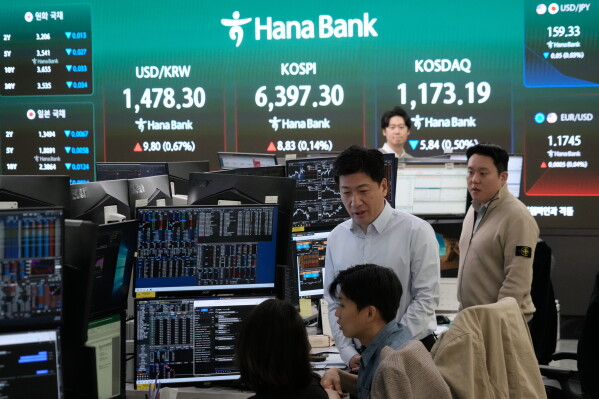
Asian markets rallied on Monday as investors welcomed a preliminary agreement between the United States and Iran that raised hopes of an end to nearly four months of conflict, although caution remained as the deal has yet to be formally signed.
Oil prices fell sharply after the announcement, with traders moving to unwind some of the risk premium that had built up around fears of prolonged disruption in the Middle East. U.S. crude oil futures for July delivery dropped 4.77% to $80.83 a barrel by 8:27 p.m. ET, while Brent crude for August delivery slipped about 4% to $83.77 a barrel.
The prospect of reopening the Strait of Hormuz, a crucial route for global oil and gas shipments, helped lift sentiment across the region. South Korea’s Kospi surged 5.1%, Japan’s Nikkei 225 gained 3.6%, and the broader Topix rose 2.6%. Australia’s S&P/ASX 200 also climbed 1.3%.
“Markets have been waiting for this news for months, and the relief is already showing, with oil sliding and risk assets catching after President Trump confirmed that the Strait of Hormuz will reopen and the U.S. naval blockade will be lifted,” said Josh Gilbert, lead analyst for APAC at eToro.
The shift was also seen in currency and bond markets. The U.S. dollar index weakened 0.32% to 99.483, while the yield on the benchmark 10-year Treasury note fell 5 basis points to 4.423%. The move suggested investors were reassessing the risk of another energy-led inflation shock at a time when central banks are closely watching price pressures.
Billy Leung, investment strategist at Global X ETFs, said the bond market reaction showed investors were treating the recent oil shock as temporary rather than a lasting threat to inflation.
Still, the rally was not without reservations. Gold rose almost 2% to $4,302.19 an ounce, signalling that some investors were still seeking protection in case the diplomatic breakthrough falters.
“Gold is the interesting outlier here,” Leung said. “In a clean risk-on trade, gold should be selling off as the geopolitical premium unwinds, but it is holding bid around $4,300, which tells you the market is not fully trusting the deal yet.”
Gilbert also warned that the agreement remains vulnerable to delays or reversals.
“The deal isn’t actually signed until June 19th, the details are still thin, and this conflict has shown more than once that headlines can turn on a dime.”
Analysts at Commonwealth Bank of Australia said the outlook for crude would depend on how quickly shipping, exports, and damaged energy infrastructure return to normal. Vivek Dhar, the bank’s head of commodities and sustainability research, expects Brent to move towards $80 a barrel by year-end if the Strait remains open and supplies recover.
For investors, cheaper oil could ease pressure on households, businesses, and central banks, but the market’s next move will depend on whether the agreement survives beyond the initial headlines.