

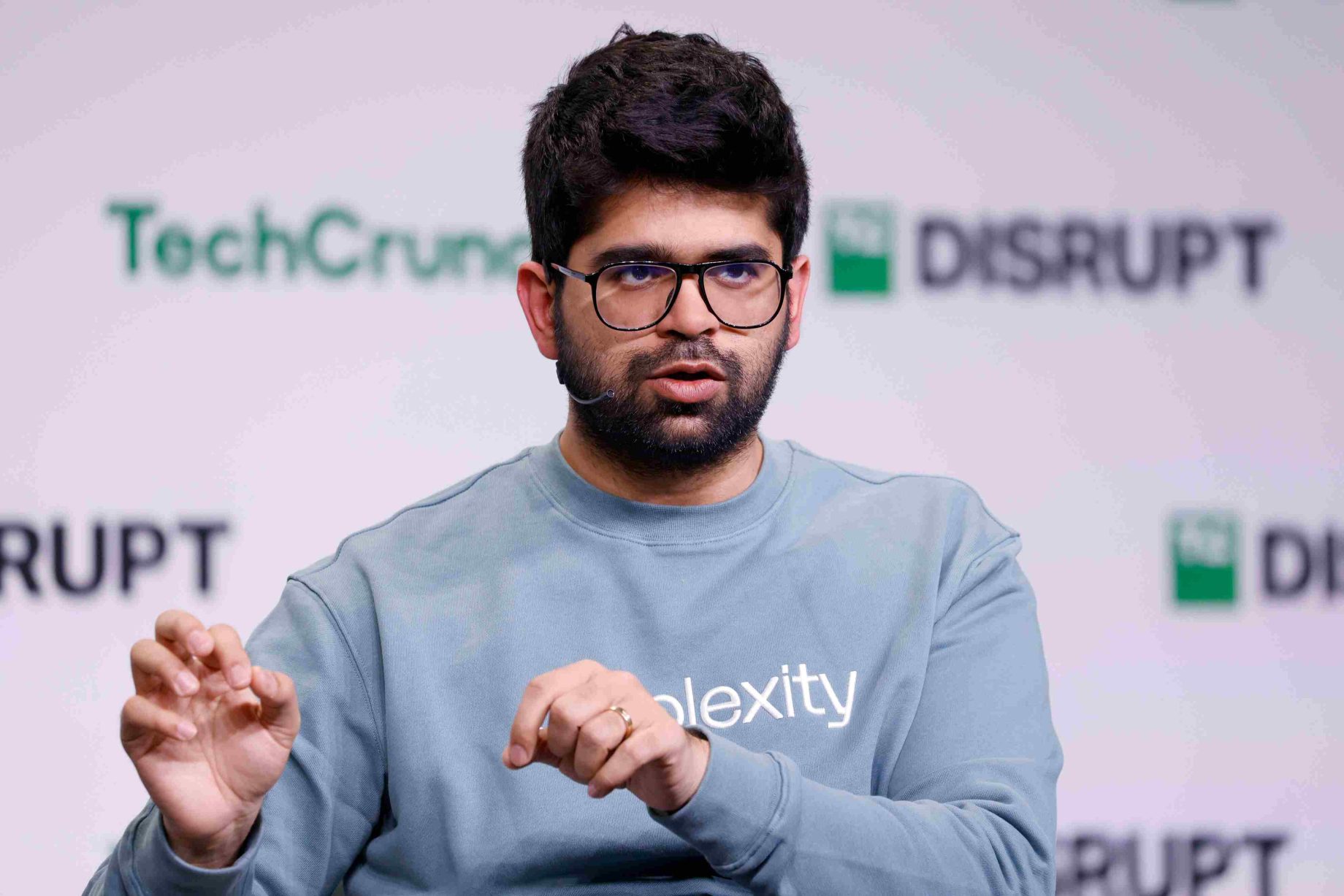
Perplexity is pressing ahead with plans for a stock market debut in 2028, even as investors prepare to assess several closely watched technology listings.
Chief executive Aravind Srinivas said the AI search company’s timetable would not depend on potential offerings from Anthropic or OpenAI, two of the best-funded businesses in the sector.
“Agnostic of these two companies, we were planning for something in 2028 so that still remains the case,” Srinivas said in an interview that aired on Tuesday.
His comments come as the public markets begin to play a larger role in determining how much confidence investors have in the artificial intelligence boom. Anthropic, which developed the Claude chatbot, confidentially filed for an initial public offering last week. OpenAI is also reportedly considering a listing, while SpaceX is expected to offer an early indication of demand for large technology flotations.
“I certainly think there will be ripple effects if they don’t go well, like there is no sugar coating on that. The SpaceX IPO this week will definitely be a leading indicator to how Anthropic or OpenAI will go out,” Srinivas told CNBC.
The attention surrounding those companies reflects a wider debate about whether lofty AI valuations can hold up as competition intensifies and development costs continue to rise.
Srinivas said Anthropic and OpenAI deserve premium valuations while they remain at the forefront of the industry, but warned that investor patience may weaken if progress slows.
“If for six months you don’t see a model capability advance from one of these two companies, then it’s a problem for them,” Srinivas said.
Companies are also taking a more measured approach to AI spending. Rather than relying on the most powerful model for every task, businesses are increasingly weighing performance against cost.
Perplexity’s platform reflects that shift. It draws on models from several providers and selects an option based on the task, expected quality, and price.
“If there is an open source model that gets the job done 90% of the time, I’d probably use that if it’s 10 to 20 times cheaper than the frontier model,” Srinivas explained.