

A hidden gem that stopped sparkling
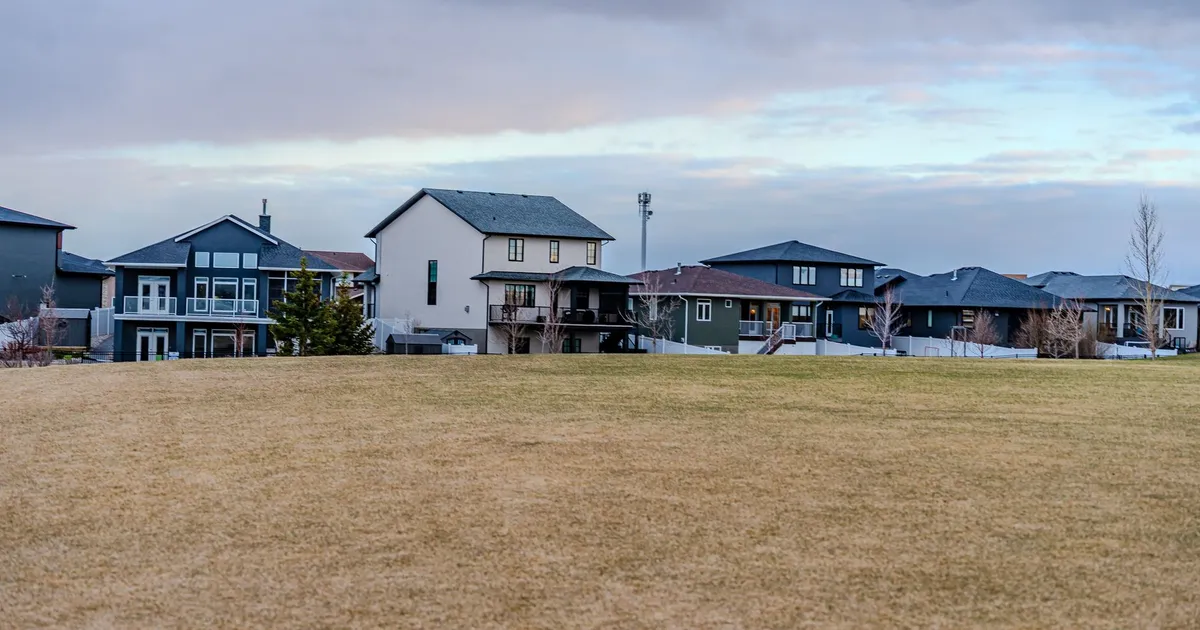
When Chris White pitched Merino Downs to the Otago Daily Times in 2018, the thesis was elegant. Twizel was a “hidden gem”, undervalued relative to Tekapo, Wanaka, and Queenstown. A 34-lot lifestyle subdivision on 22 hectares of former station land, designed to premium specifications with 16,000 native tussocks, fibre-optic connectivity, and protective covenants, would capture the upside as the Mackenzie Country caught up.
The investment case rested on three assumptions: continued house price growth, stable construction costs, and aligned partners. All three have failed.
In October 2025, Texas-based entrepreneur Trammell Simonton Crow applied through his company Pounamu Strategic Holdings to liquidate the management entity controlled by White. BDO Christchurch liquidators Colin Gower and Diana Matchett were appointed to the jointly owned building company, Hooker Holdings Management, in November 2025, and issued their first creditor report in December 2025. Of the 34 lots, roughly 20 have sold. Fourteen remain on the market from $435,000. A show home owned by Crow sat unsold after being listed in 2024.
Mackenzie District Mayor Scott Aronsen was sanguine, telling the ODT in late 2025 there would be “little impact on Twizel” because no outside creditors were owed money. White attributed the stall to macro forces: rising building costs and higher interest rates than overseas.
Both statements are technically accurate. Neither addresses the structural problem.
The macro backdrop was brutal
Merino Downs did not fail in isolation. Treasury’s Budget Economic and Fiscal Update, published on 28 May 2026, shows residential investment hitting 4.7% of GDP in the June 2026 quarter, close to post-GFC lows. House price growth forecasts have been slashed from 6-7% to 3-4% annually, weighed down by weak migration, the end of the rate-cutting cycle, and subdued domestic momentum. Unemployment is forecast at 5.2%.
For a project conceived in a rising market and priced for lifestyle buyers with discretionary capital, those numbers are poison. The exit assumptions baked into the original investment case have all deteriorated simultaneously.
Construction costs compounded the pain. The Commerce Commission’s 2022 residential building supplies market study found building materials accounted for 16-24% of total development cost, with average build costs at approximately $2,696 per square metre. Costs have only risen since. For a subdivision selling bare lots, rising build costs erode buyer confidence in the total project economics.
Offshore equity is not a feature, it is a risk
The Merino Downs structure was simple: two principals, no institutional lender, no formal dispute resolution mechanism. When the market was rising, that simplicity looked like efficiency. When it softened, it became a trap. The only way to resolve a deadlocked two-party equity arrangement is the courts.
Offshore capital in the Mackenzie Country has form. In 2020, the Overseas Investment Office required overseas investors to sell three Twizel-area land parcels totalling 327 hectares, purchased without OIO consent between 2014 and 2017. The OIO’s then-group manager Vanessa Horne said the office “was not satisfied the benefit to New Zealand would be substantial and identifiable” on a related development application. Merino Downs does not appear to involve OIO non-compliance, but the pattern is instructive: offshore investors in sensitive land categories face regulatory layers that domestic deals do not.
A sector-wide reckoning
Merino Downs is tiny by national development standards. But it sits within a pattern the sector has been living through since 2022. The government’s Residential Development Underwrite scheme, launched in October 2024, provides underwrite financing for consented, costed, ready-to-commence projects. It explicitly excludes developments requiring 100% underwriting and focuses on housing supply rather than lifestyle subdivisions. Projects like Merino Downs fall outside its reach entirely.
The uncomfortable lesson is not that Twizel is a bad market. It is that capital structures designed for a rising market become liabilities the moment two principals disagree. Institutional lenders impose governance discipline for a reason: independent valuations, milestone triggers, dispute resolution clauses, and stress-tested exit assumptions. Two-party offshore equity arrangements skip all of that. In a bull market, the discipline looks like unnecessary friction. In a soft market, its absence is the thing that kills the deal.
What developers and lenders should take from this
Seven years after White described Twizel as “the best value play”, the project is being wound down by liquidators. No creditors are harmed, which is genuinely good news. But 14 unsold lots and a liquidated building company are not what the original prospectus envisaged.
For anyone structuring a regional development deal right now, the takeaway is blunt: if your capital structure has no mechanism for disagreement, you do not have a capital structure. You have a bet that everyone stays happy. Soft markets do not reward that bet.
Sources
- Entrepreneur cuts ties with subdivision (2025-12-23)
- Budget Economic and Fiscal Update 2026 (2026-05-28)
- Residential building supplies market study – Draft report (2022-08-04)
- Overseas Investors Required To Sell Twizel Properties (2020-02-10)
- Expatriate banking on new future for Twizel (2018-03-24)
- Residential Development Underwrite (RDU) Information Document (2024-10-18)