

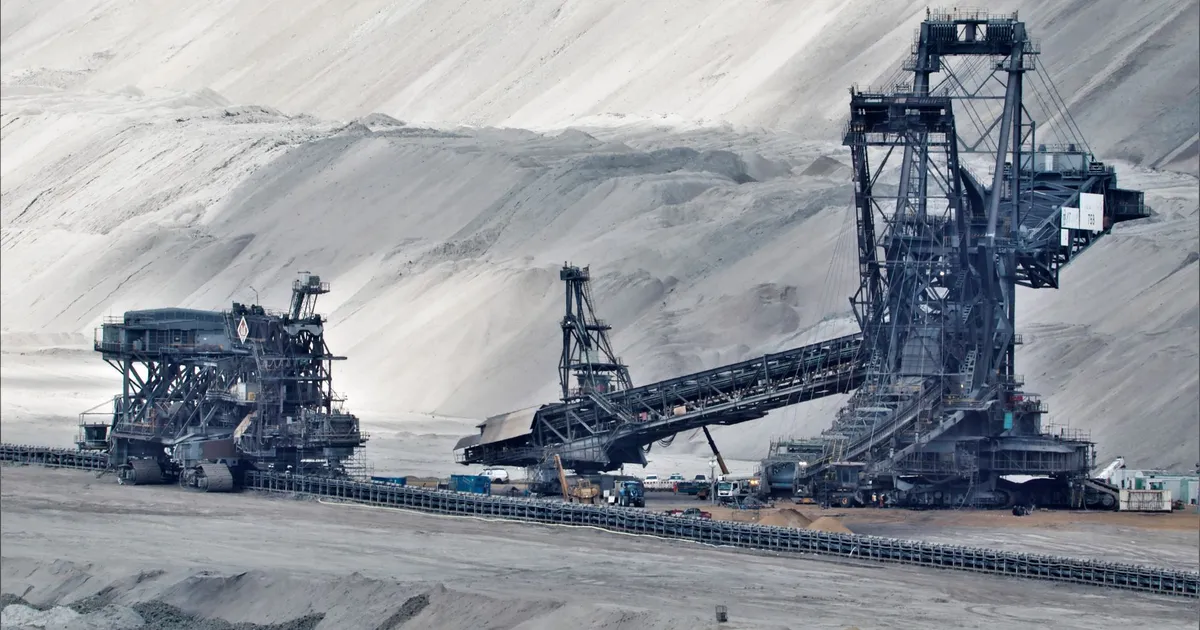
A growth story the Government will happily claim
There are not many sectors handing the Government good news right now, so the one-year review of its Minerals Strategy stands out. Mineral exports have risen from $1.46 billion in the year to June 2023 to about $2.5 billion this year, a 71% lift in roughly three years, with more than $30 million in royalties expected this financial year.
New Zealand Minerals Council chief executive Josie Vidal told Mike Hosking the sector is optimistic but not out of the woods. “There are still hurdles. Any production industry struggles with red tape, so it’s good to see this strategy try to get the mining industry up and running,” she said. For a Government that has staked political capital on reviving resource extraction, the numbers are a vindication. Whether they are durable is another matter.
Price, not production
Here is the line the press release buries. Gold export revenues have nearly tripled in three years to NZ$1.83 billion, climbing from 0.9% to 2.3% of total goods exports. But NZPAM figures show gold production in 2024 was slightly down on 2023. The tonnage did not surge. The gold price did, sitting at or near record highs, and New Zealand’s revenue figures are riding that wave.
That matters for how much of this reaches the wider economy. Westpac senior economist Michael Gordon cautioned in a June 2026 analysis that while mining is highly productive, “much of the benefit would flow to mine owners rather than transform the wider economy.” With Canadian-listed OceanaGold contributing 84% of the country’s gold output through its Macraes and Waihi operations, the profit repatriation question is real. The Crown’s royalty take is genuine but modest against a $2.5 billion headline.
The pipeline behind the price
Strip out the price effect and there is still real activity underneath. The Minerals Strategy to 2040, published in January 2025, targets $3 billion in exports by 2035, and Vidal has argued an expanding industry could beat that “conservative target.”
Fast-track consenting, passed in late 2024, is the enabler. New permit activity rose 16% to 163 new prospecting, mining and exploration permits in the most recently reported year. The projects are substantive. The Snowy River operation near Reefton is on track for commercial production, expected to create 250 regional jobs and add $350 million a year in export revenue. OceanaGold’s Waihi North has $1 billion committed, with production targeted from 2032. New Zealand’s gold output is on track to double by the mid-2030s to its highest level in three decades.
In June 2026, the first critical minerals project applied for fast-track consenting, targeting two million tonnes of sediment a year, roughly $200 million in annual export revenue and up to $1 billion in Crown royalties and taxes over its life. In the 2023/24 year, the Crown collected nearly $242 million in royalties from minerals and petroleum combined.
The regulatory contradiction nobody has resolved
The growth story has a reputational subplot. A bigger mining footprint risks the clean, green image that underpins tourism and premium exports. The Minerals Council’s answer is provenance, arguing New Zealand’s strict standards are a selling point rather than a cost.
But University of Auckland’s Professor JR Rowland flagged the core tension in January 2025 commentary. To deliver a light environmental footprint, he warned, the minister “may need heavy handed regulation” that could be incompatible with both the Regulatory Standards Bill and the fast-track law. The same legislation speeding approvals also curbs the public consultation and legal challenge that historically enforced standards. You cannot promise world-leading environmental credibility and gut the mechanisms that prove it.
What business should watch
For businesses, the near-term upside is regional and concrete. Reefton and Waihi North alone represent over $1.35 billion in committed capital and 250-plus direct jobs in regions with few alternatives, plus local procurement in engineering, logistics, fuel and accommodation. The critical minerals pipeline, if it converts, adds an export category with strong global demand tailwinds as the world races to source materials for low-emissions technology.
The question is durability. A chunk of the $2.5 billion is a gold-price story that can reverse. The structural growth is real but early. The $3 billion by 2035 target looks reachable if prices hold and projects convert, but that is a decade of investor confidence to sustain, and the one-year review cannot yet tell us whether Wellington’s settings will hold their nerve that long.
Sources
- Josie Vidal: New Zealand Minerals Council CEO on exports increasing from $1.46 billion in 2023 to $2.5 billion this year (2026-07-22)
- ‘Pure’ New Zealand chases gold as record prices burnish allure (2026-06-23)
- First critical minerals project applies for fast-track (2026-06-11)
- Mining Stats Show A Sector Delivering For NZ (2024-11)
- A Minerals Strategy for New Zealand to 2040 (2025-01)
- Government plans to double mineral exports by 2035 – Expert Reaction (2025-01-31)
- Mining industry statistics for 2024 – New Zealand Petroleum and Minerals