

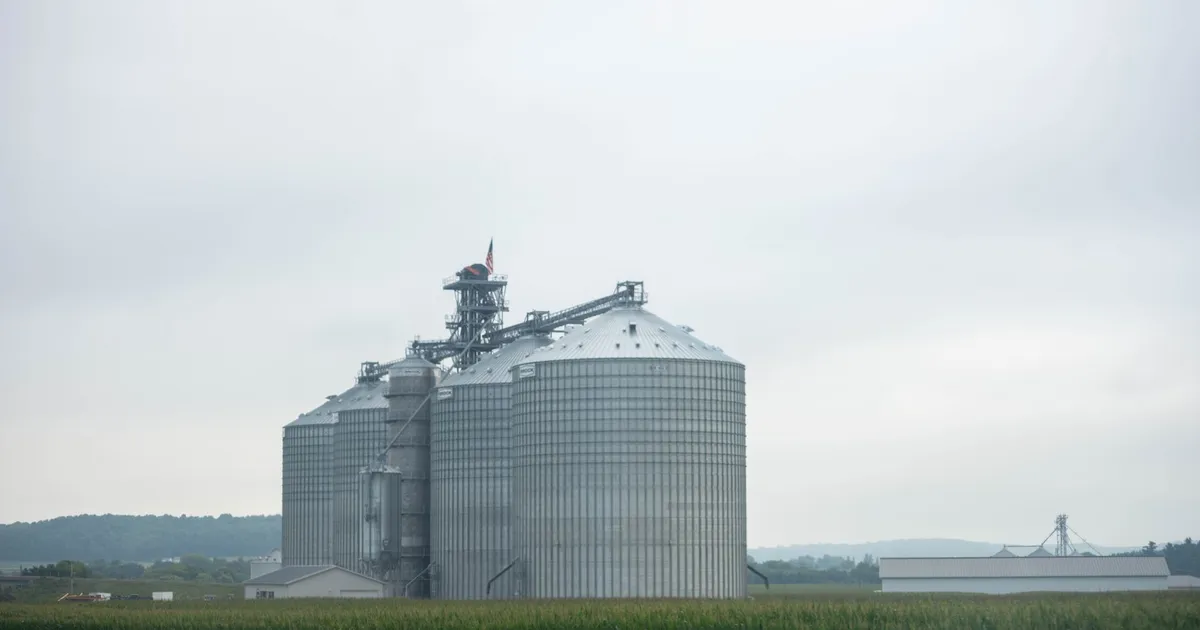
When a French multinational decides its New Zealand malting plant is no longer worth the money, 46 years of manufacturing history closes with it. Malteurop will shut its Marton malt plant at the end of September 2026, ending malting operations that have run in the Rangitikei town since 1979. Around 14 direct employees lose their jobs, plus an uncounted number of barley growers across Rangitikei, Manawatu and Hawke’s Bay.
This is not a minor supplier exit. The Marton plant supplies roughly 70% of New Zealand’s total malt market and is the primary source for Lion, DB and Asahi. When it stops, the domestic malt supply chain loses its spine.
The maths that made Marton disposable
The company declined to comment, but the story writes itself in the numbers. New Zealand beer consumption fell to 265 million litres in 2025, down 10% on the prior year and the lowest level ever recorded. Local barley intake had already collapsed from a peak of 26,000 tonnes a year down to 6,000 to 7,000 tonnes, a fall of more than 70%.
Gladfield Malt’s Doug Michael put the underlying logic bluntly. “They’re a big multi-national company and the malting plant that they have here in New Zealand is just a tiny part of their business,” he told trade publication Hoppiness. That is the whole story. When Malteurop’s global beer volumes soften, a subscale plant at the edge of its empire gets closed rather than upgraded. The plant reportedly needed significant investment to keep running, and head office decided it was not worth it.
That calculus is not unique to Malteurop. It applies to any overseas-headquartered operation where the local plant is small relative to global peers. The vulnerability is structural, not a one-off.
The pattern industry is now naming
On the same day the Marton closure surfaced, the Employers and Manufacturers Association released its 2026 election policy directives, explicitly warning of deindustrialisation. EMA head of advocacy Alan McDonald said the country has “seen the rapid progression of de-industrialisation across New Zealand,” and that New Zealand has “gone from a country that attracted international business because of our energy supply, to having energy costs and availability routinely cited as a reason for closing domestic businesses.”
The EMA wants a strategic framework identifying critical industries, conditional incentives and government-backed loans to help manufacturers shift off gas. McDonald frames it carefully for a fiscally conservative government, arguing it is “not giving away money, it’s more judicious use of that money to encourage and keep those critical businesses here.” Whether a subsidy-sceptic government buys the pitch is another matter. But the accumulating list makes the argument harder to wave away. The Marton news followed Juken NZ’s decision to close its Kaitaia timber mill after failing to find a buyer, another regional exit in the same month.
The Kiwi operator ready to move in
Here is the genuinely interesting part for a market-minded reader. The gap Malteurop is walking away from is a commercial opportunity for a New Zealand-owned business. Gladfield Malt, based at Dunsandel in Canterbury, has been quietly building domestic capacity and runs around 180 contracted growers. DB Breweries has already signalled it will lean on Gladfield and imported malt.
Absorbing 70% of the domestic market is a large ask, and the remainder will likely flow in from Australian suppliers including Malteurop’s own Geelong plant. New Zealand’s grain logistics are built around trucks rather than shipping containers, which creates friction and cost for importers scaling up, and that cost will land on brewers and eventually drinkers. But this is a competitive market reallocating, not a rescue operation. A domestic operator stands to capture share that a foreign multinational surrendered.
What to watch
Rangitikei Mayor Andy Watson says the plant’s silos, with 25,000 to 30,000 tonnes of grain storage, are in fine shape and could attract a new operator. He would “love to see someone move in that starts adding value to grain.” Lion, the largest brewer, has not yet committed to a supply alternative, and that decision will shape how much of the market Gladfield genuinely wins. For arable farmers, Federated Farmers’ Douglas Giles notes conversion to livestock is feasible but not an economic like-for-like, and his observation that the arable sector “hasn’t got a lot of profile in Government” because it lacks an export footprint is a pointed contrast with dairy and kiwifruit. The closure is a warning for any NZ manufacturer sitting inside a global balance sheet. When you are the small line item, you are the one that gets cut.
Sources
- French company Malteurop closing Marton malt plant at end of September (2026-07-21)
- ‘Another employer lost’: Marton malt mill set to shut (2026-07-21)
- NZ Brewing Shock As Major Malt Supplier Shuts (2026-07-17)
- Employers want future government to step in to stop hollowing out of manufacturing businesses (2026-07-21)
- EMA Calls For Fewer Policy Shocks, More Certainty For Business In 2026 Election Policy Directives (2026-07-21)