

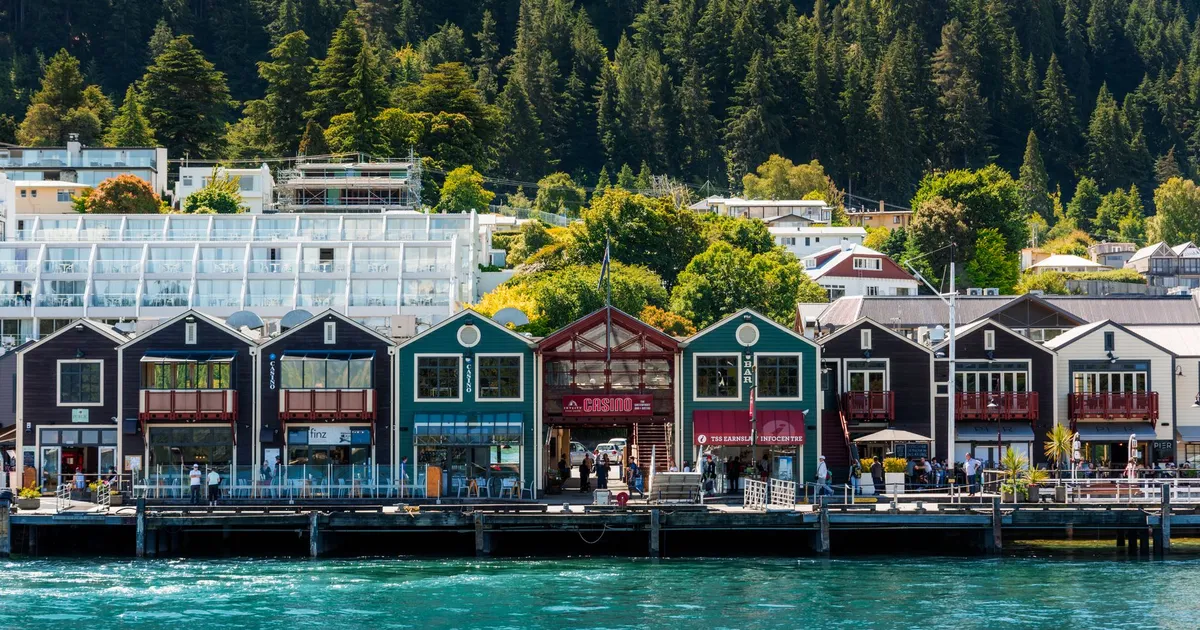
Brookfield Asset Management, a NYSE-listed firm with US$75 billion in assets under management, bought the Sofitel Queenstown and Rydges Wellington from a consortium including the NZ Superannuation Fund for $250 million. The Sofitel component set a record price per key in New Zealand. Around the same time, Australian-based MA Financial acquired Queenstown’s largest hospitality group, Republic, for over $40 million. A German family completed the South Island’s first Active Investor Plus property deal, investing $5 million-plus into Queenstown real estate.
Three separate offshore buyers. Three different structures. One destination. That pattern is not coincidence. It is a thesis.
Premium is pulling away from everything else
The data behind these deals is unusually clear-cut. In December 2025, the NZ Herald reported Grand View Research estimates that New Zealand’s luxury travel market generated more than $8 billion in revenue in 2025, with projections suggesting that figure could double to roughly $18 billion by 2033. Horwath HTL data from the same report showed five-star room supply grew 17.6% while luxury demand rose 11%, even as lower hotel categories experienced outright declines.
The divergence is the story. In Auckland, five-star hotels recorded 3% revenue per available room increases while lower categories declined over 10%. In Queenstown, peak summer revenue per available room hit approximately $370 per night, with New Year’s Eve occupancy at 91% and average daily rates up 24% year-on-year at $733. Luxury Escapes CEO Adam Schwab said in the same report that bookings to New Zealand were up nearly 40% year-on-year.
This is not a rising tide lifting all boats. It is premium hospitality decoupling from the broader accommodation market.
Confidence returned in 2026
Wayne Keene, Bayleys National Director Hotels Tourism and Leisure, said in April 2026: “We’ve seen a real shift in sentiment – confidence is back, and it’s now translating into activity.” He noted that while 2025 saw a measured transaction pace, momentum accelerated sharply at the start of this year, with Auckland hitting 89% occupancy in February and Queenstown continuing to lead on rate growth.
International visitor numbers have rebounded to around 97% of pre-pandemic levels. The government’s $70 million Major Events and Tourism package is expected to attract large-scale international acts from this year onwards. The Active Investor Plus visa has now channelled $3.39 billion into New Zealand, providing a regulatory pathway that institutional buyers and wealthy individuals are clearly comfortable using.
Queenstown’s numbers explain the bet
The destination-level economics make the offshore interest logical. Visitor expenditure rose 9% year-on-year in December 2024, driven by an 18% surge in international spending that more than offset a 2% domestic decline. Commercial guest nights totalled 351,500 with 81% average occupancy.
For the year ending June 2024, Queenstown recorded 7.6 million total visitor days and visitor-related card expenditure of $924 million. International visitor spending was $519 million, up 14% on the prior year. Tourism contributed $1.1 billion to Queenstown-Lakes District GDP, representing 28.2% of the district’s total economic output.
A Lexology analysis in April 2025 identified the structural drivers: a weaker NZ dollar enhancing purchasing power for foreign buyers, simplified AIP visa investment categories, straightforward OIO pathways for hotel assets, and rebounding tourism demand. It concluded that foreign investment in New Zealand’s hotel sector is set to grow.
What domestic players should take from this
Offshore capital is not buying New Zealand broadly. It is buying irreplicable natural assets, premium positioning, and a currency discount. The lake, the mountains, the remoteness – these cannot be built elsewhere. When a firm managing US$75 billion in assets decides an 84-room Queenstown hotel is worth a record price per key, it is pricing long-term scarcity, not betting on next quarter’s domestic consumer confidence.
The uncomfortable implication for domestic hotel owners, tourism operators, and policymakers is that the market is bifurcating in real time. Premium assets are being repriced upward by global capital with long time horizons. Mid-tier and budget accommodation is declining. If New Zealand’s tourism strategy does not explicitly account for this divergence, it risks optimising for an average that no longer exists.
Sources
- Momentum returns to New Zealand’s Hotels, Tourism and Leisure sector – Bayleys (2026-04-14)
- NZ’s luxury tourism boom: High-end travel spend set to double by 2033 (2025-12)
- DQ Visitor Economy Insights Resource YE June 2024 (2024-06-30)
- Brookfield Asset Management gains OIO consent to buy 2 hotels for $250m
- New York-listed Brookfield plans $250m purchase of Rydges Wellington, Sofitel Queenstown
- Queenstown hospitality group Republic sold to MA Financial in $40m+ deal
- South Island’s first ‘golden visa’ deal made