

The numbers keep getting worse
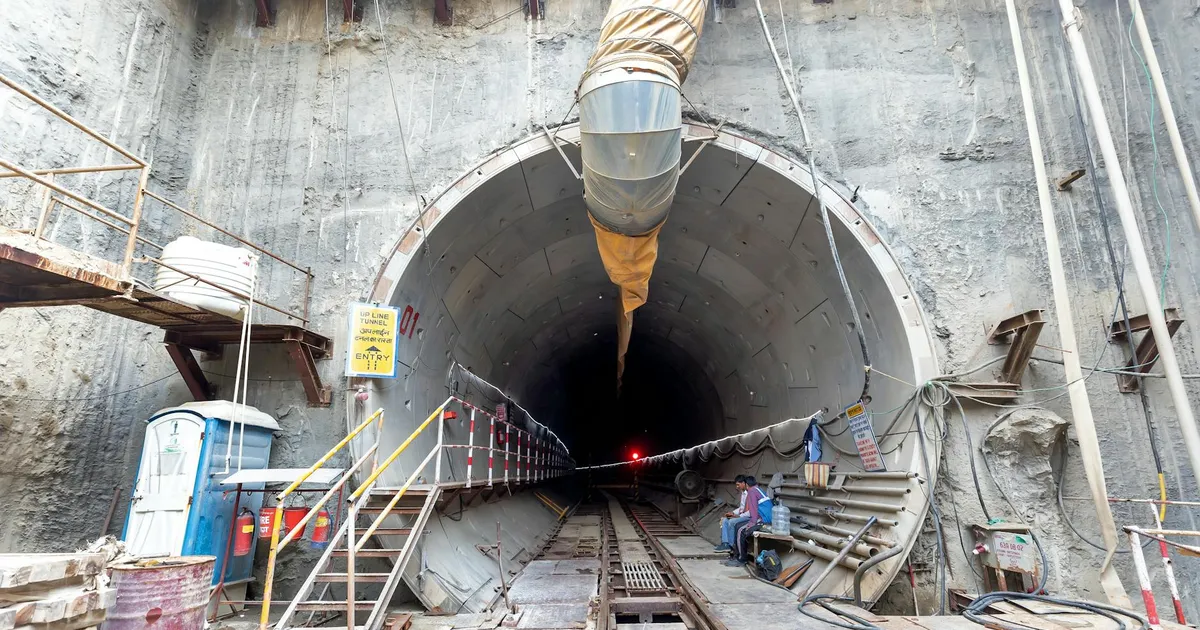
New Zealand’s largest infrastructure project is about to open with a price tag that would have been unthinkable when construction began. The City Rail Link’s final cost is expected to reach $5.5 billion, up from original estimates of $2.8 billion to $3.4 billion in 2017. That is bad enough. What makes it a balance sheet problem rather than just a project management embarrassment is what happened next.
In the 2025/26 Budget, the Crown absorbed a $700 million impairment on its CRL investment, an accounting recognition that the government spent far more than the assets are now worth. The total $5.5 billion spend is delivering assets tentatively valued at only $4.2 billion. That single write-down helped push the projected operating balance to a deficit of $12.1 billion.
Infrastructure Minister Chris Bishop has announced a full post-completion review, telling media: “Like everyone, I’m unhappy with the project’s cost. I am determined to do a post-completion full review of the project, which is something not often done in New Zealand.”
The operating cost nobody budgeted for
The capital blowout is the headline. The operating gap is the ongoing wound. Once trains start running, the estimated annual net operating cost is approximately $235 million after counting new passenger revenues. That covers interest on borrowed capital, maintenance, station running costs, depreciation, charges to KiwiRail, and additional rail services.
In June 2025, Auckland Mayor Wayne Brown put the problem bluntly: “Next year’s increase in rates is largely down to the fact that the opex for this thing was not included in anyone’s budget.” That problem has not gone away. Auckland businesses already facing rates pressure are now partially funding an operating cost that was never properly planned for.
The asset transfer itself is a governance tangle. CRL Limited must hand completed assets to two separate organisations. Auckland Transport is forecast to receive $2.8 billion in assets, while KiwiRail expects $1.4 billion. The gap between what was spent and what’s being received is the impairment already booked.
How a scope decision doubled the cost
Former CRL CEO Sean Sweeney has been unusually candid about what went wrong. Speaking in May 2026, he told 1News the project could have been delivered for roughly half the price, drawing a direct comparison with Copenhagen’s metro: “They have been brutally disciplined about how they’ve specified scope, and they’ve built very small, affordable stations all through Copenhagen at a quarter of the cost of CRL.”
The contrast is damning. CRL stations use 200-metre platforms and between six and eight escalators. Copenhagen’s are 60 metres long with two. The 2019 decision to upgrade from six-car to nine-car train capacity, made mid-project, required extended platforms at all three underground stations and an additional entrance. That single scope change is now understood to have been a major cost driver.
The broader picture is worse. New Zealand builds metro rail at US$922 million per kilometre, compared to Australia at US$321 million, France at US$256 million, and South Korea, Spain and Finland at around US$100 million. This is not a one-off failure. It is a structural one.
The next $21 billion is already in the pipeline
The CRL is the foundation of Auckland’s rail network, not the ceiling. KiwiRail’s 2024 Programme Business Case sets out a 30-year Auckland rail investment programme with a capital cost of $21.2 billion to $28.3 billion, and a total cost including operations and renewals of $54.1 billion. That investment will be delivered by the same institutions, using the same project culture, that produced the CRL.
And the foundation may not even be solid. A June 2023 Ministry of Transport rapid review warned that “if not resolved, there is a growing risk that the Auckland metro network will not be able to support the future timetable after CRL opens.” The review found insufficient alignment between KiwiRail, Auckland Transport and Greater Wellington on service outcomes, and insufficient funding to maintain the network in a steady state.
Treasury’s interim financial statements for the nine months ended 31 March 2026 show net core Crown debt at $187.8 billion, or 42.2% of GDP. The fiscal room for another round of infrastructure cost blowouts simply does not exist.
What this means for Auckland business
Bishop’s review, to be carried out by the Infrastructure Commission, is welcome. But it is examining a project whose costs are already locked in. The $700 million impairment is booked. The $235 million annual operating cost is coming. The rates increases are flowing through.
For Auckland businesses, the CRL story is no longer about a tunnel. It is about whether the institutions responsible for the next $21 billion in rail investment can be trusted to deliver it without repeating the same mistakes. The evidence so far says they cannot, and the review Bishop has ordered needs to produce genuine institutional reform rather than another report that gathers dust while the next megaproject quietly doubles in cost.
Sources
- NZ Herald: Infrastructure Minister Chris Bishop announces City Rail Link review of costs, missed opportunities (2026-05)
- Newsroom: Auckland’s shiny new $5.5b underground leaves political landmines (2025-06-12)
- 1News: Govt pledges CRL review after former boss says it could have cost less (2026-05-07)
- KiwiRail: Auckland Rail Programme Business Case Overview and Economic Impacts (2024-08)
- Ministry of Transport: Rapid Review of KiwiRail Passenger Services (2023-06-26)
- Treasury: Interim Financial Statements of the Government of NZ for nine months ended 31 March 2026 (2026-05)
- B2B News: CRL could have cost $2b less – ex-CEO Sean Sweeney admits