

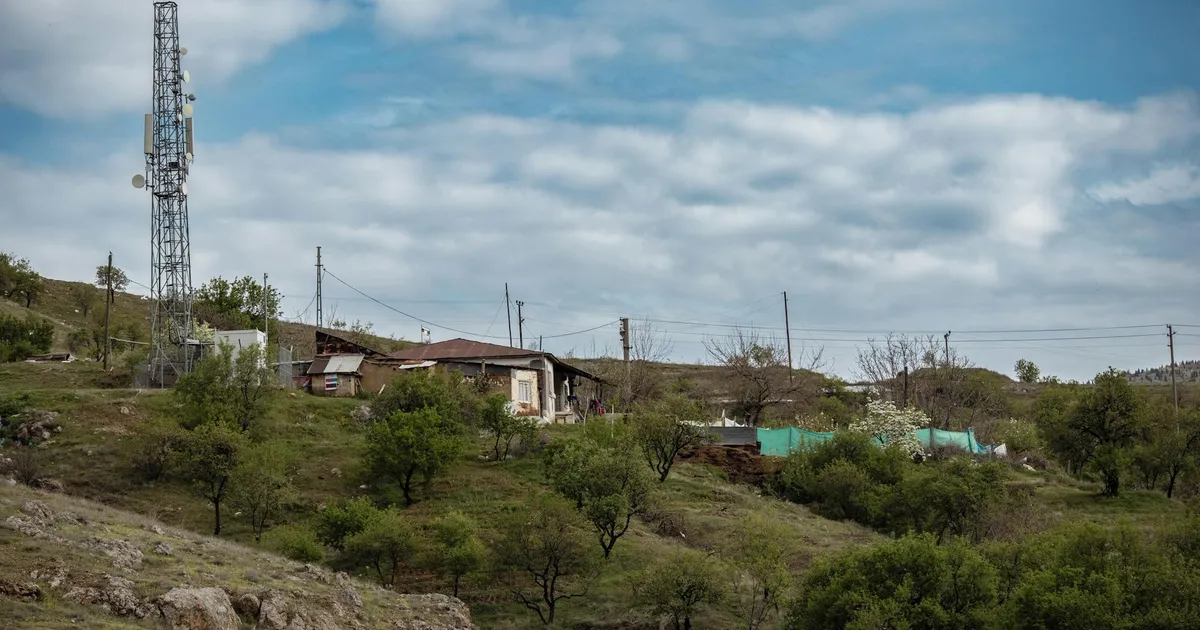
The towers survived, the batteries didn’t
Spark and Connexa have been awarded a government co-funded contract to upgrade battery backup at 295 mobile cell towers across New Zealand, extending their endurance to 24 hours. The project covers Northland, Hawke’s Bay, Gisborne, and Nelson, with work starting in the second half of 2026 and completion expected by June 2027.
The contract received $4 million from the National Infrastructure Funding and Financing (NIFF) facility, co-funded by Spark and Connexa. It is the latest tranche of a programme that has now attracted approximately $12 million in Crown investment across 300-350 rural towers.
Spark network and operations general manager Mike Paranihi says the upgrades will give over a million Spark customers continued access to mobile data, text and calls during prolonged outages, and will support up to 1.7 million addresses to call 111 regardless of provider.
The numbers are welcome. What took so long is the more interesting question.
A $37.5 million lesson in flat batteries
The Hawke’s Bay Communications Resilience Report, published in July 2024, delivered the most detailed post-mortem of what happened to telecommunications during Cyclone Gabrielle. The findings were damning in their simplicity: 80% of cell site outages nationally were caused by power loss, not physical damage. Of 1,600 impacted cell sites, only two suffered actual structural damage to telecoms infrastructure. In Hawke’s Bay alone, 185 cell sites went offline at peak disruption, leaving just 20% of the region’s sites operational.
The towers were fine. The batteries were not.
The Northland transmission tower collapse of June 2024 hammered the point home with a dollar figure. That single event affected 88,000 customers and the Electricity Authority estimated the economic cost at more than $37.5 million, with other estimates as high as $60-80 million. Power was not fully restored for more than three days. Cell towers running on 4-8 hour batteries would have gone dark long before the lights came back on.
Why telcos didn’t fix this themselves
The commercial incentive structure explains the delay. Resilience spending does not generate revenue. A tower that stays online during a storm serves the same customers paying the same monthly bill. The investment case is pure downside protection, which is a difficult pitch in any boardroom.
In June 2025, Cabinet reprioritised $6.4 million of existing connectivity funding to accelerate battery upgrades. The Cabinet minute was blunt: “electricity outages are the single biggest cause of telecommunications outages in emergency events.” By November 2025, about 100 upgrades had been completed and then-Minister for Media and Communications Paul Goldsmith said the work would “ensure connectivity is in place in the immediate aftermath of an event.”
The NIFF co-funding model, where government contributes capital alongside private partners rather than mandating spend, is the political compromise. It avoids a regulatory fight while still getting batteries into towers. Whether voluntary co-investment produces the same coverage as a mandate remains an open question.
24 hours is progress, not the finish line
New Zealand’s 24-hour target is a significant step up from the previous 4-8 hour standard. But it is not the global benchmark. The Hawke’s Bay report noted that California mandated 72-hour backup power after the 2019 wildfires, and Taiwan, Finland, Germany, Japan, and Sweden have all required carriers to prepare for extended outages.
The constraint is not engineering. Some Northland sites demonstrated the ability to operate for three days without mains power during previous storms. The constraint is investment appetite, and the willingness of either government or industry to commit to a higher standard.
What this means for businesses in exposed regions
For business owners in Northland, Hawke’s Bay, Gisborne, and Nelson, the upgrade programme addresses a specific vulnerability that most would not have identified: their mobile connectivity fails not because a cyclone rips a tower off a hill, but because a battery goes flat after eight hours.
From late 2026, businesses in those regions should have meaningfully better continuity during power outages. That is a concrete improvement. But it is also a prompt. If a single regional outage costs $37.5 million or more, the return on resilience spending is not theoretical. It is quantifiable, and for any business that depends on connectivity to operate, the question is no longer whether to invest in continuity planning but how much downtime you can actually afford.
Sources
- Reseller News: Spark and Connexa partner to boost cell phone tower battery capacity (2026-05-15)
- Telecompaper: Spark and Connexa to upgrade battery resilience at 295 mobile towers (2026-05-15)
- ODT: Money to strengthen cell towers expected: govt (2025-11-25)
- Hawke’s Bay Communications Resilience Report (2024-07)
- Electricity Authority: Northland tower collapse 20 June 2024 review (2024-09-13)