

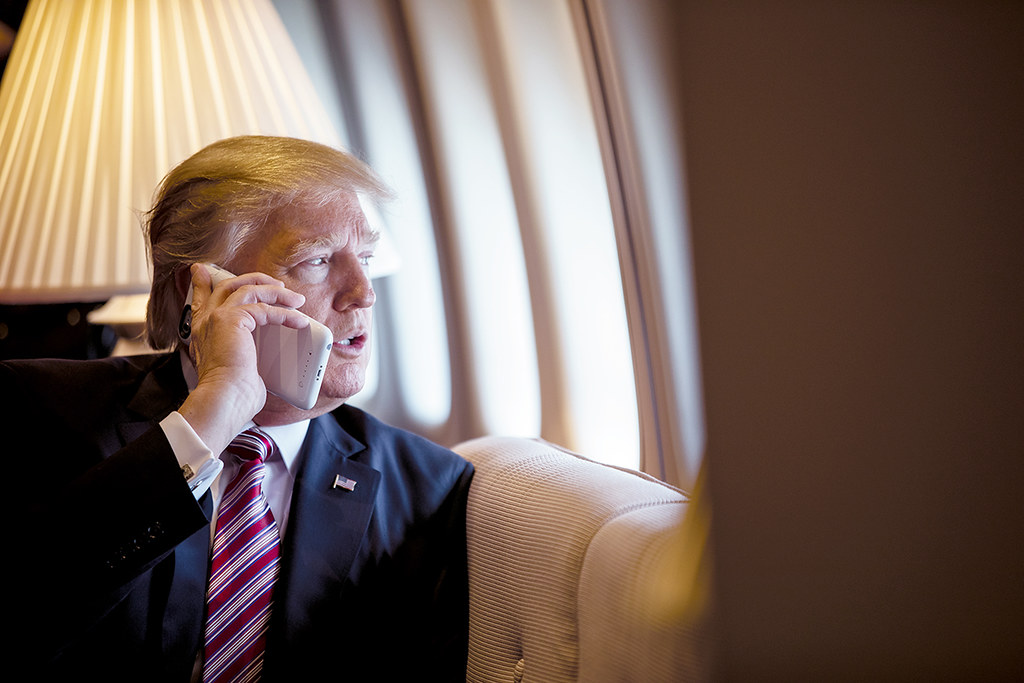
U.S. President Donald Trump has said he is prepared to speak directly with Taiwanese President Lai Ching-te as his administration considers whether to approve a major new arms package for Taipei, a move that would test decades of carefully managed diplomatic practice.
Washington has avoided direct contact between sitting U.S. presidents and Taiwan’s leaders since 1979, when it ended formal relations with Taipei and recognised Beijing as the government of China. The United States does not recognise Taiwan as an independent country, but it remains the island’s most important security partner and is required under American law to help it maintain the means to defend itself.
Trump’s remarks came after his recent meeting with Chinese President Xi Jinping in Beijing, where Taiwan was among the most sensitive issues on the agenda. China claims the self-governed island as part of its territory and has repeatedly warned Washington against treating Taipei as a formal diplomatic partner. Beijing has also not ruled out the use of force to bring Taiwan under its control.
Asked on Wednesday whether he planned to speak with Lai before deciding on the proposed arms sale, Trump said, “I’ll speak to him. I speak to everybody.. we’ll work on that, the Taiwan problem.”
The possible deal, reportedly worth about $14 billion, is expected to include air-defence missile systems and anti-drone equipment. It would come as Taiwan increases defence spending in response to growing Chinese military activity around the island.
Trump has not confirmed whether he will approve the sale. Speaking aboard Air Force One after leaving Beijing last week, he said he would “make a determination over the next fairly short period.”
“I have to speak to the person that right now is, you know who he is, that’s running Taiwan,” he added.
The legal basis for U.S. weapons sales to Taipei is the Taiwan Relations Act of 1979, which allows Washington to “provide Taiwan with arms of a defensive character.” At the same time, successive U.S. administrations have sought to manage those sales without derailing ties with Beijing.
Lai has pushed back against suggestions that Taiwan’s future could be negotiated between larger powers. He has described Taiwan as a “sovereign, independent democratic country” and said peace in the Taiwan Strait must not be “sacrificed or traded away.” He has also called U.S. arms sales a “key factor in maintaining regional peace and stability.”
Trump has challenged Taiwan protocol before. In 2016, as president-elect, he spoke with then Taiwanese leader Tsai Ing-wen, drawing a formal complaint from China.