

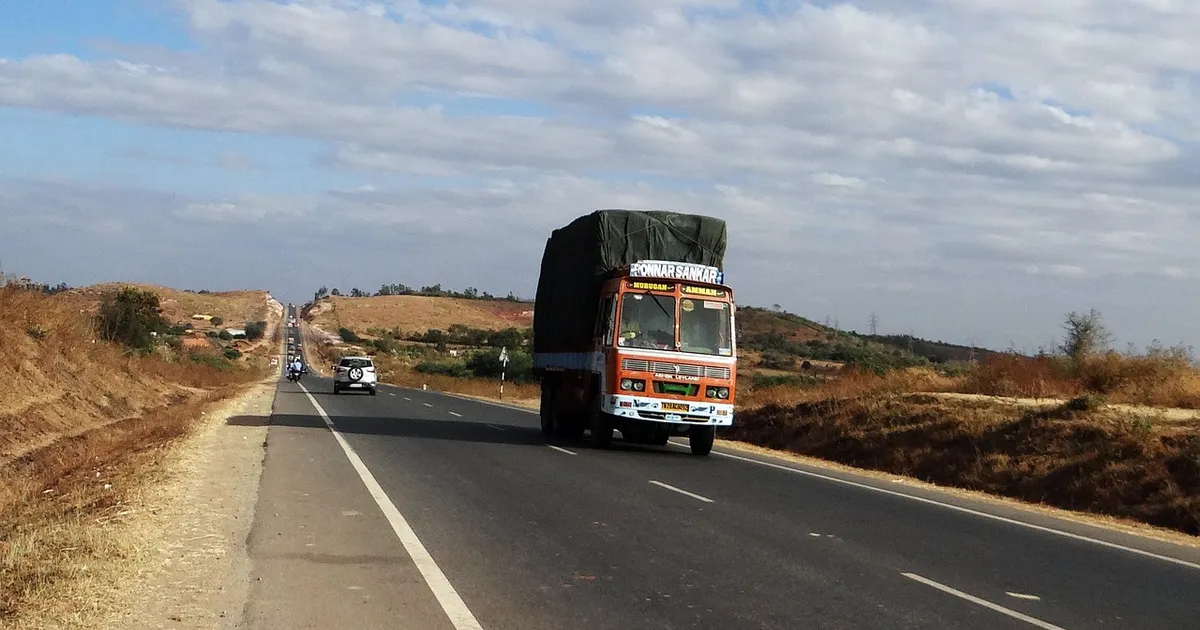
The vehicles are half-ready and the rules won’t let them work
New Zealand’s freight operators are running trucks with spare carrying capacity because regulations won’t let them fill it. At the same time, diesel sits at $3.42 per litre, national diesel stocks have fallen to 41.3 days of cover, and the industry says loosening weight restrictions alone would save several million litres of diesel and eliminate around 10 million kilometres of heavy vehicle travel.
The government agrees these changes make sense. It has identified four specific regulatory fixes. But it has parked them behind a Phase 2 trigger in the National Fuel Response Plan that has not been pulled. Transporting NZ chief executive Dom Kalasih’s response is blunt: “The vehicles we’re looking at, they’ve got spare capacity. We shouldn’t be waiting for things to get bad before we actually do things that make sense.”
A decade of knowing the rules don’t work
The Vehicle Dimensions and Mass Rule dates from 2002 and has been flagged as inadequate for at least ten years. A 2016 Ministry of Transport regulatory impact statement noted the rule gave little flexibility and needed updating so the heavy vehicle fleet could respond efficiently to demand changes. Nothing meaningful happened.
When the government released pre-crisis Phase 2 reform proposals in February 2026, the industry’s assessment was damning. Kalasih said the changes “would remove the need for about 79 heavy vehicle permits a year” and called them tinkering that wouldn’t deliver the productivity improvements the country needs. The fuel crisis didn’t create this problem. It just made the cost of a decade of inaction impossible to ignore.
Four fixes sitting in a drawer
The government’s four Phase 2 measures are straightforward: allow heavier loads per trip, let standard licence holders drive heavy electric utes, relax time and access restrictions for over-dimension vehicles, and remove route restrictions including on Auckland motorways.
Transport Minister Chris Bishop acknowledged the frustration, saying “even small increases in permitted loads could reduce the number of trips needed, saving time, lowering costs and reducing fuel use”. Regulation Minister David Seymour framed off-peak running as potentially high-impact, noting that “trucks run at off peak times without so much traffic could go a long way to improving the efficiency of the delivery of everything from food to vital materials”.
The 50MAX vehicle format already demonstrates the logic. It increases freight capacity by approximately 20% while only lifting diesel use by 10%, with additional axles ensuring no extra road wear per tonne.
Freight demand doesn’t bend with price
Ministry of Transport telematics data shows the core commercial problem. While light vehicle traffic has dropped 4.3% in Auckland, 5.2% in Canterbury, and 8% in Wellington compared to last year, heavy commercial vehicle traffic shows near-zero elasticity. Consumers can choose to drive less. Supply chains cannot.
Operators cannot reduce activity, cannot control input costs, and face serious risk that clients won’t absorb the increases. Kalasih warned that “transport operators cannot wear these price increases and the financial viability of their businesses is at risk” if procurers refuse to pay.
The grocery bill is next
NZ Trucking Association chief executive Dave Boyce put the consumer cost plainly: households could face $100-200 per week in additional grocery costs once freight costs flow through to shelf prices. He also flagged a practical problem with the off-peak delivery fix, noting that “a lot of the warehouses, supermarkets, shops etc just aren’t geared up to take trucks at night” due to labour and resource consent constraints.
This is the kind of second-order friction that gets missed in policy announcements. Removing a regulation on paper means nothing if the receiving end of the supply chain can’t respond.
The irony of Seymour’s own logic
David Seymour opened his Red Tape Tipline in late March with the right instinct: “If there are regulations that make it harder to import, store, distribute or use fuel efficiently, they need to be identified now. Not when the pressure is at its peak.” The industry responded. The regulations have been identified. The fixes are drafted. And the government’s answer is to wait for a trigger that, by definition, means things have already got worse.
The safety analysis Seymour cites is legitimate. Bridge capacity and road wear matter. But these are not novel questions. The 50MAX format already demonstrates that heavier loads and lower road wear can coexist. The VDAM rule has been under review for a decade. The data exists. What doesn’t exist is the political urgency to act before the crisis forces the issue, rather than after. Every week of delay is measured in millions of litres of diesel, millions of unnecessary kilometres, and freight costs that will land on household grocery bills within weeks.
Sources
- Government shouldn’t wait to loosen heavy vehicles restrictions, Transporting NZ says (2026-04-27)
- Government looks to cut heavy vehicle regulations as part of fuel response (2026-04-27)
- Latest fuel numbers released as Government eases vehicle regulations (2026-04-27)
- Ministry seeks regulatory feedback on fuel plan to avoid red tape ‘getting in the way’ (2026-03-29)
- Fears transport service procurers may hit back as costs rise (2026-03-27)
- Fuel information for road freight sector (20 March 2026) (2026-03-20)
- Grim warning from Trucking Association, as impact of rising fuel costs hit consumers (2026-04-20)
- Heavy vehicle rule changes fall short, says Transporting NZ (2026-02-26)
- Market response shows just how essential road freight is (2026-04-10)
- Review of the Land Transport Rule: Vehicle Dimensions & Mass 2002 Regulatory Impact Statement (2016-06-09)