

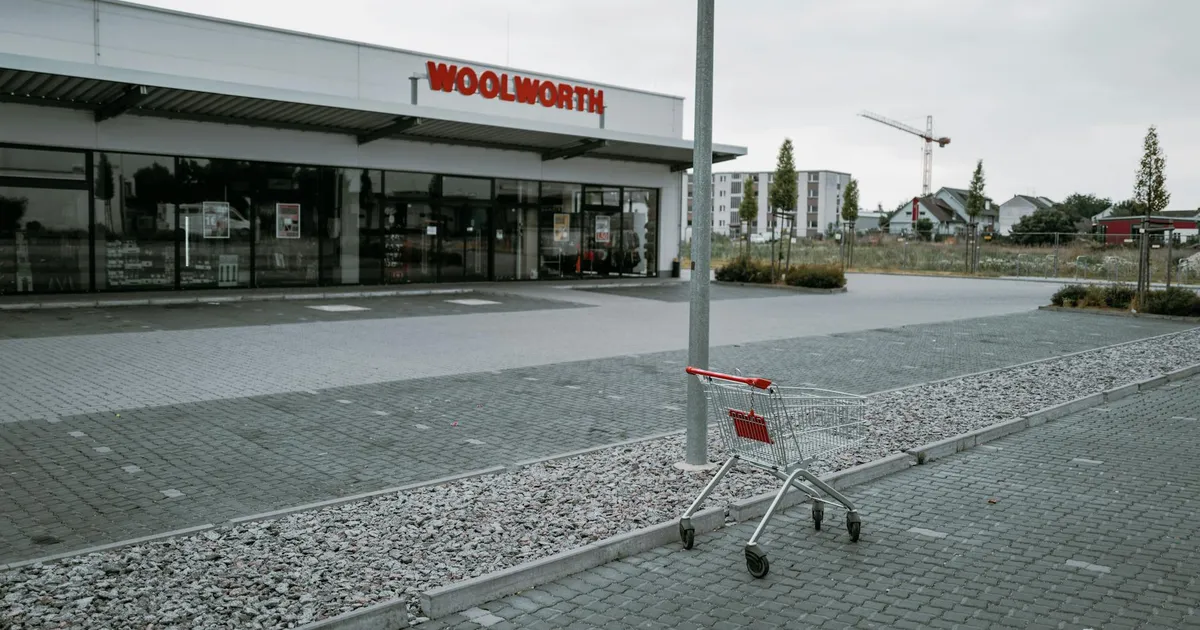
The customers voted with their phones
When The Co-operative Bank announced it would close its Whangārei branch on May 8, the explanation was blunt. Spokeswoman Catherine Bateman said fewer than 10% of the branch’s customers had interacted with it in person or by phone over the previous year.
That number reframes the entire conversation about regional CBD decline. This was not a bank abandoning its community. It was a bank following its customers, who had already abandoned the building. The branch was a ghost before the closure was even announced.
And the bank is not alone. A Northern Advocate survey counted 50 vacant shops across 10 main streets and The Strand Arcade, up 25% from 40 vacancies in January 2024. Commercial broker Peter Peeters noted some spaces had sat empty for three to four years. The casualty list reads like a retail obituary: Life Pharmacy Orrs, EB Games, Jeanswest, Pack & Send, Manna bookshop, Trade Aid, and a string of cafes and clothing stores.
A problem that predates every excuse
It would be convenient to blame the pandemic or the cost-of-living crisis. The data says otherwise.
Back in 2019, a Northern Advocate survey found 48 of 315 ground-floor premises vacant, a 15.2% vacancy rate that was already well above Auckland retail centres at 6.2-6.8%. Commercial real estate agent Peter Peeters warned in 2019 that rates in the city mall ran at around $50 per square metre, with commercial rates seven times the basic residential rate. Property owner Richard Langdon said at the time that the rates were “ridiculously high” and predicted the CBD would be “completely empty soon.”
Seven years later, the trajectory has proved him right. In April 2024, Beautiful Things owner Fiona Matson told the Northern Advocate that commercial rates had climbed a further 17.2%. She pointed to online competition and rising leases compounding the burden: “Online is huge and it’s not helping retailers. It’s not just the stores, it’s jobs gone too.”
The rates warning has been on the table since at least 2019. The council’s primary response over that period has been beautification spending and a succession of taskforces.
Taskforces cannot fix structural decline
Whangārei Mayor Ken Couper has convened a Mayoral Inner City Taskforce with six workstreams covering social support, health and addiction, community safety, infrastructure, housing, and business. The breadth of the workstreams is itself revealing. CBD decline in Whangārei is not just a retail problem but a social one, with safety and addiction issues deterring the foot traffic that remains.
Couper has been candid about the limits of what the council can deliver, calling the revitalisation effort “a community project” rather than a council one. On rates, he has acknowledged the affordability problem and approved an independent financial review ahead of the 2026-27 annual budget.
The council is also pointing to a $34 million central government investment in a Knowledge Education and Arts hub and the NorthTec revitalisation as potential anchors for foot traffic. These are genuine assets if they materialise. But education and arts foot traffic does not automatically convert to retail spend, particularly when the shops those students and visitors might walk past are already boarded up.
Whangārei is the canary, not the exception
National data confirms this is structural. Colliers figures show Auckland’s CBD strip vacancy rose from 0.9% in June 2019 to 11%, peaking at 14.4% in 2021. Wellington’s CBD vacancy nearly doubled from 4.2% to 9.3%. Whangārei ranked bottom of 11 centres in Colliers’ Commercial Property Investor Confidence study.
Retail NZ chief executive Carolyn Young offered the most sobering assessment: “People do that online now. So foot traffic may never return back to the level that it was.”
In April 2024, then-North Chamber president Tim Robinson told RNZ that Whangārei’s closures reflected nationwide retail trends, not just local conditions. He told the Northern Advocate that retailers needed to offer “something which is unique and a genuine value proposition” to survive.
What business owners should actually take from this
For anyone making location or investment decisions in a regional CBD, Whangārei is a warning that the economics of physical presence are deteriorating on multiple fronts simultaneously. Rates keep climbing. Online competition keeps intensifying. Banks are pulling branches because 90% of their customers have already migrated to digital. And the public sector response, however well-intentioned, is unlikely to reverse forces that are reshaping retail globally.
The uncomfortable truth is that no amount of street furniture, taskforces, or arts hubs will bring back foot traffic that has permanently migrated online. The question is not whether regional CBDs will survive, but what they become when the shops, the banks, and the foot traffic are gone. Whangārei is answering that question in real time, and the rest of the country should be paying attention.
Sources
- NZ Herald/Northern Advocate: Whangārei CBD taskforce moves to revive city centre as more shops close
- NZ Herald/Northern Advocate: The plan to cut costs, cap rates and bring shoppers back to the CBD – Mayor Ken Couper
- RNZ Checkpoint: Whangarei CBD suffering in tough economic times (2024-04-16)
- RNZ: How many more empty shops are there really?
- NZ Herald/Northern Advocate: CBD grim – retail spaces unoccupied
- NZ Herald/Northern Advocate: Whangārei shops closing amid cost-of-living crisis, quiet streets (2024-04)
- NZ Herald/Northern Advocate: Whangārei’s CBD ‘is rotting away’ (2019)