

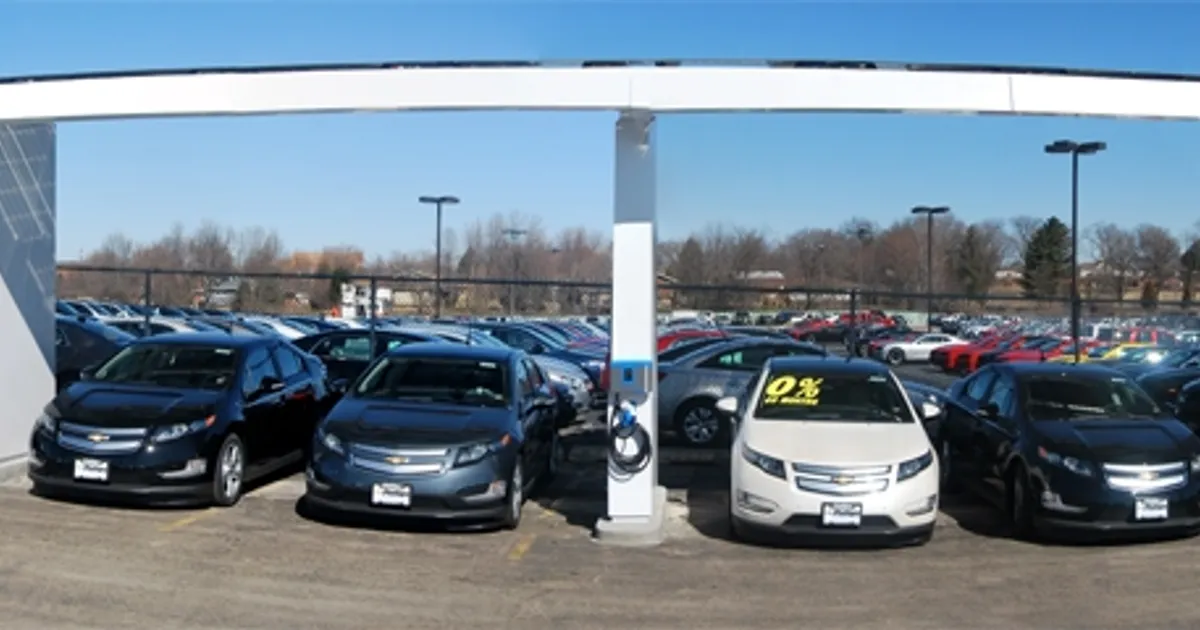
New Zealanders are buying electric vehicles the way they bought toilet paper in 2020. Full battery EV registrations nearly quadrupled in March, jumping from 800 per month to 3,100. Dealers have sold through stock, sold consignment vehicles, and are now selling cars still on the water from Japan. The trigger is fuel prices, not policy, and that makes the buying behaviour more emotional and less analytical than it should be.
Banks are happy to help. Green loans at 0-1% interest are being marketed as the bridge across the EV purchase premium. What the marketing materials gloss over is that those rates hold for only three to five years before reverting to prevailing mortgage rates. For a business owner who financed a $21,900 premium on a Tesla Model Y, that reversion can swallow the fuel savings whole.
The running costs are real but conditional
Nobody disputes that EVs are cheaper to run per kilometre. Home charging costs roughly $4.50 per 100km versus $26-plus for petrol at current prices. Servicing runs 44-66% cheaper because an electric drivetrain has fewer than 20 moving parts. A Tesla Model Y driven 15,000km annually costs $1,460-$1,856 in total running costs compared to $4,100 for a comparable Hyundai Tucson.
AA chief mobility officer Jonathan Sergel puts it fairly: “As technology has moved on and different types of vehicles have entered our market, particularly Chinese-manufactured EVs, you’ve seen price points come down considerably.” For urban commuters on short regular trips, EVs “stack up really well”. But Sergel is explicit that the equation changes materially without home charging access or with long daily distances.
The costs nobody mentions at the dealership
The purchase premium on a Tesla Model Y over a Hyundai Tucson is $21,900, which at current savings rates takes 7.8 years to recover. Then stack the hidden costs. EVs depreciate 30-40% in year one versus 20-30% for petrol cars. Insurance premiums run 23-40% higher – a Tesla Model Y costs $2,800 a year to insure versus $2,003 for a Subaru Forester. Registration is 40% more expensive at $241.59 versus $172.97.
Policy has also moved against EV owners. Road User Charges were reinstated from March 2024 at $76 per 1,000km, roughly $874 annually. The ACC motor vehicle levy discount for battery EVs was removed from 2025/26. These were costs that early adopters never had to carry. Today’s buyers inherit them from day one.
Where the numbers genuinely work
Chinese brands have changed the calculus at the affordable end. The BYD Atto 3 costs less than $6,000 more than a Mazda CX-5, shrinking payback to 2.5-3 years. The BYD Atto 1 starts at $30,000, below a Toyota Corolla Hatch GX Hybrid at just under $38,000. For fleet operators buying volume at these price points, with depot charging already installed, the total cost of ownership case is strong and getting stronger.
Oxford Finance notes that petrol vehicles still cost less to finance upfront because the loan amounts are simply smaller. That matters for small businesses watching cash flow. The green loan rate is not free money; it is a promotional rate with an expiry date.
Charging infrastructure is still half-built
The structural bottleneck remains access. New Zealand has just over 1,800 public charge points. The government’s $52.7 million loan scheme will lift that to around 4,500, which is less than halfway to the 2030 target of 10,000 chargers. For any employee or fleet vehicle without reliable home or depot charging, public charger costs at commercial rates eat directly into the savings that justified the purchase.
Meridian Energy’s head of energy Richard Sanford calls the current moment “a tipping point”, and the demand data supports him. But tipping points reward the prepared, not the panicked. The current EV fleet is just 2.99% of New Zealand’s 4.4 million light vehicles. This transition is early-stage, and the businesses that come out ahead will be the ones who ran the ownership numbers before they signed the loan, not after the fuel price dropped back.
Sources
- The Spinoff: Fomo at the forecourt: EV sales skyrocket amid surging fuel prices (2026-04-09)
- RNZ: Tipping point: Kiwis switch to electric cars, solar as fuel prices stay high (2026-04-09)
- NZ Herald: EVs are cheaper to run but are they cheaper to own?
- NZ Herald: Are electric vehicles cheaper than petrol cars? Costs, savings and battery concerns explained
- Quashed: EV vs Petrol Car – Total Cost of Ownership in New Zealand 2026 (2026)
- Tonkin Financial: Does Buying an EV Make Financial Sense?
- Oxford Finance: EVs vs Petrol
- EVDB: EV Market Stats 2026 (2026)