

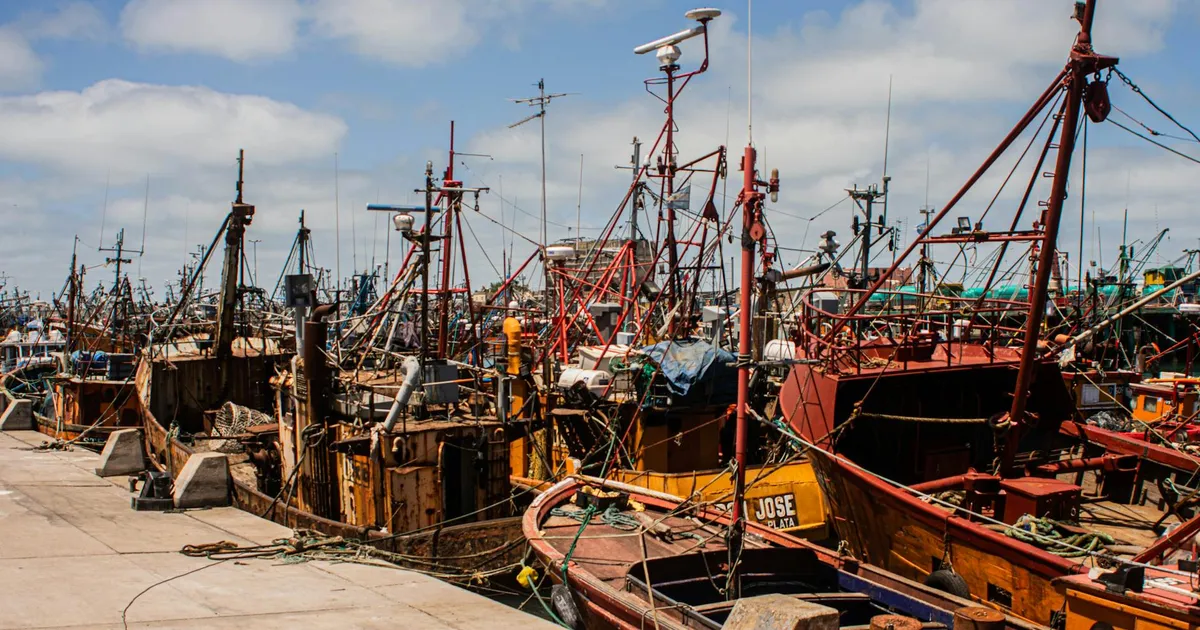
The most exposed industry in the country
When Infometrics ranked New Zealand’s industries by fuel exposure earlier this month, fishing and aquaculture sat alone at the top. Diesel accounts for 26 percent of non-wage operating costs in the sector, a figure that dwarfs road transport at 19-26 percent, primary sector support services at 11 percent, and horticulture at 5.5 percent. Infometrics chief forecaster Gareth Kiernan put fishing “top of the list” for vulnerability, noting it spends roughly a quarter of its input costs on oil-based fuels.
Fishing vessels run on diesel or they do not run. There is no hybrid option, no overnight switch to electric propulsion, no short-term substitute. When diesel hits $3.80 per litre, representing a 24 percent increase in four weeks, the arithmetic for smaller operators becomes existential.
The same story playing out across the Tasman
Australia’s fishing sector is providing a preview. The Australian Financial Review reports that veteran tuna fisher Pavo Walker has watched his monthly fuel bill more than double from $100,000 to over $213,000 since the Iran conflict began, with diesel climbing from $1.50 to $3.20 per litre. Industry experts warn the surge could decimate Australia’s commercial fleet without intervention.
New Zealand’s operators face the same maths with an additional handicap. Unlike dairy and meat producers who benefit from commodity price lifts during inflationary periods, fishing operators have no such buffer. Seafood prices are set by international markets that do not adjust upward just because a fleet’s fuel costs doubled.
Efficiency replaced resilience and nobody noticed
The structural problem runs deeper than the current price spike. New Zealand became 100 percent dependent on imported refined fuels when Marsden Point Refinery converted to an import terminal in 2022. Dr Dulani Jayasuriya, senior lecturer at the University of Auckland Business School, frames the consequence sharply: both Australia and New Zealand “dismantled domestic refining capacity through the 2010s and early 2020s, replacing it with import-dependent supply chains that are lean, efficient, and extraordinarily fragile.”
Jayasuriya’s line deserves repeating in every boardroom: “The just-in-time supply chain is a marvel of optimisation right up until the moment a Supreme Leader is killed and an insurance underwriter in London stops answering the phone.”
The government introduced a Minimum Stock Obligation in January 2025, requiring fuel companies to hold reserves. But the obligation for diesel, the fuel that powers productive industry, is just 21 days, the lowest of the three regulated fuel types. Jayasuriya asks the question Wellington has not answered: “What is the plan for Day 30?”
MBIE saw this coming and set the bar low anyway
MBIE’s own Fuel Security Study, prepared by Envisory and Castalia and published in February 2025, explicitly identified fishing and aquaculture as the economy’s most exposed sector. It modelled 90-day complete fuel supply cessation scenarios. It flagged critical infrastructure vulnerabilities at the Marsden Point import terminal, the Ruakaka-to-Auckland pipeline, and the Wiri storage facility. The government read the report, implemented a 21-day diesel obligation, and produced no sector-specific resilience policy for fishing.
This is not a failure of information. It is a failure of action. The data existed. The modelling existed. The political will to do anything meaningful about it did not.
Compounding hits from every direction
The fuel shock does not arrive in isolation. Fertiliser prices are surging globally following the Middle East conflict. Swap rates increased 70 basis points between 2-23 March, pushing up bank funding costs for operators carrying vessel debt. The primary sector still carries the memory of a 25 percent spike in on-farm costs during 2021-23 that thinned margins and left less capacity to absorb the current hit.
Meanwhile, the downstream effects are already moving. NZ Trucking Association CEO David Boyce, whose members move more than 90 percent of domestic freight, reported diesel rising 35 percent in a single week. Fuel now accounts for 30 percent of trucking operating costs, up from 8-10 percent before the conflict. Westpac chief economist Kelly Eckhold expects CPI to “stay above 3 percent until the end of the year”.
The fleet is not asking for a handout
The centre-right instinct here is correct but needs directing at the right target. The problem is not that government failed to subsidise alternatives. It is that successive governments optimised for efficiency, closing Marsden Point, setting minimal stock obligations, layering compliance costs onto productive sectors, without building any resilience into a system that was always going to face a geopolitical shock. Diesel makes up 51 percent of New Zealand’s total oil consumption, at 24.2 million barrels of 47.2 million total in 2025. Treating its supply as a market problem when it underpins strategic export industries is not free-market thinking. It is negligence dressed up as policy.
The fishing industry does not need Wellington to pick winners. It needs Wellington to stop pretending a 21-day diesel buffer constitutes a plan for an island nation that refines nothing and imports everything.
Sources
- Infometrics: Oil shock a challenge to industrial New Zealand (2026-03)
- RNZ: Fuel crisis – which foods will rise in price fastest, and when? (2026-03)
- RNZ: Grim warning from Trucking Association as impact of rising fuel costs hit consumers (2026-03)
- RNZ: Fuel costs could drive New Zealand trucking businesses to the ground (2026-03)
- University of Auckland: Global chokepoint shows up fragile food security (2026-03-07)
- AFR: Fuel price surge has Australian fishing sector facing a collapse (2026-03-27)
- Infometrics Economics: Oil shock a challenge to industrial New Zealand (2026-03)
- University of Auckland: Oil crisis exposes New Zealand’s vulnerability (2026-03-25)