

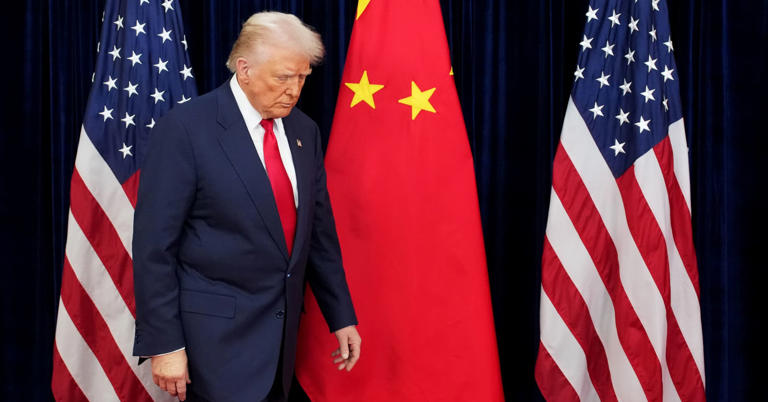
Tensions between Washington and Beijing have intensified sharply, with President Donald Trump signalling that his planned landmark visit to China could be deferred unless the country helps reopen the Strait of Hormuz, a vital artery for global oil flows.
This development underscores the fragility of bilateral relations amid ongoing trade disputes and a fresh Middle East crisis.
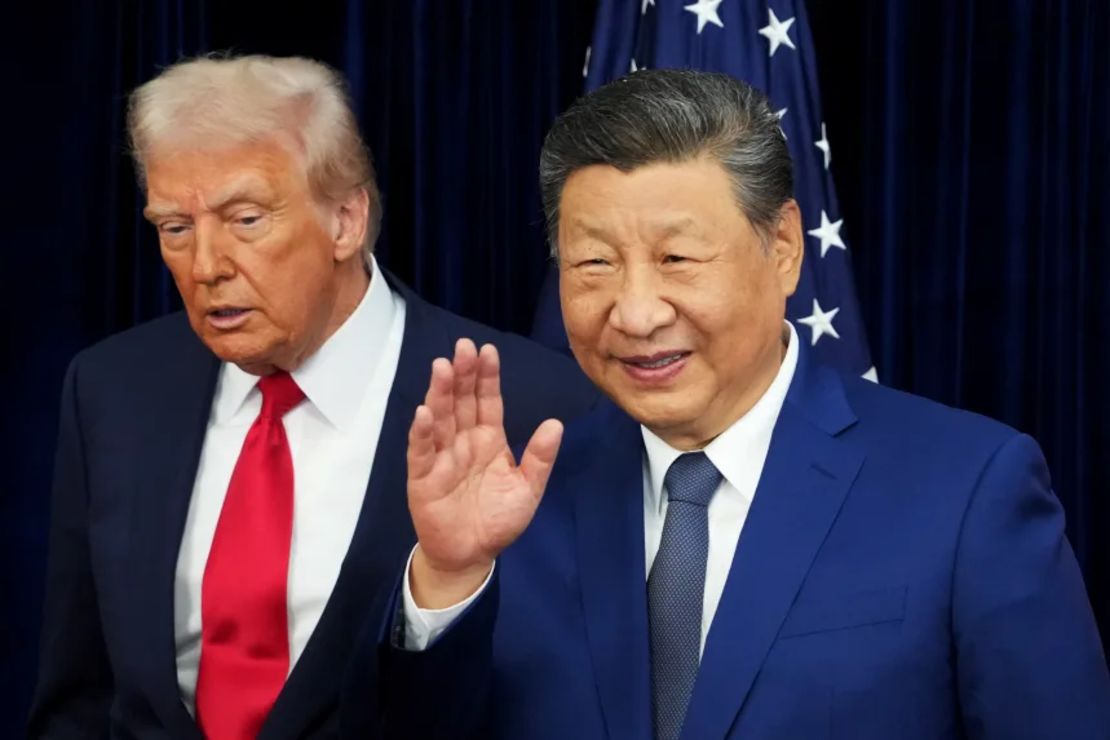
In an interview with the Financial Times published on Sunday, Trump made clear he expects Beijing to assist in clearing the strait before he meets President Xi Jinping in the Chinese capital for a summit originally scheduled from 31 March to 2 April.
“We may delay,” he told the FT, adding that the upcoming two weeks amounted to “a long time” in which Washington seeks firm commitments. The remarks came as Treasury Secretary Scott Bessent conferred with Vice-Premier He Lifeng in Paris on summit preparations, though Beijing has yet to endorse the dates publicly, adhering to its customary discretion.
The proposed trip would be the first by a U.S. president to China since Trump’s own 2017 visit during his initial term, following their October 2025 Busan summit that secured a one-year trade truce after tariffs soared to triple digits. China’s foreign minister Wang Yi recently noted that agenda items are already set.
Aboard Air Force One on Sunday, Trump pointed out that China sources roughly 90% of its oil via Hormuz, framing involvement as a matter of self-interest while appealing to European and Asian partners. The strait handles one-fifth of world oil trade, and its late-month blockade by Iranian forces—linked to regional hostilities—has driven Brent crude up 15%, according to Reuters and BBC analyses.
However, experts like Rush Doshi from the Council on Foreign Relations suggest China’s vulnerability is limited. Diversification efforts since 2024 have reduced Hormuz seaborne imports to under half of total oil, with the route accounting for just 6.6% of energy needs per Nomura. Iran continues shipping crude to China despite the impasse.
Both sides are ramping up pressure ahead of the talks. The U.S. has launched Section 301 probes into overcapacity and forced labour. China’s commerce ministry condemned these on Monday as abuses overriding global rules. “We urge the U.S. side to immediately correct its wrong practices and meet China halfway,” a spokesperson said, pledging countermeasures.
With markets wobbling—Dow futures down 2%—Trump’s gambit could either revive detente or deepen divides.