

The one scenario they didn’t test
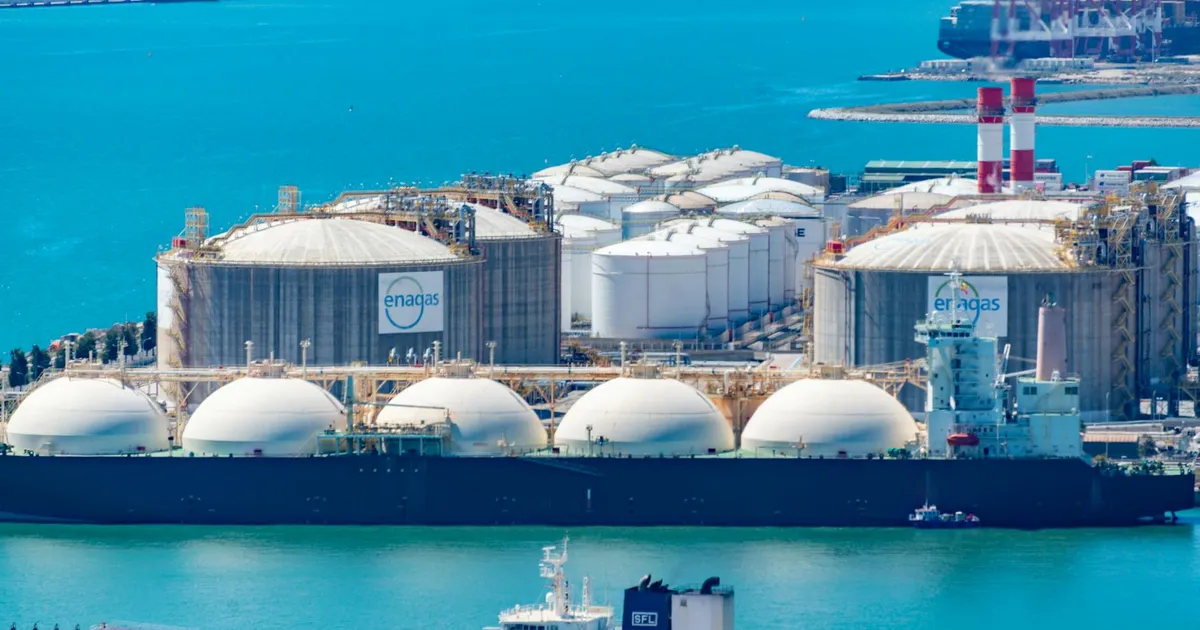
The entire case for a $1 billion LNG import terminal at Port Taranaki rests on a simple promise: when domestic gas runs short and prices spike, imported LNG will keep the lights on and costs down. It is, in the government’s framing, an insurance policy.
Insurance policies get stress-tested against worst-case scenarios. This one wasn’t. The Concept Consulting report commissioned by MBIE explicitly did not consider international fuel price volatility. It tested only two LNG price scenarios, $20 and $25 per gigajoule, and assumed unlimited, uninterrupted supply. The executive summary and conclusions were redacted from OIA releases.
Business owners who will fund this facility through a levy deserve better than a blacked-out punchline.
Reality provided its own stress test
While officials were modelling placid markets, the real world was doing the opposite. Iranian drone strikes hit QatarEnergy facilities, the world’s largest LNG producer. European gas futures rose over 50%. Traffic through the Strait of Hormuz, which carries around 20% of global LNG supply, ground to a halt. Goldman Sachs forecast price rises of 130% if disruption continued, with a further 50-100% jump if conflict escalated.
Brad Olsen, CEO of Infometrics, put it bluntly: “Very quickly, the risks outlined around LNG access have come true”, warning the facility could become “a very expensive white elephant if a dry year coincided with Strait of Hormuz disruption.”
MBIE’s response was that current conflict created only “short-term volatility”. That is exactly the kind of volatility the modelling was supposed to account for.
Cheaper options were sitting right there
The government’s own commissioned modelling undermines its own decision. Concept Consulting found that the Tariki gas storage facility outperforms LNG in every like-for-like comparison on wholesale electricity prices, even without subsidy. Demand management would make twice as much difference as LNG in lowering wholesale prices.
Christina Hood, chief advisor at the NZ Climate Foundation, noted that “demand reduction/boosting supply appears to be a far lower-cost and higher-impact option than LNG, yet no analysis was released showing feasibility and cost”. A biomass pellet plant assessment showed stronger potential but was dismissed as too long-term. Accelerated renewables, demand response, and diesel peakers all received cursory treatment.
The spot market trap nobody wants to discuss
Basil Sharp, emeritus professor of energy economics at the University of Auckland, identifies a structural problem: if the facility operates as insurance, it relies on the spot LNG market with inherent volatility. International LNG supply typically uses 25-30 year contracts, with suppliers demanding minimum quantity commitments. Australia, the closest source, “won’t be interested in ‘itty bitty spot market stuff'” New Zealand wants.
Sharp draws explicit parallels to Think Big, noting that “further concentration of market power will not bode well for households”.
The damage is mostly done anyway
Sense Partners modelling for the government found that most economic damage from the gas crisis has already occurred or is locked in regardless of what happens next. The LNG scenario delivers GDP 0.71% lower than baseline by 2035, saving roughly a quarter of a percentage point compared to doing nothing. In all three scenarios modelled, Methanex and Ballance plants close in 2029.
Officials themselves warned that “over-reliance on LNG could link domestic gas prices to global markets, increasing costs for consumers”. That is the exact risk the modelling never quantified.
The energy pain is real. MBIE estimates higher energy prices have already reduced GDP by $5.2 billion. EMA members report energy price rises of 20-100% on fixed contracts. Businesses are closing. Nobody disputes the problem.
But spending $1 billion on a facility that was modelled only in fair weather, redacted in its conclusions, and outperformed by cheaper alternatives in the government’s own analysis is not a serious response to a serious problem. It is a billion-dollar bet dressed up as prudence, and the businesses paying the levy deserve to know the modelling wouldn’t survive a first-year risk management exam.
Sources
- RNZ: Government’s plans for LNG terminal didn’t model international price spike (2026-06-18)
- NZ Herald: LNG price spike highlights risks for planned $1b NZ terminal
- Carbon News: Govt’s own modelling shows LNG leads to higher electricity prices than other solutions
- RNZ: Conflict in Iran shows risk of government’s plan to import LNG
- Newsroom: Most economic damage from gas crisis ‘locked in’, officials warn (2026-02-12)
- EMA: Terminal investment – why NZ was right to greenlight the $1b LNG lifeline
- University of Auckland: LNG plan needs a closer look – the details don’t bode well (2026-02-17)