

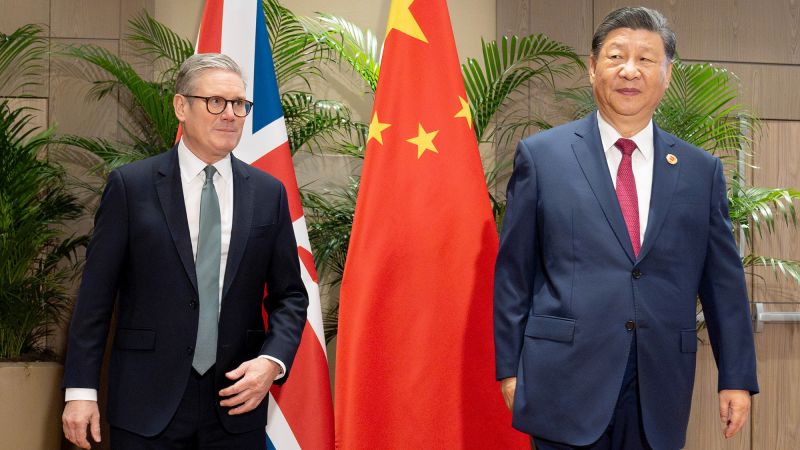
UK and China have agreed to establish a long-term strategic partnership after talks in Beijing between Prime Minister Keir Starmer and President Xi Jinping. The pact seeks to mend years of strained relations and boost cooperation in key areas.
Starmer’s four-day visit marks the first by a British prime minister in eight years. It addresses past tensions from UK claims of Chinese espionage, Hong Kong’s 2020 security law, and recent sanctions on China-based firms over alleged cyberattacks.
The agreement covers education, healthcare, finance, AI, biosciences, and renewable energy. Beijing may offer visa-free entry to Britons and seeks fair conditions for its UK businesses. Starmer told Xi it was “vital that we build a more sophisticated relationship” for collaboration.
He later described the summit as “positive” with a “productive outcome,” placing ties in a “good, strong place.” Both announced anti-smuggling efforts targeting Chinese boat engines in migrant crossings.
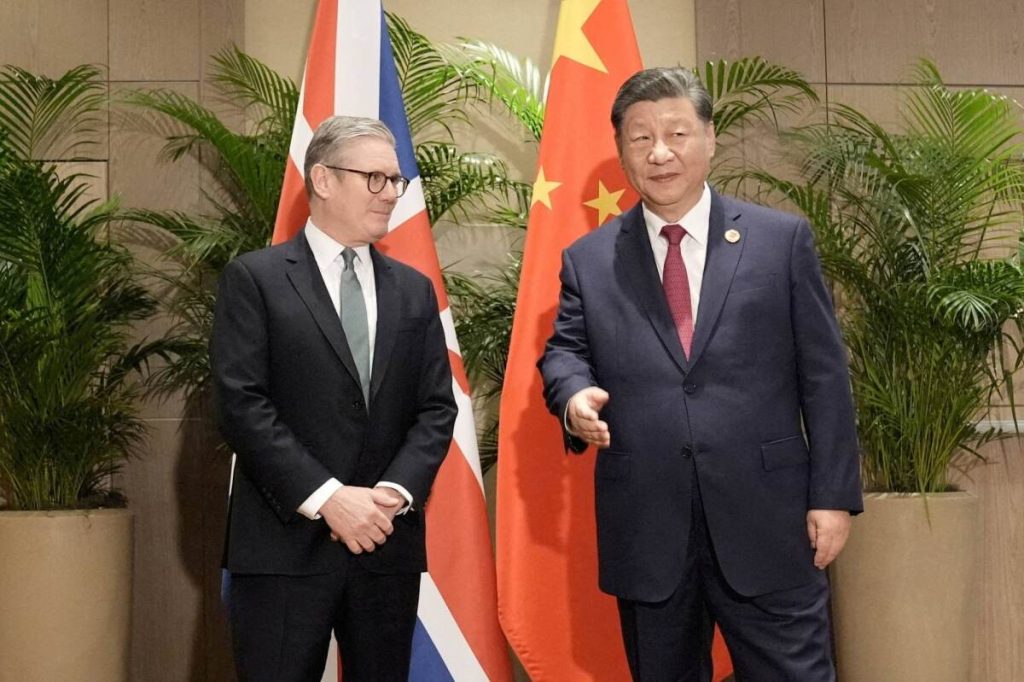
Xi warned against “unilateralism, protectionism and power politics,” urging major economies to lead on global rules to avoid a “jungle-like world.”
The UK recently approved a new Chinese embassy in London despite security concerns. Trade hit $137 billion last year, with a £42 billion UK deficit to June 2025.
British firms report a tough Chinese market, with nearly 60 per cent of 300 surveyed by the British Chamber of Commerce facing worse conditions due to slowdowns and regulations. Most remain committed despite caution.
Starmer rallied executives from AstraZeneca and GSK to seize opportunities supporting 370,000 UK jobs, framing the approach as a “strategic and consistent relationship” balancing growth and vigilance. This aligns with Western leaders diversifying ties amid U.S. uncertainties.