

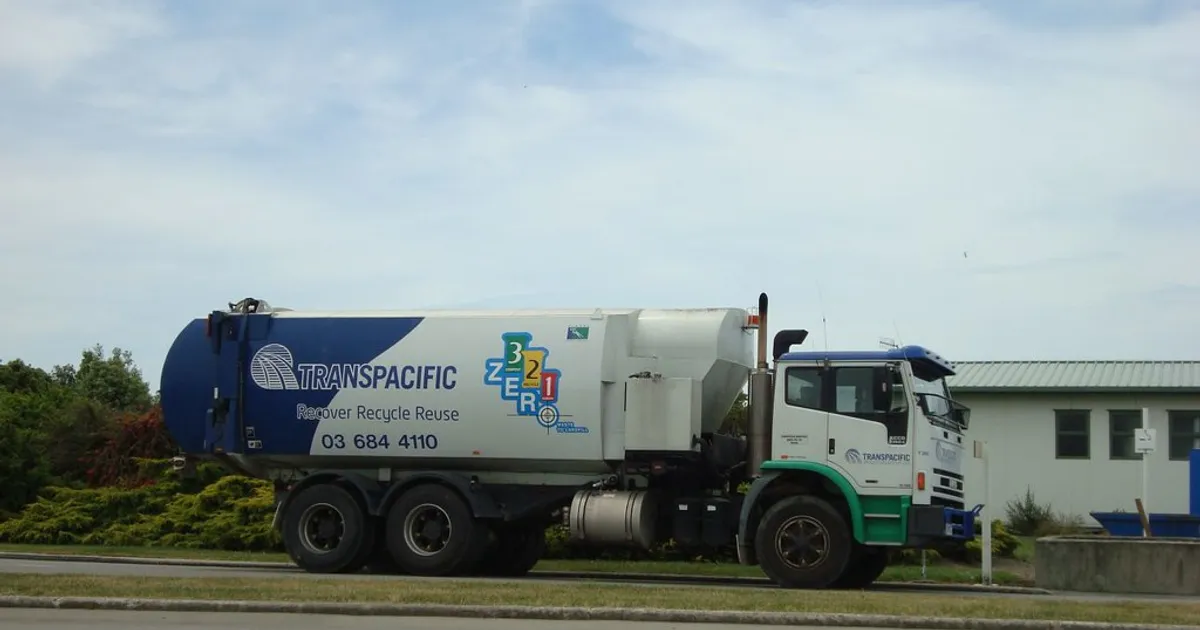
Dunedin City Council has walked away from a $24.9 million materials recovery facility it had planned to build at the Green Island Resource Recovery Park. The city’s mixed recycling will keep going north to an Enviro NZ facility in Timaru. The council says the switch will save more than $40 million over the next decade.
This is the right call, and an uncommon one. Councils rarely kill a capital project once it has a name, a site and a place in the long-term plan. Dunedin did, because the maths stopped working.
The savings come from not borrowing
Mayor Sophie Barker called the decision “a significant win for the ratepayers of Dunedin“. She added that household and council budgets are both under pressure and the council is hunting for savings wherever it can find them.
Strip away the press-release gloss and the mechanics hold up. The council puts average operational savings at $1.7 million a year, or $16.6 million over ten years. Those savings come from three places: lower interest on borrowing, lower depreciation and running costs the council will never incur. Add the $24.9 million build it no longer has to fund and the $40 million headline figure largely reconciles. The council has not published the full bridge between the two numbers, and it should.
The effect on the wider project is just as clear. In September the Green Island redevelopment was priced at nearly $80 million, now about $55 million with the recycling plant removed. A new composting facility, upgraded glass bunkers, the bulk waste transfer station and the recycling drop-off area all still go ahead.
That is the point business owners will recognise. Owning an asset that carries debt and depreciation is not automatically cheaper than buying the service from a specialist who already runs at scale. Enviro NZ already has the plant. Dunedin just needed the honesty to admit it.
The stopgap that became the strategy
The reversal is sharper than it first looks. Dunedin has had its recycling sorted in Timaru since July 2023, and the arrangement was always presented as temporary while Green Island was built.
Even in early 2025 the council treated Timaru as a cost problem. Its draft 2025/26 budget, published in January 2025, set the waste minimisation operating budget at $38.136 million. Part of that increase was a $1.713 million rise in the cost of processing recyclables and organics in Timaru, pending Green Island coming online in stages.
Nearly two years later, the same council has concluded the stopgap is the cheaper permanent answer. Plenty of organisations stick with a plan after the numbers turn against it, because changing course feels like admitting a mistake. Dunedin re-ran the numbers and changed course.
Trucks have a cost too
The trade-off is real. Chief executive Richard Briggs acknowledged the environmental impact of trucking recyclables out of town, and said the council had to weigh that against the benefit to ratepayers. In his view it struck the right balance.
He has a point. The council is still investing heavily in diversion where local scale makes sense. In the 2024-25 year its enhanced kerbside service diverted 16,932 tonnes of food and garden waste from landfill, which is why the composting plant stays in the build.
The decision also cuts against a sector argument for more infrastructure spending. In 2025, WasteMINZ research found the waste and resource recovery sectors contributed over $3.3 billion to the economy, while New Zealand’s material productivity sat at just 59% of the OECD average. That is a fair case for national investment. It is not a case for every council building its own sorting plant. Regional processing hubs that serve several cities are arguably the more efficient model, and Dunedin has just backed one.
Decided behind closed doors
One caveat. Councillors cancelled a near-$25 million capital project in the confidential part of Wednesday’s meeting, and the public found out through a mayoral statement framing it entirely as a win. Commercial sensitivity around a live contract negotiation probably explains the secrecy. But ratepayers deserve to see the whole-of-life analysis that justified the call, especially when a project is dropped from a long-term plan they were consulted on.
What comes next
The council will formalise the arrangement through a variation to its existing Enviro NZ contract in the coming weeks. The terms matter. A ten-year saving is only as good as the price escalation clauses and the contract term that lock it in, and Dunedin is giving up the bargaining power that came with its own plant.
Other councils weighing their own resource recovery builds should take note. Sunk planning, branding and political momentum are not reasons to borrow tens of millions. Run the full numbers on interest, depreciation and operating costs, compare them honestly against buying the service, and be prepared to walk away.
Sources
- Otago Daily Times: About-face on recycling as council dumps plan for Dunedin processing facility (2026-11-27)
- RNZ: Dunedin set to save $40m over decade by sending recycling to Timaru (2026-11-27)
- Scoop: DCC Recycling Changes Will Save Millions (2026-11-27)
- WasteMINZ: New research shows waste efficiency good for New Zealand’s economy (2025-06-12)
Join the discussion
Add useful context, ask a good question, or challenge an idea — keep it specific and respectful.