

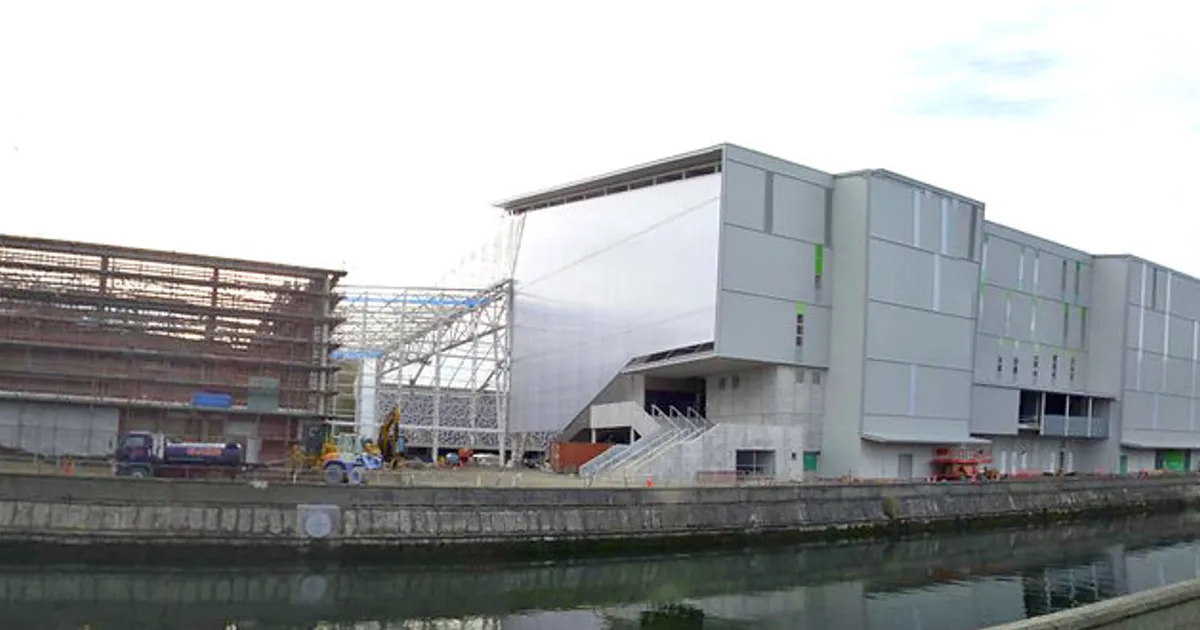
Dunedin’s bid for an NRL franchise reads like a sports story. It is really a plan to fix a stadium that the city has never managed to make pay. A consortium backed by Dunedin Venues Management Ltd (DVML) wants the Southern Sea Lions based at Forsyth Barr Stadium. The target is the NRL’s planned 22-team competition by 2032, with an outside shot at 2029.
The pitch is for a team that represents the whole South Island, not just Dunedin. That matters commercially. A city of Dunedin’s size cannot fill a 30,000-plus stadium every fortnight on its own. A region of 1.26 million people with no NRL team might.
A stadium built for crowds it rarely gets
Forsyth Barr Stadium is owned by Dunedin Stadium Property Limited (DSPL), a council company. Its accounts explain why a permanent tenant is worth chasing. In the year to 30 June 2026, DSPL recorded a net deficit of $8.84 million before subventions and tax. Operating revenue was about $1.26 million, against $9.58 million of expenditure. Most of that spending was depreciation and interest on stadium debt.
Ratepayers are covering more of that gap, not less. Council has approved equity funding rising to $2.5 million a year from 2027/28. The board has also approved spending on a capacity reduction system. That is a retractable curtain that, RNZ reported in March, will let the venue scale from 3,000 to 38,000 seats. The stadium’s managers have called this its “Goldilocks problem”: the venue is too big for small events and awkward for mid-sized ones.
The curtain helps fill the stadium on a quiet Tuesday. It does not create a regular stream of large, paying crowds through the winter. An NRL team could.
Dunedin already knows what a full house is worth
Dunedin Venues has spent years measuring the economics of every big event. It records visitor numbers, the share of people travelling from out of town, and how much each visitor spends. The latest figures were released the day before the bid went public. They show the All Blacks v France test generated $13.2 million in direct economic impact. Some 68% of attendees came from outside Dunedin, and the average visitor spent $736.
“This event proves the stadium’s ability to deliver real value to our city and region,” said Paul Doorn, chief executive of DVML, in the same release. In 2025, the city’s holding company reported a similar pattern. That year’s All Blacks test generated $13.7 million in direct additional spend, with 69% of the crowd from out of town.
The weakness is that each of these is a one-off. Tests and concerts have to be won, often with event-attraction funding, and then won again the following year. A franchise would play a full home season every year. For the city’s hotels, hospitality and transport operators, that means predictable winter trade rather than occasional spikes.
Demand shown before the product exists
The bid is using the same evidence-first approach. Phil King, who is fronting the bid, points to a Warriors v Wests Tigers game in Dunedin. For that match, 94.3% of pre-sale tickets were bought by people from Southland, Otago and Canterbury. “When a big event comes to Dunedin, the whole South Island turns up,” King told The Stadium Business. He has even suggested taking a game or two to Invercargill.
The obvious comparison is the North Queensland Cowboys. They play in Townsville, a city of about 200,000, but draw from a catchment of 750,000 to 850,000. That shows a regional franchise can work. But a single sold-out exhibition game is not 12 home games a season in July sleet. The demand case is plausible. It is not yet proven at NRL scale.
Private money carries the risk
The entry price is steep. NRL boss Peter V’landys has said new franchises must bring around $100 million, paid as a licence fee over five years. They also need to show sustainable crowds and commercial backing.
The overall size of the bid is still unclear in public reporting. The Herald puts the bid at $2.8 billion. The Stadium Business says A$2.3 billion. That gap needs closing before anyone treats the numbers as settled.
What is settled matters more. According to the Southland Tribune, no ratepayer money is committed. This is private capital betting on demand that consumers have already shown, to make better use of a public asset. For a council company that keeps asking ratepayers for top-ups, that is the right way round.
What a yes would change
If the bid succeeds, the ODT-reported plan could be what turns Forsyth Barr from a subsidised venue into one with steady, recurring content. It would not erase the debt or the depreciation. It would put dependable revenue against them. If the bid fails, ratepayers lose nothing directly, but the stadium’s structural losses continue.
The next milestone is the NRL’s expansion decision. Until then, Dunedin businesses should watch one thing. The question is whether the private backers can turn a sold-out exhibition game into a commercial case convincing enough to win a licence.
Sources
- NZ Herald: Dunedin NRL bid: Southern Sea Lions could be ready to join competition by 2029 (2026-11-27)
- Stuff: Audacious plan to base NRL team, the Southern Sea Lions, in Dunedin (2026-11-27)
- RNZ: Retractable curtains for stadium to fix Dunedin’s ‘Goldilocks problem’ (2026-03-27)
- Dunedin Venues: All Blacks vs France Test Delivers $13.2M Economic Boost (2026-11-26)
- Southland Tribune: Dunedin bid could bring NRL games to Invercargill (2026-11-27)
- SportNuvia: Southern Sea Lions: Dunedin Launches $2.3 Billion Bid for 2032 NRL Expansion (2026-11-27)
- ODT: Southern Sea Lions based in Dunedin looking to join NRL (2026-11-27)
Join the discussion
Add useful context, ask a good question, or challenge an idea — keep it specific and respectful.