

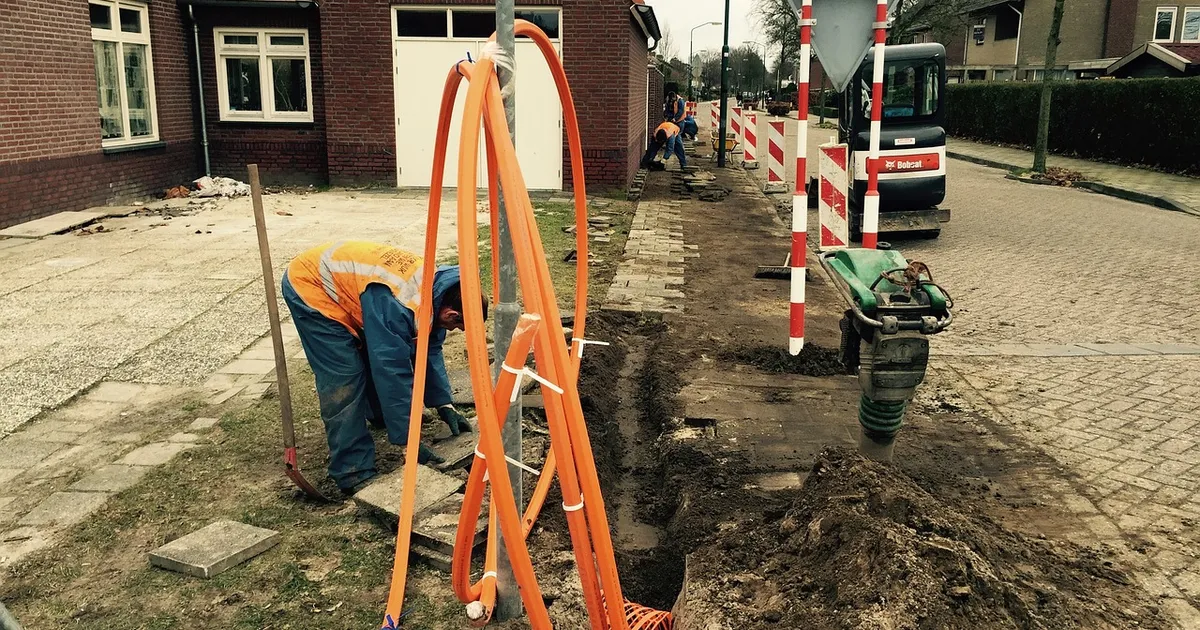
Christchurch City Council has voted 9-6 to consult on selling Enable Networks, its fibre broadband company, with sale as the preferred option. Read it as an asset story and you miss the point. This is what the local government funding squeeze looks like when it reaches the balance sheet: a council discovering that the dividend stream it budgeted on is no longer reliable, and reaching for the one big asset it can actually sell.
Nothing is final. Consultation runs through the 2027-37 Long Term Plan early next year, with a decision expected around June 2027. But the direction is clear, and the logic deserves a hard look from anyone who pays rates or does business in Canterbury.
The dividend hole came first
The sharpest detail in this debate is not the price tag. Councillor Yani Johanson said he found it “shocking” that councillors were only told in November that Christchurch City Holdings (CCHL) was unlikely to meet its previously promised dividends if Enable stayed in council hands. The same modelling shows 2028 dividends of $40 million under retention versus $90 million under sale.
That changes the framing. This is not a council cashing in an opportunistic windfall. It is a council whose revenue assumptions were already unravelling. One councillor put the choice bluntly: “there’s the way where we’re going to literally need to find the equivalent of $50m a year from ratepayers”.
The proposal is to target at least $1 billion in net proceeds, with $500 million paying down CCHL’s $2.5 billion debt and $500 million seeding a legally protected Future Fund. On the council’s numbers, selling delivers about $45 million a year more than holding.
The job Enable was built for is done
The case for selling is stronger than opponents allow. Enable was created in 2007 because Telecom was too slow to get Christchurch off copper. A 2025 Post Investment Review found the company had substantially achieved its original objectives. The public-policy rationale for owning it has been fulfilled.
It has also grown up. In February, Enable repaid $294.4 million in CCHL loans through its own syndicated bank facility. It no longer needs council money to function. And as the Taxpayers’ Union pointed out, Christchurch is the only council in New Zealand that owns a fibre network. Every other city manages without one.
Timing matters too. In April 2026, industry commentator Bill Bennett noted Enable had earned $41.1 million in net profit and paid a $25 million dividend the previous year, but warned that 5G fixed wireless and low-earth-orbit satellite services may influence how buyers value the network long-term. Selling a well-run utility before competition erodes its moat is basic capital discipline.
The $1 billion number is doing heavy lifting
Here is the catch. CCHL’s own independent Deloitte valuation put Enable at $776 million as at 30 June 2026. The $1 billion target assumes a buyer pays a premium of roughly 29% over that. Deloitte and Macquarie Capital recommended full divestment, but only subject to a minimum $1 billion in net proceeds.
Control premiums for infrastructure assets are real, and fibre networks with regulated, predictable cash flows attract patient global capital. But the whole “sell beats hold” case rests on that premium materialising. If bids land closer to $776 million, the arithmetic gets much less comfortable, and the council should say now what its walk-away price is.
A fence is only as good as the next council
Mayor Phil Mauger wants the Future Fund to have “a cast iron fence around it”. Some councillors are sceptical, and the council’s own review of CCHL’s advice found credible arguments for both keeping and selling, while anti-privatisation campaigners suspect the money will end up underwriting the $820 million Lyttelton Port expansion.
That is the real risk. Recycling a mature asset into debt reduction and a genuinely protected endowment is sound. Recycling it into a pot that future councils can raid to plug operating gaps is just a slower way to spend the capital. Taxpayers’ Union spokesperson Tyler Groenewald backs scrutiny of the sale but says the council “should be open about the proposed sale price and how the proceeds would be used”.
What comes next
The sale itself looks defensible. Enable has done its job, it stands on its own, and councils have no special reason to run telcos. What should worry ratepayers is why the decision is suddenly urgent. CCHL’s dividend model, the quiet subsidy that has kept Christchurch rates lower than they otherwise would be, is no longer delivering.
Selling Enable buys time. It does not fix a funding structure that leans on investment returns councillors were only just told won’t arrive. When consultation opens in February, the question for businesses is not just whether to sell, but what the council plans to do when there is nothing left on the shelf.
Sources
- NZ Herald: Enable fibre broadband sale: Christchurch council agrees to public consultation (2026-11-24)
- BusinessDesk: Christchurch explores $1b Enable sale to establish investment fund (2026-11-24)
- The Press: Christchurch City Council backs Enable sale ahead of public consultation (2026-11-24)
- The Press: Christchurch poised to make $1b windfall by selling fibre network, councillor says (2026-11-19)
- RNZ: Anti-privatisation group wants Christchurch to keep public ownership of fibre network (2026-11-24)
- Christchurch City Council: Finance and Performance Committee – Enable Networks Ownership Review (2026-11-25)
- Enable Networks Limited Annual Report 2026 (2026)
- Taxpayers’ Union: Enable Sale Could Help Christchurch Tackle Debt and Infrastructure (2026-11-24)
- Bill Bennett: Analysis – Enable Networks ownership review explained (2026-04-17)
Join the discussion
Add useful context, ask a good question, or challenge an idea — keep it specific and respectful.