

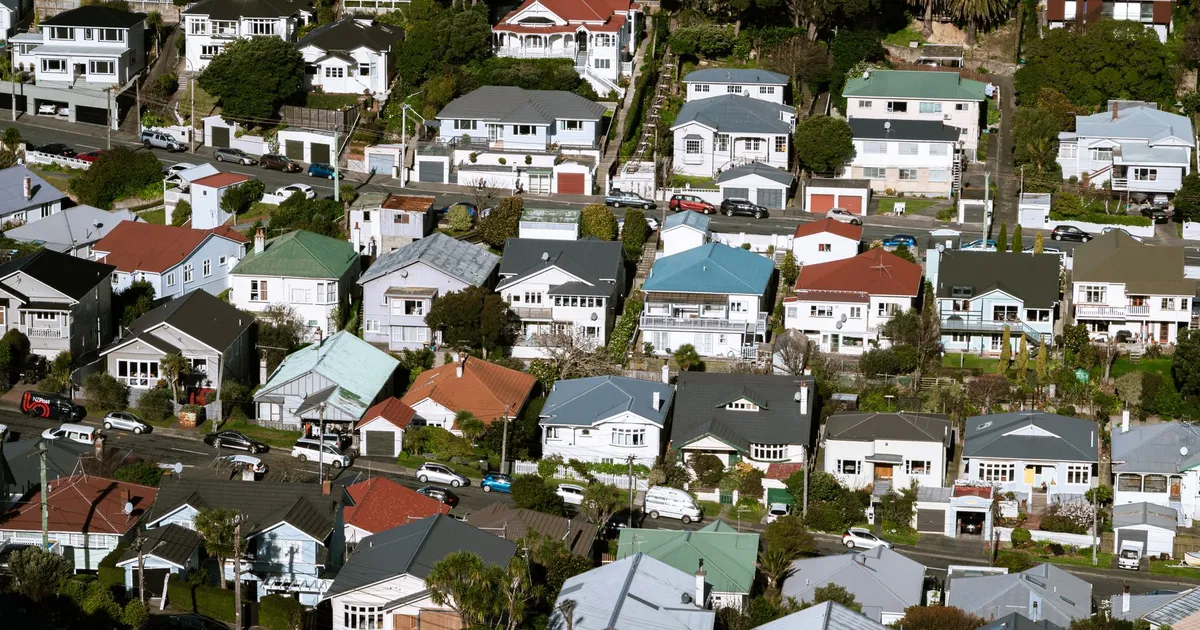
Kāinga Ora has a defensible reason to sell Manderson Grove. It has chosen a strange way to do it. Almost an entire street of state homes in Lower Hutt, about 80 bedrooms in total, is being marketed by Bayleys for “investment, development, and land banking”, with buyers able to take one property or the lot before an 8 December deadline. In the same city, 339 households sat on the public housing waitlist as at September.
The agency wants the best price. Fair enough. But the best price and the most homes are different objectives, and the sale brochure tells you which one is winning.
The fiscal case stands up
This is not a story about a reckless sell-off. In April 2026, Kāinga Ora said it was selling about 900 homes a year, roughly 1% of a 78,000-home portfolio, while replacing or extensively renovating around 2,000 homes a year. The coalition launched the turnaround plan arguing that the agency’s roughly $2.5 billion in annual spending and rising debt were unsustainable after Labour’s expansion years.
Some disposals are plainly smart. In Wellington, the agency sold 117 units in the Dixon St Flats to Taranaki Whānui for $1.04 million, a building abandoned since 2022 as earthquake-prone, with remediation estimated above $125 million. Walking away from a nine-figure repair bill is exactly what a disciplined owner should do.
Best price is not a build plan
The problem at Manderson Grove is what happens after settlement. A Kāinga Ora spokesperson says the agency is “comfortable” with Bayleys’ approach and wants “the best price” because proceeds go back into social housing. Experienced investors quoted in the same coverage suggest the land-banking line is mostly agent bait, since few buyers now sit on sites for a decade. The New Zealand Initiative’s Eric Crampton argues the site is not classic speculative land banking at all, and that letting it be intensified could add a lot more housing without pushing up prices.
That is the right test. Selling to a developer who builds 30 townhouses is a win. Selling to someone who waits for the market to turn is not, and nothing in this sale requires one outcome over the other.
Christchurch shows where the leak is
The early numbers should worry anyone who believes the “one out, one in” promise. Christchurch became the fastest-selling region, with nearly 150 homes sold since July 2025 raising at least $65 million. In the second half of 2025 the city recorded a net loss of 86 public housing units, the first six-month decline since at least 2017.
Nationally, Public Housing Futures’ Vanessa Cole said in March 2026 that Kāinga Ora had cancelled nearly 3,500 planned homes, leaving empty sections behind. Then-Housing Minister Chris Bishop called the programme “sensible asset management” and insisted overall supply was still growing. Both can be partly true. But the gap between selling fast and building fast is where housing supply quietly disappears.
Swapping one land banker for another
There is an irony here the agency’s critics on the left tend to miss. In 2025, the New Zealand Initiative argued Kāinga Ora itself “operates as a large-scale land banker”, sitting on scarce land and banking valuation gains like a commercial developer. The same report said what matters is “an adequate supply of housing”, not who holds the title.
Centre-right readers should take that point seriously in both directions. Public ownership of underused land is no virtue. Neither is private ownership of underused land. Moving an idle asset from the Crown’s balance sheet to an investor’s balance sheet improves the fiscal picture without adding a single bedroom.
Price the build, not just the land
The fix is not to halt sales. It is to sell with conditions. Development covenants, build-by dates, or a modest discount for buyers who commit to density would trade a little price for a lot of certainty. Kāinga Ora already accepts price trade-offs. In April 2026 it reported homes selling 5% above market value on average, yet the Herald found top inner-Auckland homes went 13% below council valuations. Price is already negotiable. Outcomes should be too.
At Nuku Street in Strathmore last month, regional director Sarah Willson said no social housing redevelopment option was financially viable, pointing to 37 planned homes nearby as proof of commitment. That may well be right. But if the state cannot make a site pencil, the next owner should at least be expected to.
Bids close on 8 December. The real measure of this sale will not be the cheque Kāinga Ora banks. It will be whether anyone is living on Manderson Grove’s extra capacity in five years, and right now nobody is on the hook for that answer.
Sources
- RNZ: Kāinga Ora homes pitched as opportunity for land bankers (2026-11-25)
- Kāinga Ora: Information sheet – Selling Kāinga Ora homes and land (2026-04)
- NZ Herald: Kāinga Ora sell-off – The location and prices paid for Auckland’s most valuable state homes, plus full national list (2026-05-05)
- The Post: Kāinga Ora has sold $12m worth of Wellington property in nine months (2026-05-07)
- The Press: Investors cash-in on state housing sell-off in Christchurch (2026-03-13)
- The Post: The state homes on the market as part of Kāinga Ora’s ‘turnaround plan’ (2026-03-13)
- New Zealand Initiative: Owning less to achieve more (2025-10)
- RNZ: Sale of Wellington Kāinga Ora houses sparks local backlash (2026-10-21)
Join the discussion
Add useful context, ask a good question, or challenge an idea — keep it specific and respectful.