

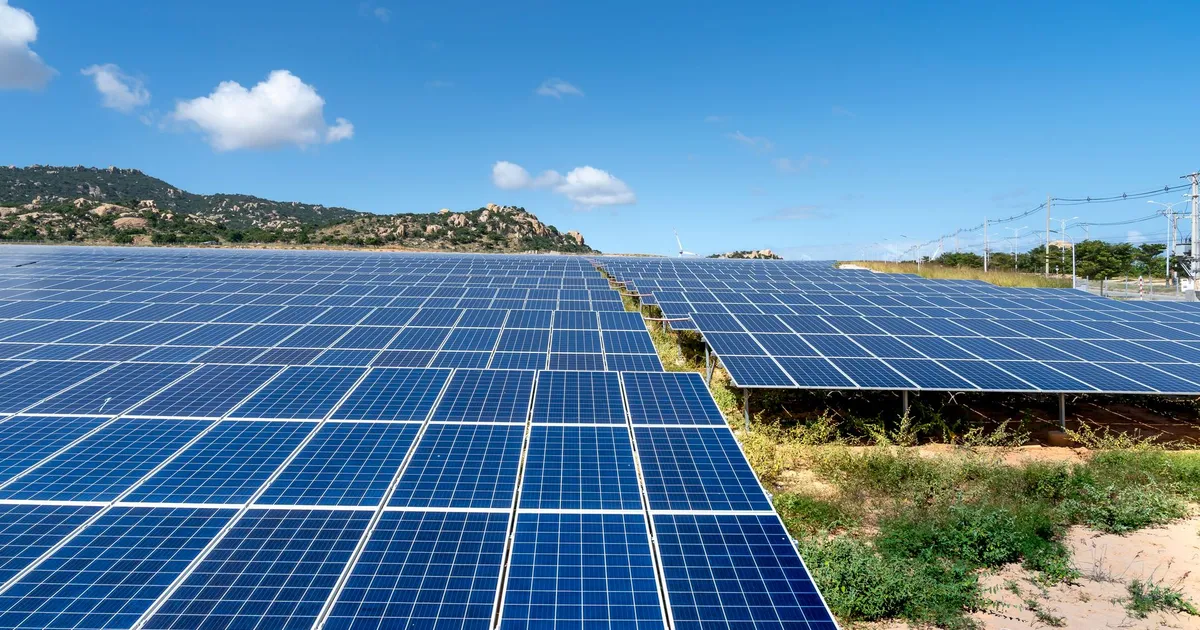
Receivers are now running Far North Solar Farm (FNSF), the government-backed developer behind the contested Mackenzie Basin solar project. They were appointed by Singapore-based Aquila Clean Energy after FNSF defaulted on debt owed to its former joint venture partner.
The coverage so far has focused on birds, consents and unpaid bills. The sharper lesson is about capital structure. When a Crown-supported developer’s numbers stopped working, the private offshore partner had the contractual standing and the appetite to act. The taxpayer-funded green bank had neither.
Aquila took the working assets early
FNSF and Aquila formed their joint venture in 2022 to build roughly ten solar farms. When they ended it in January 2026, Aquila said it was retaining the five most advanced projects, including Pukenui, the only one actually generating power. FNSF kept six of the least developed, including The Point.
That split mattered. A commercial investor looked at a shared portfolio, took the assets producing revenue and left its partner with the ones still needing money, consents and time. Ten months later, Aquila used its creditor position to put FNSF into receivership. This is how disciplined private capital is supposed to behave. It is not a scandal. It is a reminder of who sits where when things go wrong.
The Point was already in trouble
The Point is a proposed $600 million, 450MW solar farm on about 670 hectares near Lake Benmore. The fast-track panel, chaired by retired High Court justice Raynor Asher, described the ecological management as “notably deficient” and said risks to critically endangered species including kākī were unacceptably high.
Then the money ran short. The EPA suspended the application on 21 August after FNSF failed to pay recoverable costs. Director Richard Homewood told the EPA the company would not pay two invoices “at this time”, describing non-payment as the only way to buy more suspension time under the Fast-track Approvals Act. That may be clever procedure. It is also what a company does when it cannot fund the next stage of its own consent.
Homewood has maintained FNSF progressed the project diligently and remains committed to it. The panel’s concerns, though, existed independently of the balance sheet. More funding would not have fixed them.
The green bank backed in, then backed off
In August 2024, NZGIF signed a $78 million finance facility with FNSF for grid connection and development across five sites, pitched as accelerating about 1,132 MWp of capacity. Weeks later, NBR reported that FNSF’s directors had previously been warned over misleading conduct. NZGIF said at the time it had done “detailed due diligence” and regarded FNSF as a credible counterparty.
By June this year, NZGIF had locked down the $78 million without explaining why. It had already written off $133.3 million after the SolarZero collapse. Withholding funds was prudent. It was also the posture of a lender playing defence, not one shaping the outcome.
A fund the government had already judged
None of this surprises the government. A strategic review reported in 2025 found NZGIF’s claimed return of $10.65 per tonne of emissions benefit became a $9.80 per tonne deficit once interest on idle term deposits was stripped out. Its crowd-in ratio of 1.5:1 trailed Australia’s 2.8:1 and Japan’s 11:1. In April 2025, Climate Change Minister Simon Watts ordered a wind-down, saying almost $400 million had been invested “with very limited results”.
The latest annual report shows that wind-down biting. Total equity fell from $318.8 million to $84.0 million, $228 million went back to the Crown, and staff numbers shrank to three or four people managing an orderly wind-out. Credit to the government for correcting course before FNSF fell over. A shrinking fund with a skeleton crew, however, is not a creditor that dictates terms.
What this means for anyone pitching public money
The green-bank model rests on a simple promise: public capital takes early risk so private capital follows. FNSF shows the reverse can happen. Private capital arrived, extracted the bankable assets and enforced its claims, while the public lender was left managing exposure to whatever remains.
For developers, the takeaway is that a Crown facility is not a safety net. It does not fix weak consents, thin ecology work or a stretched balance sheet. For investors, Aquila’s playbook is the one to study, because clear security and early exits beat policy goodwill every time.
The receivers will now decide what the six unfinished projects, including The Point, are worth to a buyer. Whatever price they fetch, the order of payment is already set, and taxpayers did not write it.
Sources
- Newsroom: Govt-backed developer behind contentious solar farm projects put into receivership (2026-11-19)
- Aquila Clean Energy APAC: Aquila Clean Energy APAC concludes joint venture with FNSF in New Zealand (2026-01-05)
- The Press: $600m Mackenzie solar farm fast-track stalls as developer leaves EPA bills unpaid (2026-09-16)
- The Press: Huge solar farm approval in doubt after grave warning on rare birds (2026-07-03)
- Newsroom: Govt green bank locks down $78m public funds as second solar project hits hurdles (2026-06-25)
- BusinessDesk: Govt’s NZGIF ‘green bank’ was losing money, underperforming (2025-06-24)
- Treasury: New Zealand Green Investment Finance Annual Report 2025-2026 (2026-10-15)
Join the discussion
Add useful context, ask a good question, or challenge an idea — keep it specific and respectful.