

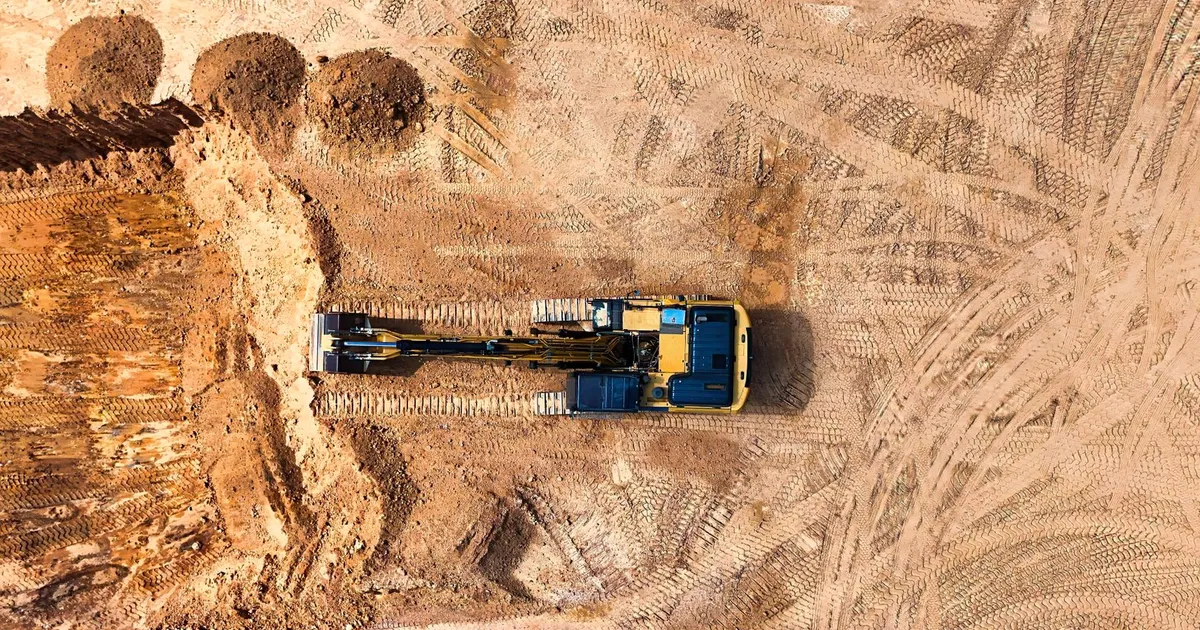
New Zealand’s Active Investor Plus visa is meant to channel wealthy migrants’ money into productive, growth-oriented businesses. Instead, its single biggest deal appears to have bankrolled the pipes, roads and earthworks under a Porirua subdivision. Officials have now confirmed that the $135 million Plimmerton Farm loan was not permitted under growth visa rules. The Herald’s verdict is the more damning part: the regulations apparently weren’t clear enough to deliver any sanction.
That is the real problem. An investor visa lives or dies on certainty about which assets qualify. Plimmerton shows that certainty arrived months after the cheque cleared.
The fund managers who said no
Fund manager Private Capital Group (PCG) channelled the money into the Gillies Group development, which had secured a 2024 fast-track consent covering 712 lots and 551 homes across 379.5 hectares. PCG’s public framing, set out by its lawyers, was that the funding delivered critical infrastructure such as wastewater, stormwater, power and roading, rather than housing.
Competitors did not buy it. In August, the Herald reported that Peninsula Credit and Aotea Asset Management both considered and rejected the financing, viewing it as property development. Peninsula managing director Andrew Pryde said Invest New Zealand’s own advice was that the deal would most likely be excluded. PCG chief executive Paul Carman countered that the firm had legal advice confirming the transaction fit the framework, and that both PCG funds remained on Invest NZ’s approved list.
So the cautious operators lost the deal, and the one that pushed the boundary got to deploy the capital. That is not a story about one aggressive fund. It is a story about a regulator whose informal steer was clear enough to scare off two managers but not firm enough to stop a third.
A single deal that dwarfed the property bucket
Scale makes it worse. Immigration NZ’s July quarterly report shows $2.12 billion of committed capital across the scheme, $1.49 billion of it in the growth category. In the balanced category, where property development is actually allowed, it accounted for just $22 million, or 4%.
On those numbers, the Plimmerton loan is roughly six times the scheme’s sanctioned property development exposure, and equivalent to around 9% of all committed growth capital. A programme designed to keep property on a short leash ended up with its largest bet sitting in a residential subdivision.
Rules rewritten after the horse bolted
Officials moved quickly once the deal went public. Invest NZ’s August guidance now states it will generally not treat infrastructure built solely or primarily to enable a residential property development as standalone infrastructure. Roads, water, wastewater, earthworks and utility networks inside a subdivision are explicitly out, and proposals will be judged on the substance of the underlying activity rather than how components are labelled.
A 12 August amendment circular formalised what counts as acceptable property development, and further guidance followed in September, part of what law firm Martelli McKegg calls an effort at cleaning up the golden visa.
At the same time, the government opened a clearly labelled front door. From December, applicants can count investments in approved build-to-rent housing funds toward the growth requirement. That is defensible policy. If ministers want migrant capital in housing supply, say so and design for it, rather than letting funds dress subdivisions up as infrastructure. Advisers have argued infrastructure could be a valuable evolution for the scheme, provided appropriate governance structures exist. Plimmerton proves they did not.
Why this costs more than one deal
The damage is to credibility. Fund managers compete to host visa capital, and they need to know the rules will hold. If the penalty for following official guidance is losing the mandate, and the penalty for ignoring it is nothing, the incentive structure is upside down.
There are signs the scheme’s pitch is already weaker. The Herald reports Invest NZ has scrapped its offshore investor roadshow and cut four staff in Europe and the US. There is no evidence that is a direct consequence of Plimmerton, but a programme pulling back its marketing while rewriting its rulebook is not projecting confidence.
The tightened guidance should stop a repeat. The harder question is whether Invest NZ will back clear rules with consequences, and whether the fund managers who walked away get any acknowledgement that they read the rules correctly. A growth visa that rewards whoever pushes hardest will attract exactly the wrong kind of capital.
Sources
- NZ Herald: Plimmerton Farm deal was not permitted under the Active Investor Plus growth visa rules, according to officials (2026-11-19)
- NZ Herald: Active investor plus visa – Plimmerton Farm deal raises questions over property rules (2026-08-25)
- EPA: Plimmerton Farm fast-track consent final decision (2024-11-01)
- Simpson Grierson: Simpson Grierson advises Private Capital on major infrastructure financing
- Immigration NZ: Quarterly report on the Active Investor Plus Visa Q4 FY25.26 (2026-07-01)
- Invest NZ: Active Investor Plus Visa Managed Funds Application Guidance Notes (2026-08)
- Immigration NZ: Amendment Circular No. 2026-22 (2026-08-12)
- Martelli McKegg: Cleaning up the ‘golden visa’ (2026-10-16)
- MinterEllisonRuddWatts: Active Investor Plus (AIP) Visa – Charting the course
Join the discussion
Add useful context, ask a good question, or challenge an idea — keep it specific and respectful.