

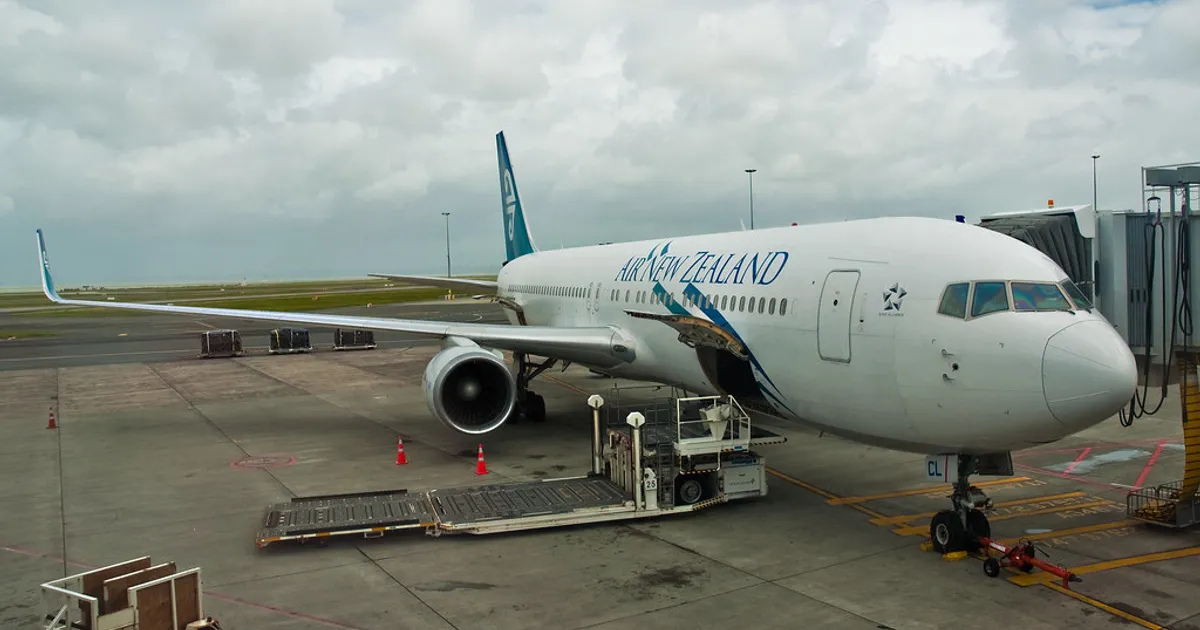
The Commerce Commission is filing criminal charges against Air New Zealand in the Auckland District Court under section 13(i) of the Fair Trading Act. The core allegation is simple. When flights were delayed or cancelled for reasons within the airline’s control, passengers were allegedly told compensation was “strictly capped” at amounts below what the law allows. The Commission believes the conduct has likely been happening since January 2024.
This is not a story about grumpy travellers. It is about whether a dominant carrier can quietly narrow its customers’ legal rights at the exact moment its own failures are costing those customers money.
The statute sets the ceiling, not the airline
Commission deputy chair Anne Callinan did not soften it. “Air New Zealand made statements that led some passengers to incorrectly assume they weren’t entitled to compensation, and rejected legitimate reimbursement claims,” she said. “Ultimately, we believe passengers missed out on money they were entitled to under the law.”
The entitlement is not ambiguous. Under the Civil Aviation Act, domestic passengers can claim reasonable costs for meals, accommodation and getting to their destination up to 10 times the ticket price when the disruption is the airline’s fault. International travellers are covered by the Montreal Convention. A company can choose how generous to be above those floors. It cannot tell customers the floor is lower than it is.
The Commission opened its file on 22 July 2024. More than two years of investigation ended in criminal charges, not a warning letter.
The timing is hard to ignore
The Commission does not allege the airline set out to save money, and nobody should assume motive. But the context matters. January 2024 was the depth of Air New Zealand’s engine crisis. Its investor update for that month showed load factor down 4.0 points to 83.9%, blamed on Pratt & Whitney maintenance, with around $35 million in temporary costs flagged to manage operational pressure and customer impacts.
The FY2024 annual report put earnings before tax at $222 million, roughly $100 million lower than it would have been had grounded aircraft been flying. A parliamentary select committee review in 2025 found about 5,000 seats a day missing from the network, and recorded the airline conceding its delays and cancellations were “too high”.
So the alleged misstatements began when controllable disruption was at its peak and every claim paid hit an already bruised bottom line. That is precisely when compliance discipline matters most, and precisely when it tends to slip.
Sorry is not a defence
Air New Zealand’s response leans on scale. It says a voluntary review of more than 62,000 claims found mistakes in under 1% of cases, against nearly 45 million passengers. Chief customer and digital officer Jeremy O’Brien conceded communications “weren’t as clear as they could have been” and that “we didn’t get it right for those customers, and we’re sorry.” The airline says it was disappointed the Commission went to court given its remediation, insists the errors were not systemic, and will cooperate.
There is a fair point buried in there. Current leadership, with Dame Therese Walsh as chair and Nikhil Ravishankar as chief executive per the 2026 annual report, is cleaning up a problem rooted in the 2024 crisis. But the Commission’s decision to prosecute anyway sends the real message. Fixing it afterwards does not undo the breach. And this is not a one-off. Jetstar was fined $2.25 million in September 2025 for similar conduct. Rights communication is now its own enforcement category.
An information gap airlines control
The deeper problem is structural. In March 2026, Consumer NZ reported that nine in ten New Zealanders were not fully aware of their rights when a flight is disrupted, more than three-quarters relied on the airline itself for that information, and two-thirds of disrupted passengers paid at least some costs out of pocket. When the party owing the money is also the main source of advice on whether it is owed, the incentives are obvious.
A 2025 Victoria University of Wellington Law Review article argued New Zealand’s passenger protections lag the EU and Canada, recommending fixed compensation and an airline-funded dispute scheme. In 2025, then-Associate Transport Minister James Meager floated voluntary codes while warning that extra costs on airlines “eventually all flows through to ticket prices”. He is right about that. EU-style mandatory payouts are a blunt instrument, and passengers would ultimately fund them.
But the case for a light-touch regime depends on airlines honouring the rules that already exist. Every prosecution like this one weakens that argument.
What every board should take from it
The lesson extends well beyond aviation. Telcos, insurers, logistics firms and event operators all carry statutory or contractual compensation obligations, and all have frontline scripts, templates and web copy describing them. Those words are legal representations, not brand tone. Under pressure, the temptation to round entitlements down is real, and regulators are now actively looking for it.
The Air New Zealand case will take its course through the courts. The policy question it reopens will not wait as long. If voluntary compliance keeps failing, the industry should not be surprised when Wellington reaches for the mandatory version it has so far resisted.
Sources
- NZ Herald: ‘We’re sorry’: Air NZ accused of misleading passengers about compensation rights (2026-11-19)
- 1News: ‘We’re sorry’: Air NZ responds as it faces charges over compensation (2026-11-19)
- Newstalk ZB: ‘We’re sorry’: Air NZ accused of misleading passengers about compensation rights (2026-11-19)
- Commerce Commission: Air New Zealand Limited case register (2026-11-19)
- Air New Zealand: January 2024 Investor Update – Operational Statistics (2024-02-19)
- Air New Zealand: Annual Report 2026 (2026-08-28)
- VUW Law Review: Navigating Towards an Airworthy Protection Regime for New Zealand’s Airline Passengers (2025-05-07)
- Consumer NZ: Minister Meager, it’s time to force airlines to tell us about our rights (2026-03-10)
- The Post: Are New Zealand travellers getting a fair deal when flights are cancelled? (2025-10-26)
Join the discussion
Add useful context, ask a good question, or challenge an idea — keep it specific and respectful.